
I keep coming back to one feeling when I think about Dusk. It feels like someone finally looked at finance the way it actually exists, not the way crypto wishes it existed. In real life, money is personal. It is fragile. It is strategic. It can be tied to pride, fear, survival, and reputation. And most of all, it is not meant to be displayed like a public diary.
That is the quiet problem Dusk is built around. Most blockchains treat transparency as a virtue. Everyone can see everything. That sounds clean and fair until you imagine your salary, your savings, your business revenue, your investor positions, your trading strategy, your customer payments, all sitting out in the open forever. Then the idea stops feeling pure and starts feeling dangerous. It can turn into pressure. It can turn into targeting. It can turn into manipulation. It can turn into a world where only people who can afford privacy get privacy, and everyone else has to live exposed.
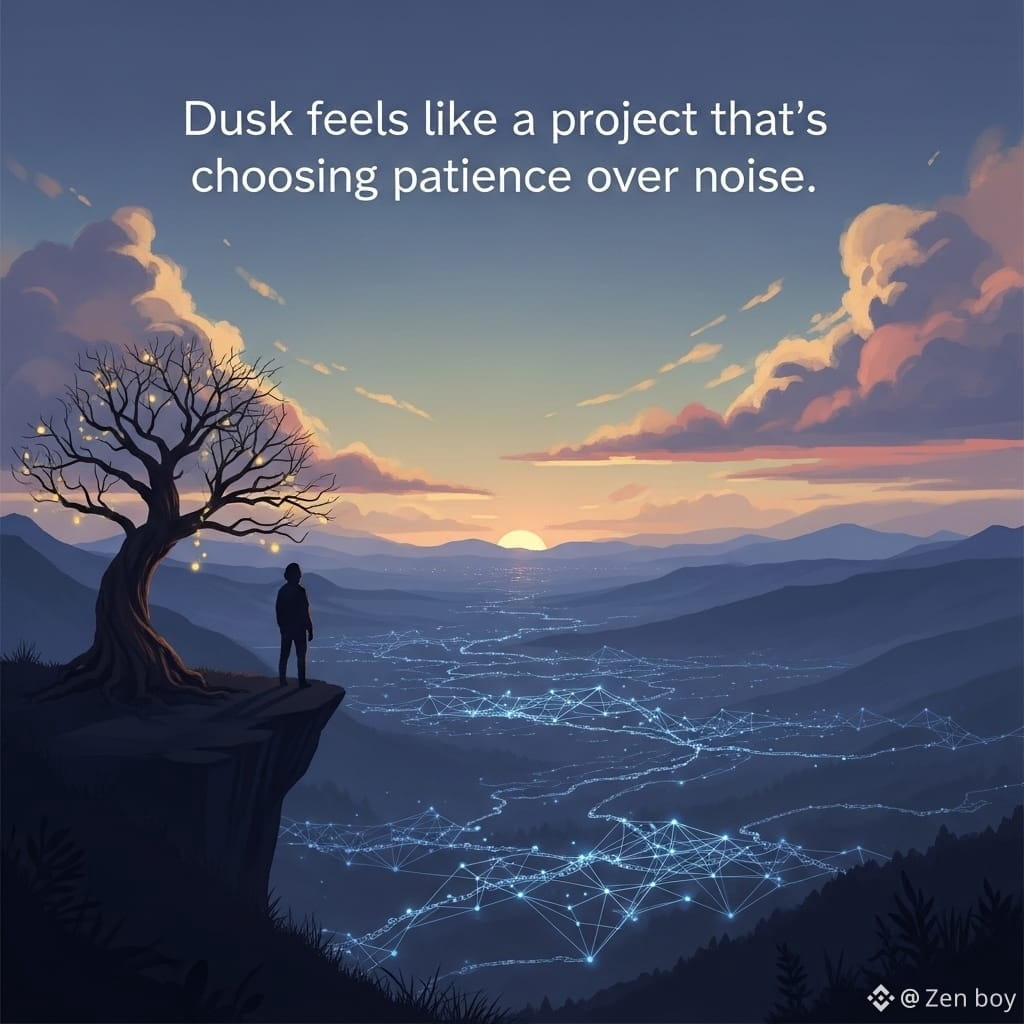
Dusk is trying to say something simple but heavy. Privacy is not a luxury. It is protection. And in finance, protection is not optional. At the same time, there is another truth that cannot be avoided. If institutions, regulated firms, and serious financial players ever move on chain in a meaningful way, they cannot step into a system where nothing can be proven. They have auditors. They have legal obligations. They have policies that are not flexible. So Dusk is not chasing the fantasy of hiding from the world completely. It is chasing something more mature and honestly more difficult. It is trying to build a chain where sensitive information can stay private, while the system can still support accountability and audits when rules demand it. Privacy with structure. Privacy that can survive regulation, instead of breaking the moment regulation appears.
When people describe Dusk as modular, I read it like this. They’re building separate pieces for separate truths. One truth is private value transfer. If I pay you, the world does not need to know what I paid, what I still have, how often I pay, or who else I pay. That is not freedom. That is exposure. Dusk’s design leans into confidentiality at the transaction level so the public chain does not become a surveillance tool. Another truth is that regulated assets have rules. Tokenized real world assets and institutional instruments come with ownership constraints, permissions, lifecycle events, and reporting realities. Institutions want the integrity of a public chain, but they cannot accept a system that forces them to reveal every balance and move to everyone. Dusk tries to live in that middle zone where sensitive data can remain protected while state changes can still be provable and accountable. Then there is programmability, because finance is not just sending tokens. It is conditional flows, settlement logic, collateral rules, and agreements with consequences. Dusk’s approach aims to allow applications to encode real financial logic without stripping away privacy every time a contract is used.
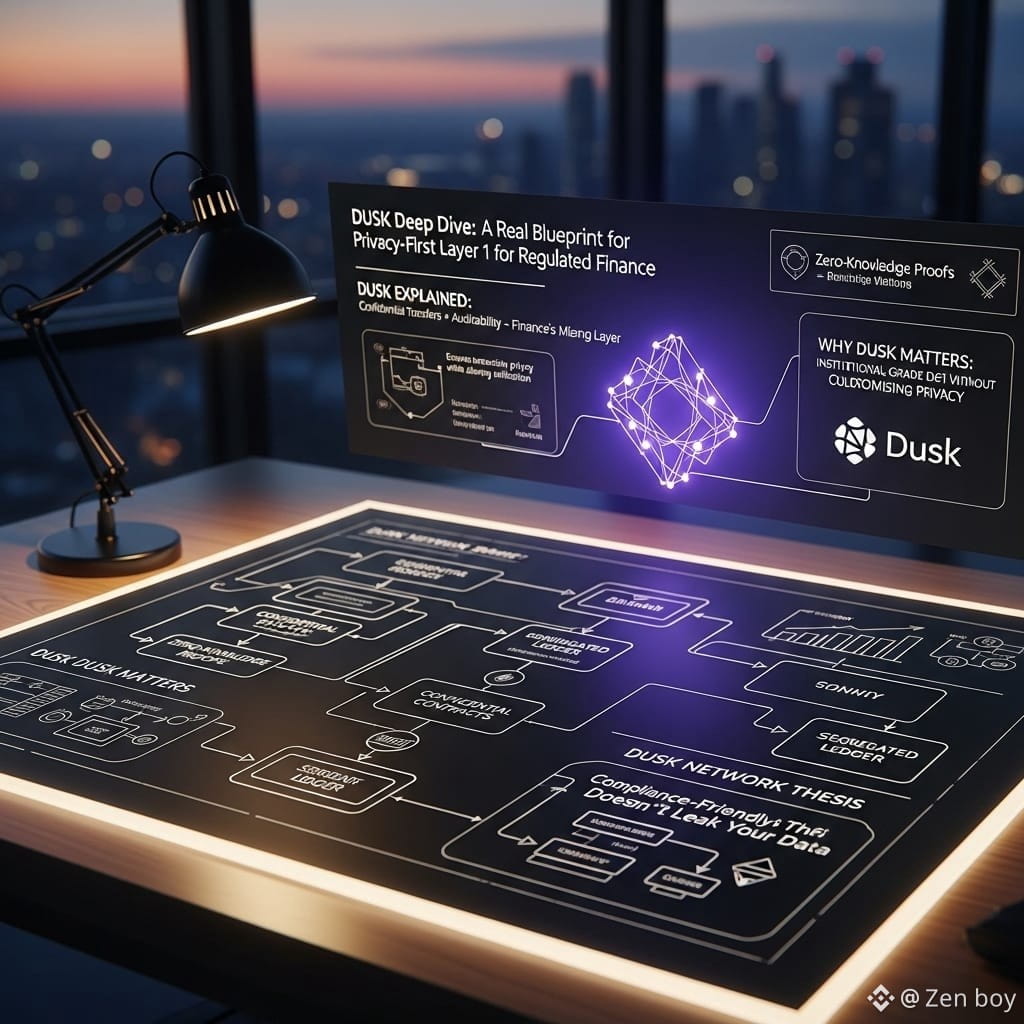
Even the way the network reaches agreement matters. You can talk about privacy and compliance all day, but if settlement is uncertain, nobody serious will treat it like infrastructure. In finance, certainty is safety. Finality is calm. You do not want a system where the ground can shift after you think a transaction is done. Dusk’s consensus direction is framed toward fast finality and reducing the risk of forks, which is exactly the kind of reliability regulated markets quietly demand. It is not the loud kind of innovation, but it is the kind that makes systems usable.
The emotional trigger for me is this. Dusk is trying to protect people from becoming transparent objects. Transparency without control can become cruelty. It can become a weapon. It can create a world where the strongest players watch everyone’s moves and punish them for it. If a chain becomes a permanent archive of every financial decision, that does not automatically create fairness. It can create fear. It can make people hesitate. It can make businesses smaller than they should be. It can make ordinary users feel like they are walking with their pockets turned inside out.
Then there is the token, because every network needs an economic heartbeat. DUSK is used to secure the network through staking and to pay for usage through fees and network activity. That means staking is not only about rewards, it is about responsibility. People who stake are helping the network stay honest and resilient. The emission and reward structure is the system’s way of keeping security participation attractive while the ecosystem grows. But there is a real world truth here too. Tokenomics only feel healthy when real usage grows alongside them. If demand does not grow, inflation feels heavy. If demand does grow, utility and fees can help balance it out. The chain has to earn adoption, not just claim it.
And if you mention an exchange in this context, Binance is enough. Anything else distracts from the main point, which is the infrastructure itself.
So what is the real test for Dusk. It is not whether the concept sounds right. It does. The real test is whether it becomes dependable. Whether developers can build without fighting the tools. Whether privacy holds up under pressure. Whether upgrades do not create uncertainty. Whether institutions can trust the system without feeling like they are stepping into a compliance storm. Whether real applications launch and stay alive.
If Dusk succeeds, it becomes more than another chain. It becomes proof that blockchain can grow up. That we can move value and build markets without forcing everyone to live exposed. That privacy can be normal and lawful at the same time. That the future of finance does not have to be either a locked room or a glass box. It can be a place where trust does not require sacrifice, where you don’t have to choose between being safe and being compliant, and where your financial life can stay yours without breaking the rules of the real world.