

Because “faster” in crypto is a suitcase word. People stuff different things into it—block cadence, confirmation speed, how quickly your swap feels “done,” how the chain behaves when it’s busy—then zip it up and pretend it’s one clean metric. The trick is that you can make almost any chain look heroic if you get to choose what goes inside the suitcase.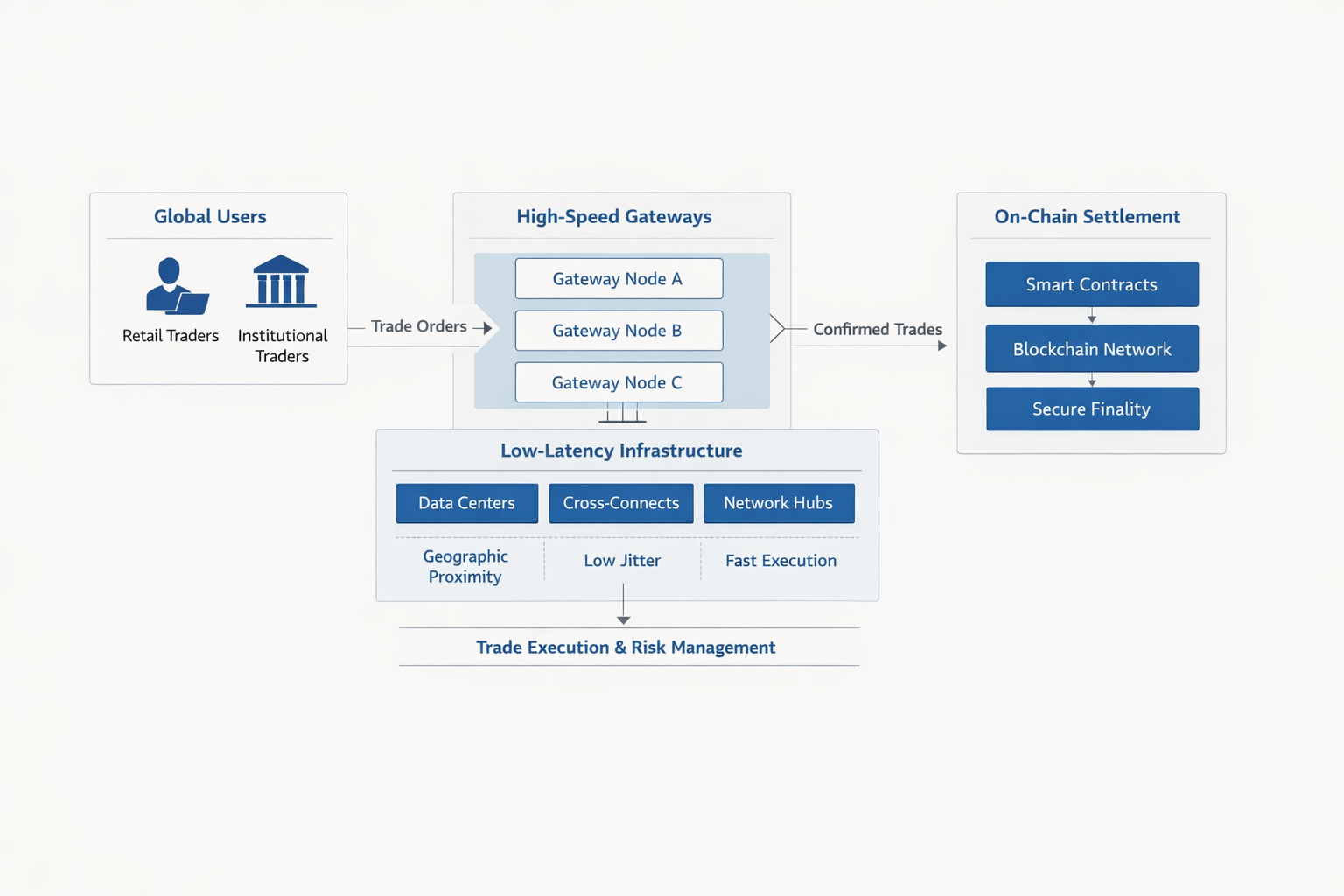
Fogo’s headline number usually shows up alongside another number that’s easier to grab onto: 40 milliseconds. The project and launch coverage repeatedly frame Fogo around “40ms blocks,” and then connect that to the “up to 18x faster” claim.
So, is the claim false?
Not in the simple “they made it up” sense. Fogo really does publicly anchor itself to the idea of extremely short block times, and “up to” gives them room to describe a best-case scenario without promising you’ll live in that best case every day.
But is the claim clean? Is it the kind of comparison you can take literally?
That’s where it starts to wobble.
Solana’s own developer documentation talks about slots (the rhythm at which block production happens) being configured around ~400ms, with some fluctuation. If you do the simple math most readers assume they’re being invited to do—40ms versus 400ms—you get 10x, not 18x.
So how do people end up saying 18x?
There are a few perfectly legal ways to land there without ever writing something technically “wrong.” You can compare to the slower end of Solana’s fluctuation range. You can compare a lab-like target to a real-world average. You can quietly shift the meaning of “faster” from “slot cadence” to “confirmation experience.” Or you can just let the “up to” do its job: it signals a maximum, not a typical outcome.
That’s why the claim spreads so well. It’s not pinned to one measurement method, so it’s hard to pin down and disprove.
The more interesting part is how Fogo is trying to make 40ms plausible in the first place.
Most chains run into a boring, unavoidable limit: distance. Consensus is messages flying between validators, and messages have to travel through fiber across continents. You can write the fastest software in the world and still lose to physics if your key nodes are far apart.
Fogo doesn’t pretend that problem doesn’t exist. It leans into a solution that’s blunt: keep consensus-critical validators close to each other.
In Fogo’s architecture materials, validators are grouped into geographic “zones,” and the ideal version of a zone is described as a single data center—close enough that network latency is tiny and predictable. The whole point is to get consensus messages moving fast enough that sub-100ms blocks aren’t a fantasy.
That’s the part most “18x” quotes don’t mention. Fogo isn’t saying “we beat Solana while playing the same game on the same field.” It’s trying to win by shrinking the field.
And that changes what the comparison really means.
If a chain gets low latency by encouraging co-location and tighter operational constraints, you’re not just comparing software quality. You’re comparing tradeoffs.
It’s like comparing two delivery services where one says, “We’re 10x faster,” and then you realize their drivers only operate inside one neighborhood while the other one covers the entire city. The speed can be real. The comparison can still be misleading.
There’s another reason “40ms blocks” doesn’t automatically translate into “you feel 18x faster.”
Users don’t experience block intervals directly. Users experience:
how quickly their transaction gets picked up,
whether it gets dropped or delayed under load,
how many confirmations they wait before they relax,
whether the infrastructure they’re using (RPCs, relayers, validators) becomes the bottleneck.
A chain can print tiny block intervals and still give you a mediocre experience if the network is congested or the transaction path is messy. That’s why serious Solana infrastructure discussions focus on things like confirmation/commitment behavior, not just slot timing.
And Fogo is early enough that the hardest test—stress, volatility spikes, adversarial traffic—hasn’t had years to write the chain’s real reputation yet.
Even in early mainnet coverage, you can see the gap between “block time” and “what’s actually happening on-chain.” Reporting around launch mentioned 40ms blocks, but also cited throughput numbers for early apps that are solid yet nowhere near the kind of “blow everything away” mental image casual readers attach to the slogan.
So here’s the most human, non-hype answer:
If someone hears “18x faster than Solana” and imagines a simple promise—every action you take will settle eighteen times quicker than it does on Solana, under the same conditions, for everyone worldwide—that’s not a fair interpretation. The claim isn’t defined tightly enough for that, and the underlying design choices (zones, co-location, operational constraints) mean it’s not an apples-to-apples race anyway.
If you interpret the claim the way the fine print wants you to—in the best case, with a topology designed around low-latency zones, we can run block intervals far shorter than Solana’s nominal slot cadence—then it’s not inherently false. It’s just narrower than the slogan sounds.
What would actually settle this, in a way that’s worth trusting?
Not more tweets. Not more multipliers.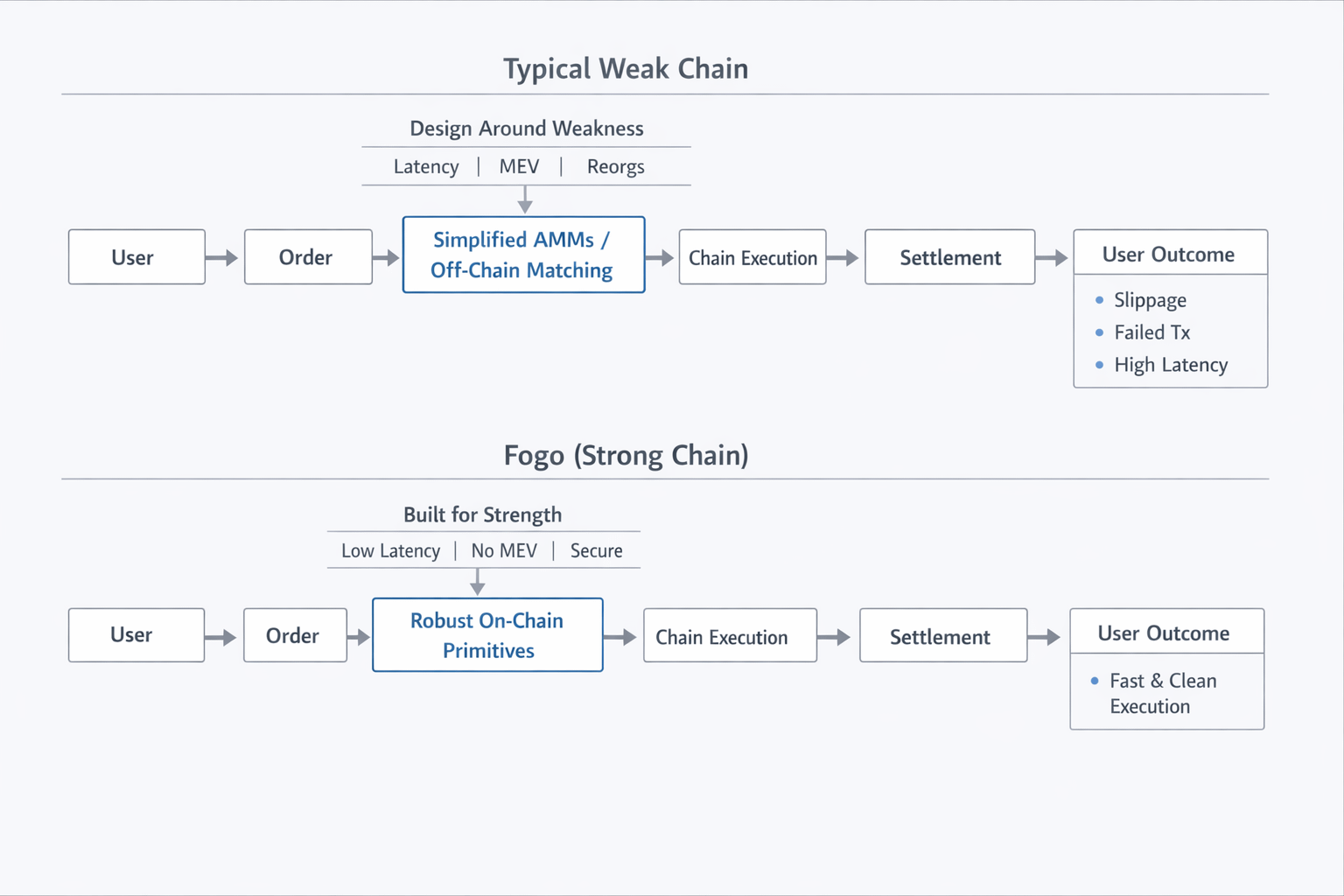
You’d want to see real, boring evidence over time: does Fogo keep those low block intervals during heavy usage? Does inclusion latency stay tight when blocks fill up? Are reorgs rare and clearly communicated? Do zones expand in a way that doesn’t quietly turn “decentralization” into a small club of co-located operators?