

As of mid-February 2026, the global economy continues to show resilience amid a mix of supportive and challenging forces. Growth remains steady, driven by technology investments, fiscal policies, and private sector adaptability, even as trade tensions and geopolitical uncertainties persist. In this environment, traditional safe-haven assets like gold and innovative digital alternatives like cryptocurrencies are attracting renewed attention as potential hedges and growth opportunities.
- The Global Economic Landscape in 2026
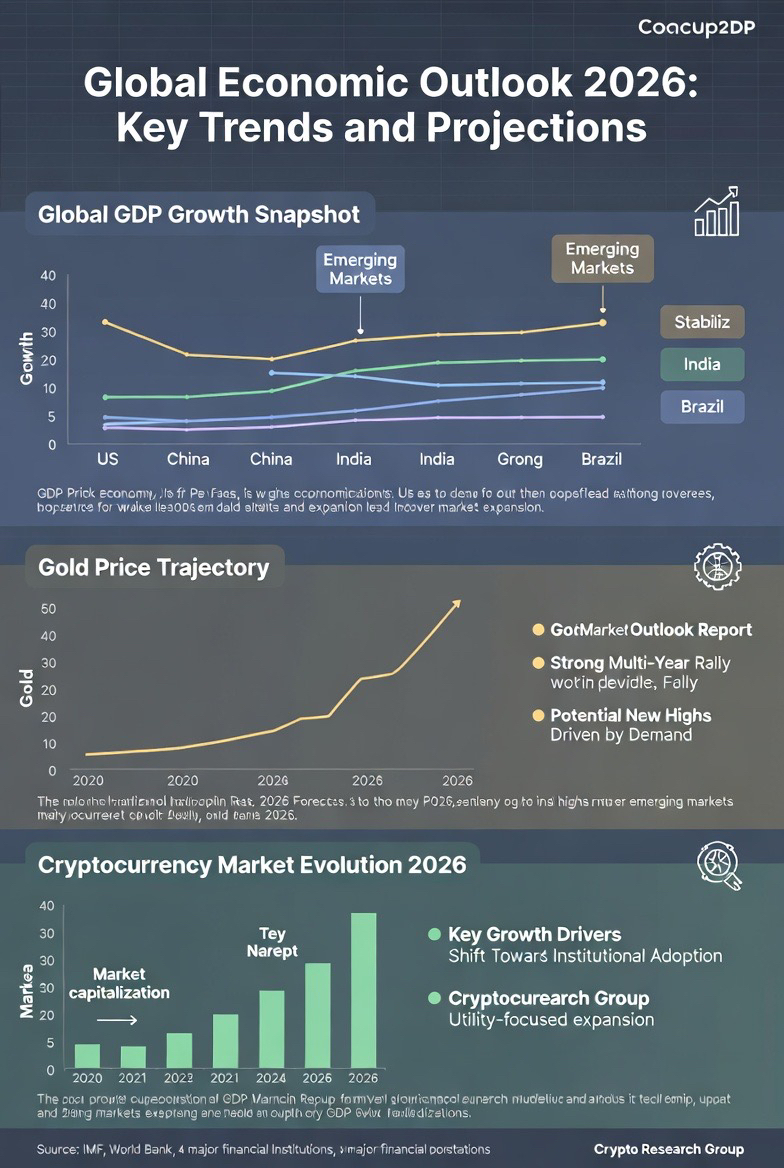
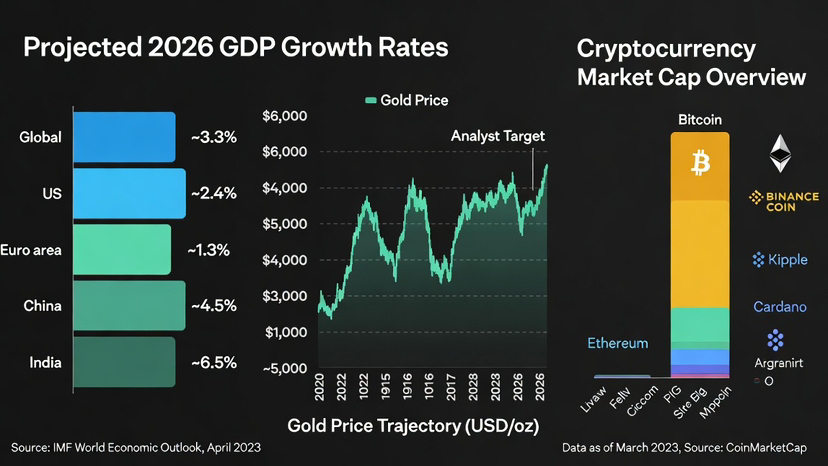
Global growth is projected at around 3.3% for 2026, with a slight upward revision from earlier estimates, reflecting balanced influences from AI-driven productivity gains and accommodative conditions offsetting policy headwinds. Inflation is expected to ease gradually, though progress varies by region, with the United States seeing a slower return to target levels.
Advanced economies are forecasted to expand at about 1.8%, with the US leading at roughly 2.4% thanks to fiscal support and technology momentum. The euro area holds steady around 1.3%, while Japan moderates to 0.7%. Emerging markets provide stronger momentum: China at approximately 4.2–4.8%, and India leading major economies with 6.2–6.9% growth fueled by consumption, exports, and infrastructure.
Overall, the outlook points to sturdy but uneven expansion, with downside risks from potential reevaluations of tech expectations, escalating trade barriers, or geopolitical flare-ups. Policymakers face the task of rebuilding fiscal buffers while fostering sustainable progress.
- The Future of Gold: Enduring Appeal as a Safe Haven
Gold has maintained its status as a reliable store of value, with prices hovering near $4,900–$5,000 per ounce in February 2026 after significant gains in prior periods. Analysts remain broadly bullish, with median forecasts around $4,700–$5,000 for the year on average, and some projections pushing toward $5,000–$6,000 or higher by year-end in optimistic scenarios.
Key drivers include ongoing central bank purchases for reserve diversification, investor demand amid uncertainty, and gold's role in hedging inflation and currency risks. Structural factors like limited supply and sustained inflows into related investment vehicles support upward pressure, even if short-term volatility arises from dollar movements or rate expectations.
In a world of divergent growth paths and persistent risks, gold's timeless qualities position it well for continued relevance, particularly if economic stability wavers.
- The Future of Cryptocurrencies: From Speculation to Institutional Integration
Cryptocurrencies are transitioning toward greater maturity in 2026, with Bitcoin and the broader market showing signs of consolidation after volatility. Institutional adoption, clearer regulations in key jurisdictions, and technological advancements are fueling optimism for a constructive year.
Many observers expect Bitcoin to potentially set new highs, breaking traditional cycle patterns, with some forecasts ranging from $75,000 to over $200,000 depending on macro conditions and demand. Broader trends point to expanded stablecoin usage, growth in tokenized real-world assets, and rising volumes in prediction markets and derivatives.
While challenges like economic slowdowns or liquidity shifts could introduce corrections, the convergence of crypto with traditional finance—via ETFs and mainstream infrastructure—suggests increasing diversification potential and utility in digital economies.
- How Gold and Crypto Fit into the Broader Picture
In today's landscape, gold offers tangible stability during periods of uncertainty, while cryptocurrencies provide exposure to digital innovation and potentially higher returns. Both assets can serve complementary roles in diversified portfolios—gold for preservation, crypto for participation in emerging tech-driven growth.
Shared influences like regulatory developments, geopolitical stability, and interest rate paths will likely affect their performance, occasionally leading to correlated movements in turbulent times.
Outlook: Balancing Caution with Opportunity
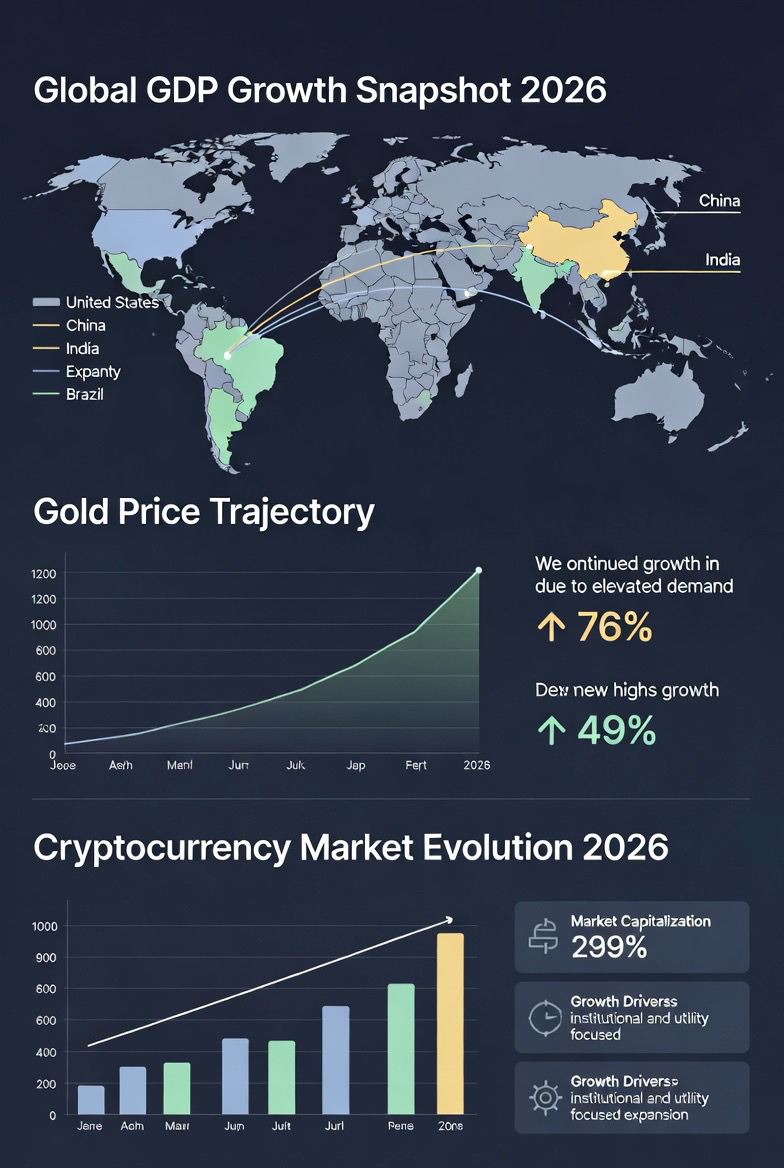
The 2026 global economy appears poised for moderate, resilient expansion, supported by innovation even as risks linger. Gold is set to benefit from its enduring safe-haven status, with prices likely remaining elevated, while cryptocurrencies could see deeper mainstream integration and renewed momentum.
Investors should approach both with a focus on diversification, staying attuned to macroeconomic shifts and policy changes. In this dynamic environment, blending traditional reliability with forward-looking innovation remains a prudent strategy for navigating uncertainty.