


My first transaction on Vanar went perfectly. That’s what made me suspicious.
I clicked confirm expecting the usual anxiety. Would the gas spike? Would it hang? Would I get some cryptic error about RPC timeouts or nonce conflicts?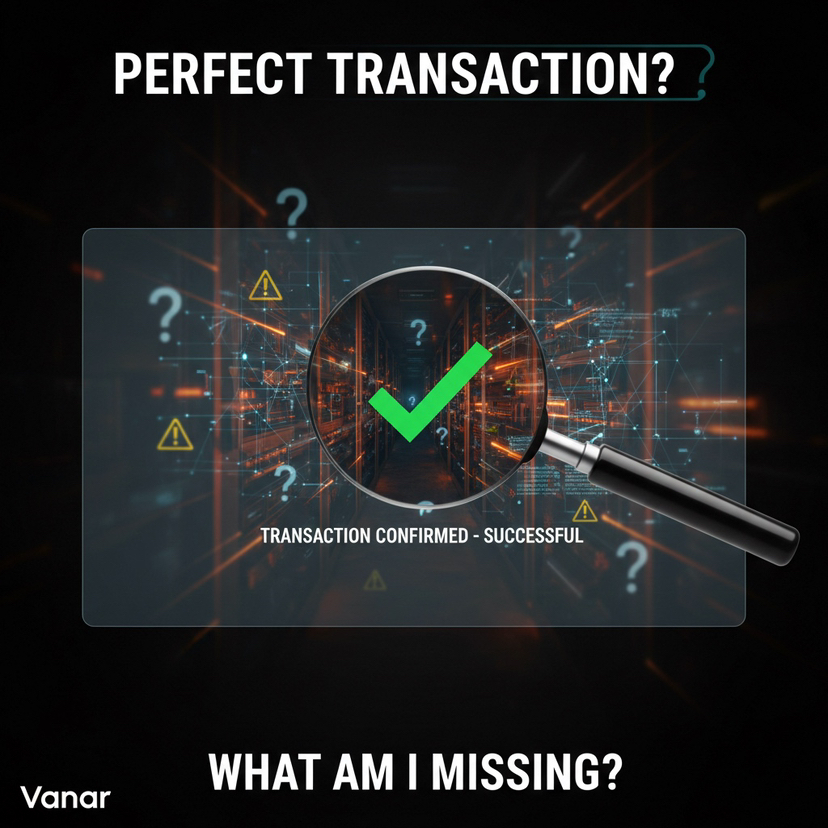
None of that happened. The transaction just went through. Fee matched the estimate. Confirmation came exactly when expected. Smooth as glass.
And my immediate reaction wasn’t relief. It was doubt.
Perfect Is Usually a Red Flag
I’ve tested enough blockchains to know that perfect first impressions are often misleading.
Sometimes things feel flawless simply because nobody else is using the network yet. No congestion means no competition for block space. No stress on infrastructure. Everything works beautifully until actual users show up.
Sometimes you’re being quietly routed through premium infrastructure. High-end RPC endpoints, over-provisioned nodes, maybe middleware catching errors before you see them. The experience feels great but it’s not representative of what most users will encounter.
Sometimes the chain is just too young for the pathological cases to have emerged. The weird contract interactions. The failure modes that only trigger under specific conditions. The bugs hiding in code paths that haven’t been exercised yet.
I spent three days after that first transaction trying to figure out which category Vanar fell into.
Breaking Down What Actually Happened
I needed to understand what “predictable” actually meant in technical terms.
Was it fee stability? Were the fees just low enough that variance didn’t matter, or was there something actively stabilizing them?
Was it confirmation consistency? Were blocks coming at regular intervals, or was I just getting lucky with timing?
Was it the absence of failures? Or was the system designed to fail gracefully in ways I couldn’t see?
The more I dug, the more I realized the smoothness came from something specific. Vanar is a Geth fork running standard EVM. That architectural choice eliminates entire categories of friction.
Why Geth Forks Feel Different
I’ve deployed the same contract to seven different chains in the past year. The Geth-based ones always feel calmer.
Transaction lifecycle is familiar. Wallet behavior matches your mental model. Gas estimation doesn’t do weird things. The tooling ecosystem just works without configuration hell.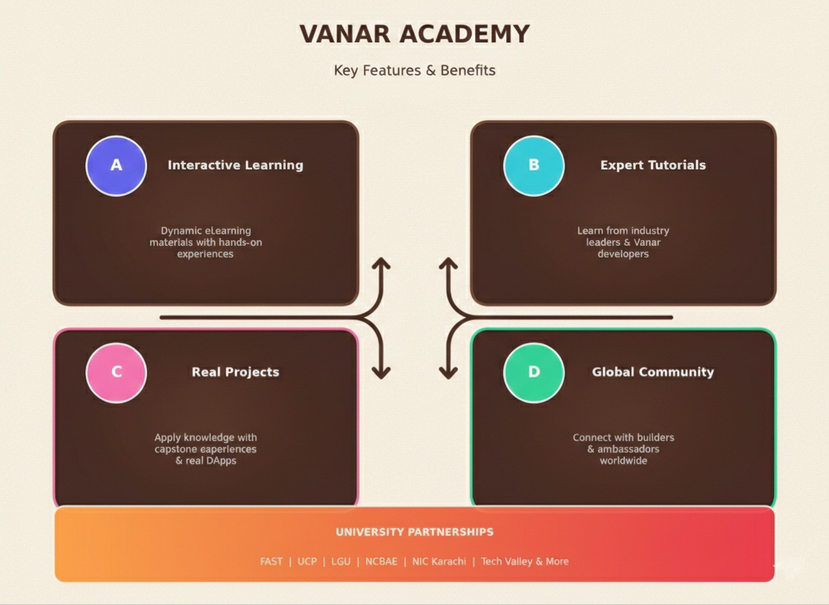
When you’re on a custom VM or novel architecture, you’re constantly discovering new failure modes. Gas costs that don’t make sense. Tools that partially work. Documentation that’s six months out of date.
Geth has been hammered by Ethereum mainnet for years. The edge cases are known. The bugs have been found. The behavior is documented.
But here’s what worried me about Vanar being a Geth fork. It’s not a one-time decision. It’s an ongoing maintenance commitment.
The Maintenance Trap
Ethereum’s Geth client changes constantly. Security patches land every few weeks. Performance improvements arrive. Breaking changes happen.
If Vanar stays close to upstream, they get those improvements automatically but risk regressions in their custom modifications. If they diverge significantly, they have to manually backport security fixes while maintaining compatibility.
I’ve watched multiple EVM-compatible chains struggle with this exact tension. They fork Geth, make custom changes, then slowly fall behind on upstream patches because merging becomes too risky or too expensive.
Two years later they’re running ancient code with known vulnerabilities because the cost of upgrading is too high.
That’s where “predictable” can quietly rot away. Not because anyone made a bad decision, but because sustained engineering discipline is genuinely difficult.
The Fee Question I Couldn’t Answer
The fee stability bothered me for a different reason.
Users love predictable fees. I love predictable fees. But as someone trying to decide whether to hold this token, I need to understand what’s creating that stability.
Are fees low because the chain is empty? That’s temporary.
Are fees low because of aggressive parameter tuning? That might not scale.
Are fees low because infrastructure is subsidizing costs through token emissions or centralization? That changes the whole investment thesis.
I spent an hour trying to find documentation on Vanar’s fee mechanism and came up mostly empty. Marketing materials talk about low costs. Technical docs don’t explain the actual economic model.
That gap makes me nervous.
Where the Real Innovation Might Be
The parts of Vanar that actually interest me are Neutron and Kayon. The data handling and reasoning layers.
Not because I think every chain needs AI features. But because data-heavy applications are where most chains break down, and if Vanar actually solved that problem it would be significant.
But I can’t tell if they solved it or just moved it.
When I read about Neutron compressing and restructuring data for on-chain storage, I have basic questions I can’t answer. Is it storing full data? Is it storing compressed representations? Is it storing proofs with availability elsewhere?
Those are three completely different architectures with different security properties, cost models, and failure modes.
I tried to find technical specs. Found mostly marketing language about capabilities without implementation details.
For an engineer evaluating whether to build on this, or an investor evaluating long-term viability, that’s a problem.
The Reasoning Layer Concern
Kayon is described as a reasoning layer. Which sounds useful until you think about what “reasoning” actually means.
If it’s just convenient indexing and analytics, fine. That’s a nice feature. But it’s not a moat and it’s not particularly hard to replicate.
If it’s something deeper, something that makes trust decisions or classification decisions, then I care intensely about correctness guarantees.
I’ve seen AI-adjacent tools in crypto before. They work great in demos. Then someone discovers the system confidently provided wrong information about a contract balance or misclassified transaction intent, and suddenly nobody trusts it for anything important.
Trust in that kind of system doesn’t erode gradually. It breaks instantly.
What Needs to Happen Next
That first perfect transaction moved my evaluation from “does this work?” to “what exactly is creating this consistency?”
I need to see how Vanar behaves when usage ramps. Not just higher transaction count. Different types of usage that stress different parts of the system.
I need to see how they handle upgrades. Do they stay current with upstream Geth patches? Do they test thoroughly? Do they have rollback procedures when things break?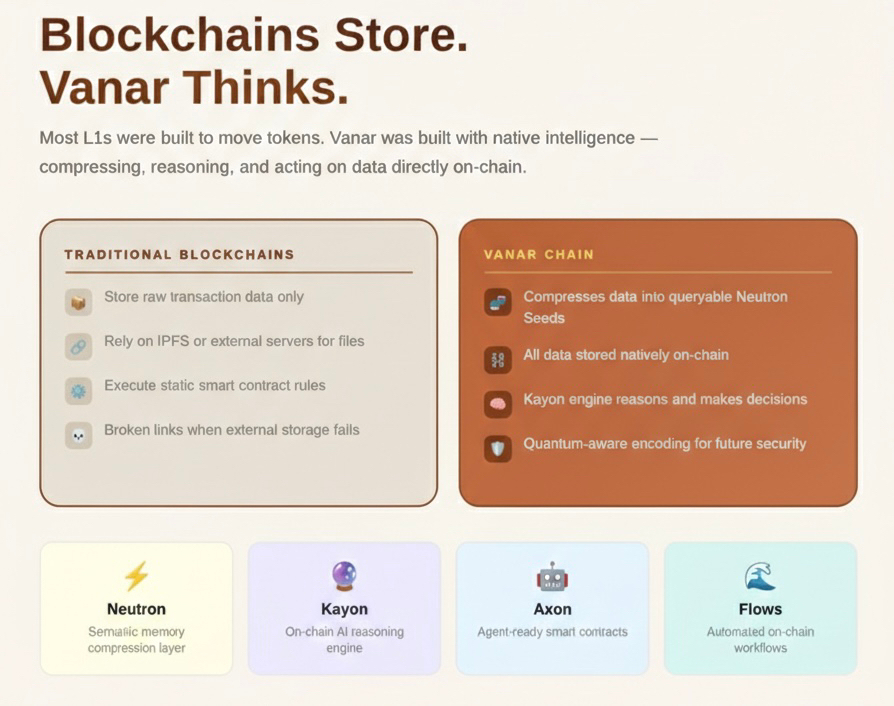
I need to see independent infrastructure. Are third-party RPC providers getting the same smooth experience, or is the performance localized to official endpoints?
I need to see how the system responds to spam and adversarial behavior. Theory is easy. Implementation under attack is what matters.
And I need to see whether that predictable feeling persists when the chain has to make hard choices between user experience and validator economics. That tension exists on every chain. How you resolve it reveals everything.
Why I’m Not Buying Yet
So here’s where I landed after a week of digging.
That smooth first transaction proved Vanar has technical competence. The infrastructure works. The integration is clean. The basics are solid.
But smooth basics are table stakes, not a differentiated product.
What I don’t know yet is whether the smoothness survives real conditions. Whether the Geth fork stays maintained properly. Whether the fee model works at scale. Whether the data layers are actually innovative or just repackaged standard features.
I’m not skeptical because I found problems. I’m skeptical because I didn’t find problems, and in early-stage blockchain infrastructure, not finding problems usually means you haven’t looked in the right places yet.
The machinery under the hood might be excellent. Or it might be adequate infrastructure that hasn’t been tested properly. The only way to know is to watch what happens when things get messy.
Right now Vanar is interesting enough to watch closely. Not interesting enough to bet on yet.