
For a long time crypto builders obsessed over one thing: transactions per second or TPS. The higher the number the louder the bragging. Every chain wanted to show off massive throughput, as if scaling alone would decide who wins in the end.
But things are changing.
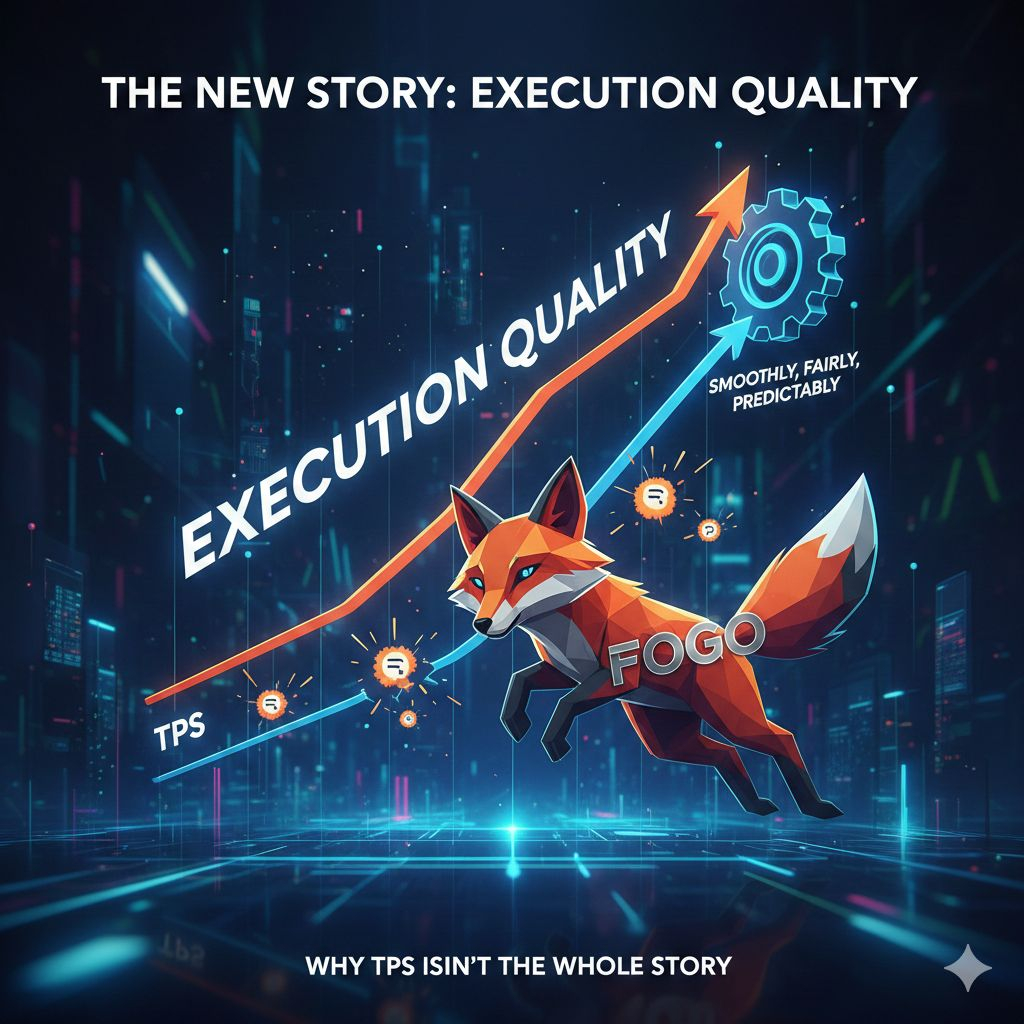
The crypto world’s growing up, and now people care about something else: execution quality. It’s not just about blasting through a ton of transactions. What really matters is how smoothly, fairly, and predictably those transactions actually get done.
That’s the new story, and Fogo’s jumping right into the middle of it.
Why TPS Isn’t the Whole Story
TPS is easy to measure, easy to hype, and honestly, it’s what everyone talked about for years. But it doesn’t tell you what traders or big investors actually want.
Just because a network claims sky high throughput doesn’t mean you get:
Low slippage
Consistent and predictable transaction ordering
Little to no MEV (maximal extractable value) abuse
Stable performance when things get busy
Fast, reliable finality
You can have a chain with impressive numbers on paper, but if trading gets sketchy the moment things heat up, what’s the point?
DeFi’s getting more complicated now. We’ve got order books, perpetual futures, prediction markets, arbitrage bots all stuff that needs way more than just raw speed. So the question’s shifting from “How many transactions can you handle?” to “How well do you handle them?”
What Execution Quality Actually Means
In traditional finance, execution quality is all about how close your trade lands to the best price, with as little delay and hidden cost as possible.
In crypto it’s similar but with a few twists:
Low latency you want trades confirmed fast
Deterministic ordering transactions happen in a predictable order
Minimal slippage prices match up cleanly
MEV protection stop extractive, sneaky behavior
Solid performance under pressure no falling apart when things get wild
Execution quality is about real outcomes, not just numbers for a pitch deck. As more serious money comes in, outcomes start to matter a lot more than theoretical limits.
Why the Shift Is Happening Now
1. Institutions Are Here
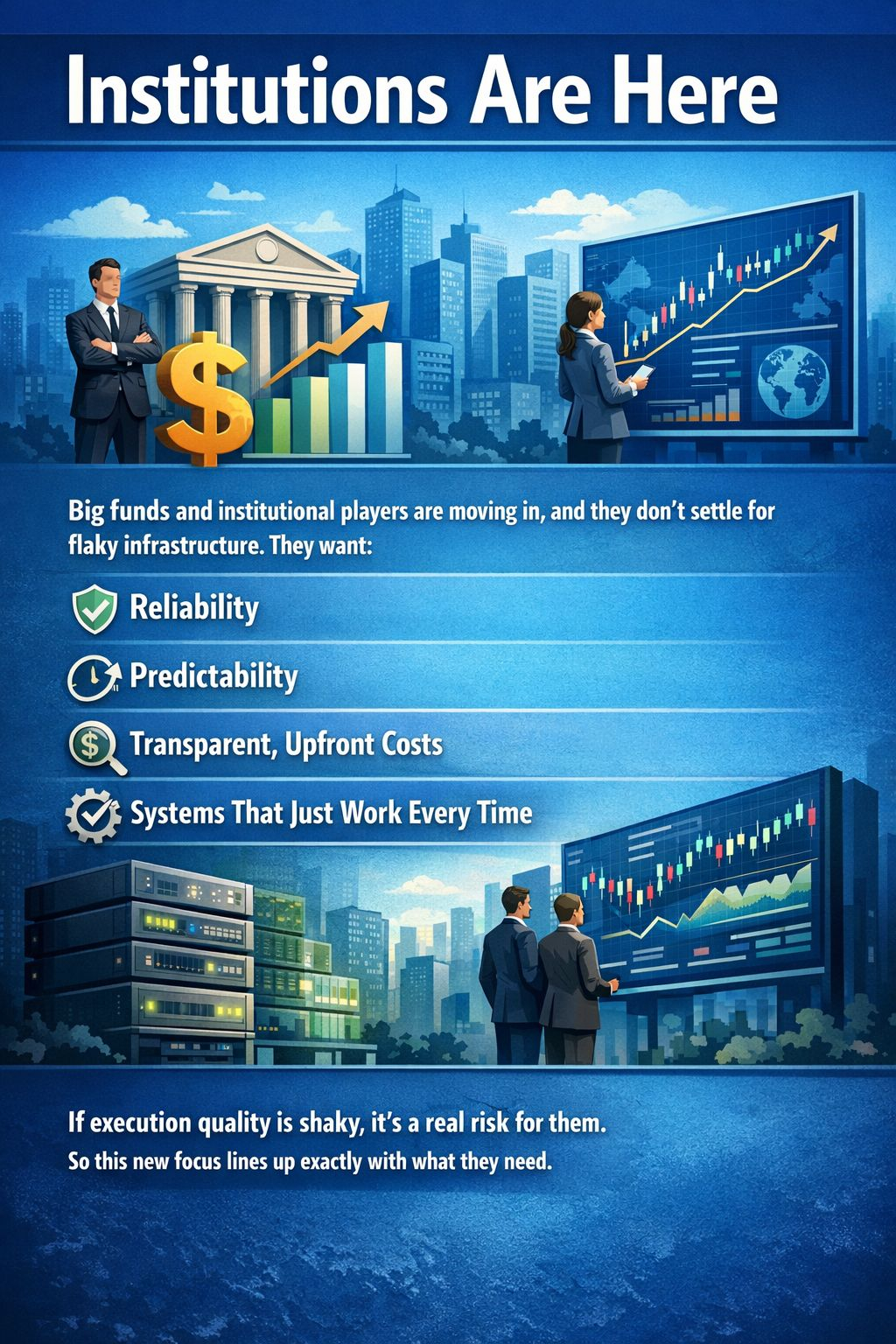
Big funds and institutional players are moving in, and they don’t settle for flaky infrastructure. They want:
Reliability
Predictability
Transparent, upfront costs
Systems that just work every time
If execution quality is shaky, it’s a real risk for them. So this new focus lines up exactly with what they need.
2. On-Chain Trading Isn’t a Toy Anymore
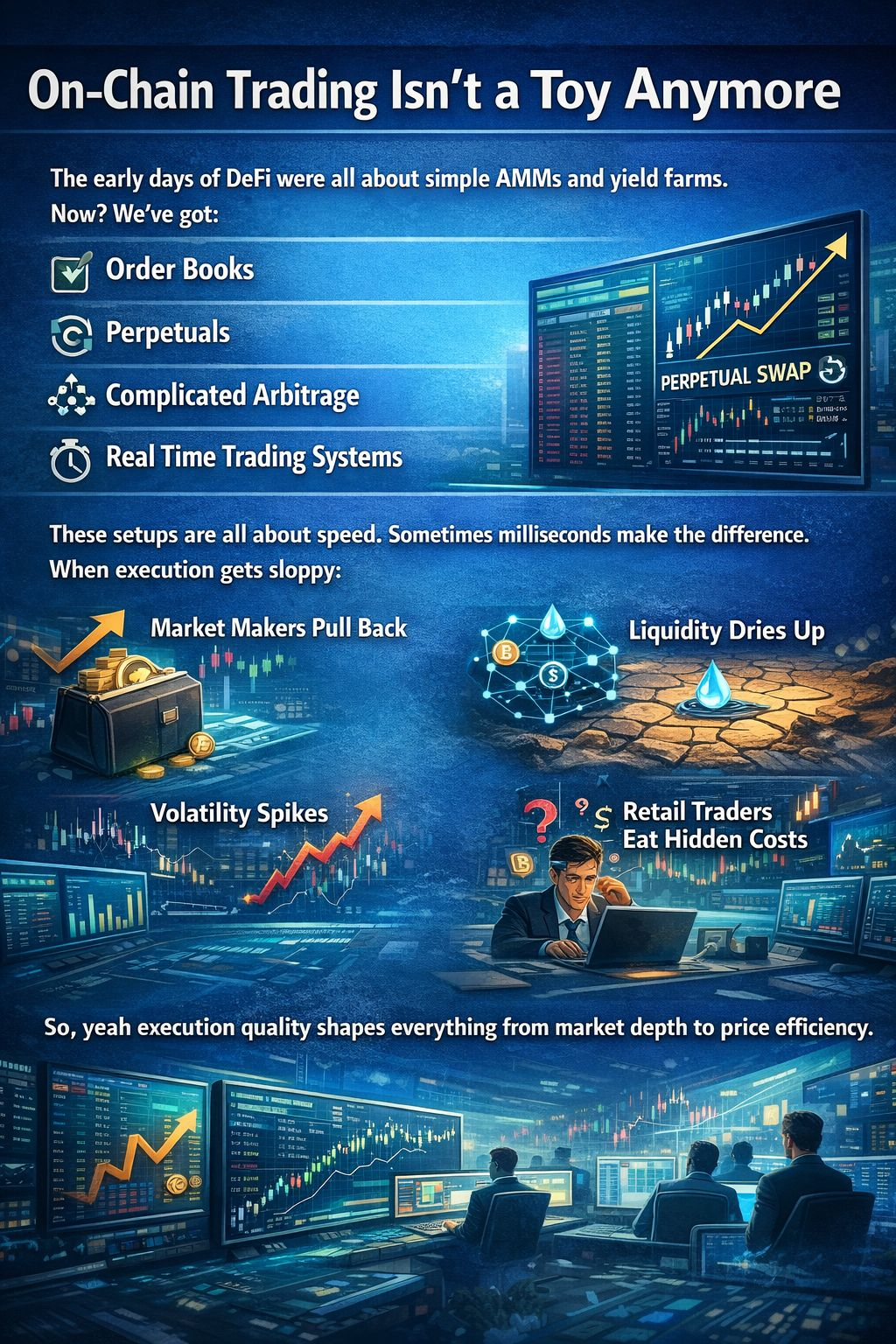
The early days of DeFi were all about simple AMMs and yield farms. Now? We’ve got:
Order books
Perpetuals
Complicated arbitrage
Real time trading systems
These setups are all about speed. Sometimes milliseconds make the difference. When execution gets sloppy
Market makers pull back
Liquidity dries up
Volatility spikes
Retail traders eat hidden costs
So, yeah execution quality shapes everything from market depth to price efficiency.
3. MEV Pulled Back the Curtain
MEV (maximal extractable value) exposed real flaws. Validators can mess with transaction order, front-running or sandwiching regular users. That kills trust and buries extra costs in every trade.
Now, users expect networks to keep MEV in check without breaking incentives. As people wise up, they’re less willing to put up with extractive environments. Fairness is turning into a selling point.
From Scale to Precision
First, crypto was all about experimenting with decentralization. Then, it became a race to scale up. Now, it’s about precision executing trades cleanly predictably & efficiently.
Look at traditional exchanges. They compete on speed, fairness, and uptime not how many trades they could theoretically handle per second.
Crypto’s finally moving in that direction.
High Performance Chains Set the Tone
Chains like Solana proved blockchains could hit serious scale without endlessly stacking rollups. They brought in parallel execution and went all-in on performance. That shook up old assumptions.
But scale alone isn’t enough. Now it’s about dialing in latency, tightening up validator networking, and making transaction order predictable.

That’s exactly where Fogo comes in.
Fogo’s All-In on Execution
Fogo isn’t trying to do everything for everyone. It’s laser focused on trading performance.
The chain’s design is all about:
Super low latency
Strict performance driven validator standards
Built for trading use cases
Making capital work efficiently
Instead of just cranking up validator numbers Fogo seems to care more about having top tier validators and tight networking a lot like how traditional exchanges think.
