
I have been going through the fees documentation and transaction ordering specifications at @Vanarchain in the last few days. Not the marketing pages and the protocol-level design options. The unintuitive conclusion: there is no cost feature of fixed gas fees. They represent a decision in the market structure with second order implications on the behavior of builders, the exposure of MEV, and the demand of tokens.
Predictability
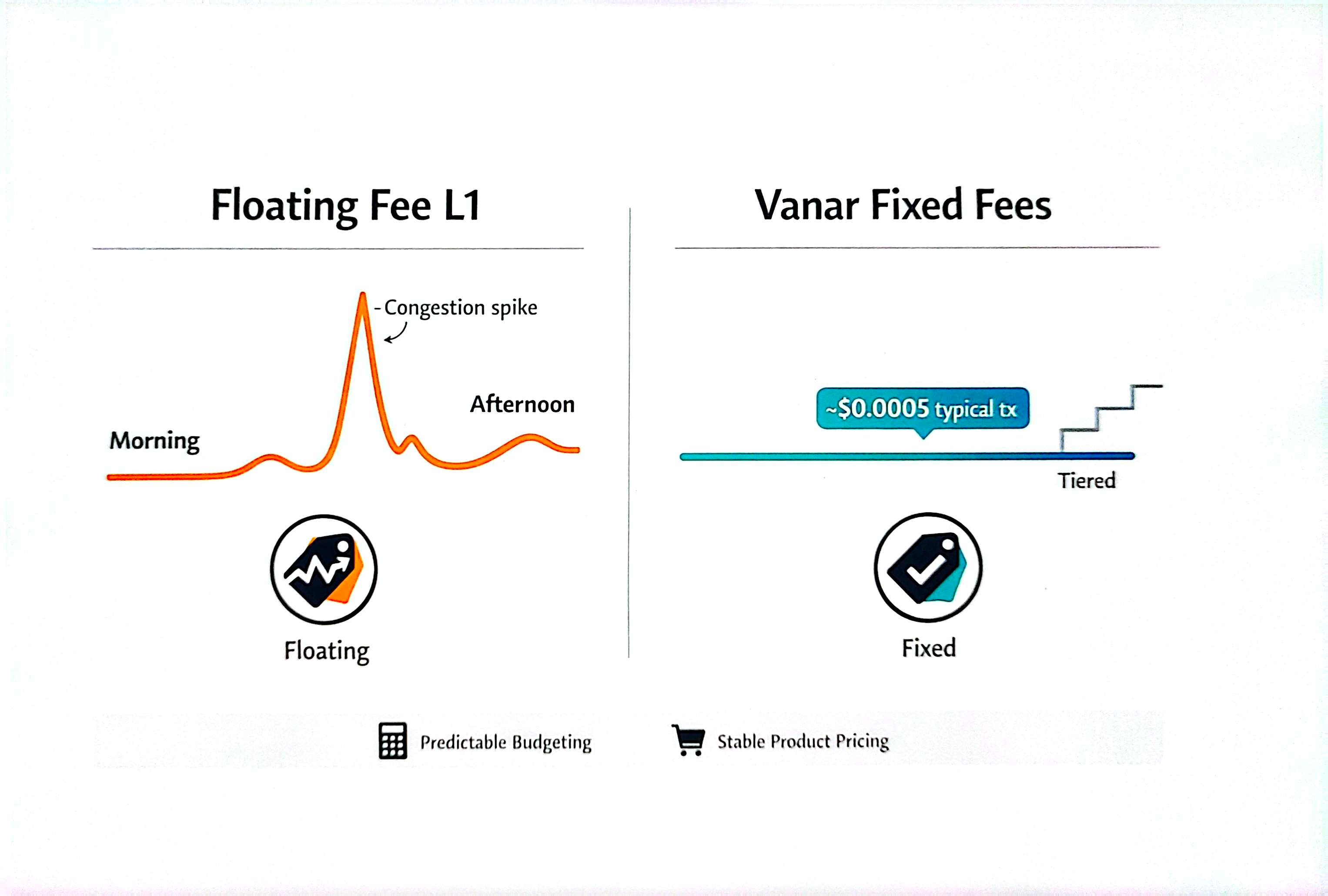
Gas prices are floating with demand on most of the L1 chains. A transaction that would cost one a dollar in the morning would cost a fifteen in the afternoon due to a congestion event. Builders either take this volatility or transfer them to users. Neither option works well.
Vanar charges on a tiered basis. Such common functions as swaps and NFT minting are said to cost approximately 0.0005. The rate remains constant irrespective of the demand in the network. The advantage: constructors determine the pricing of products once. Users are aware of the price before they are inked. The sacrifice: Vanar sacrifices fee markets as a congestion indication. In times of traffic surges, the chain shifts the traffic load at the same rate rather than to a rationing system, or by charging more.
Ordering
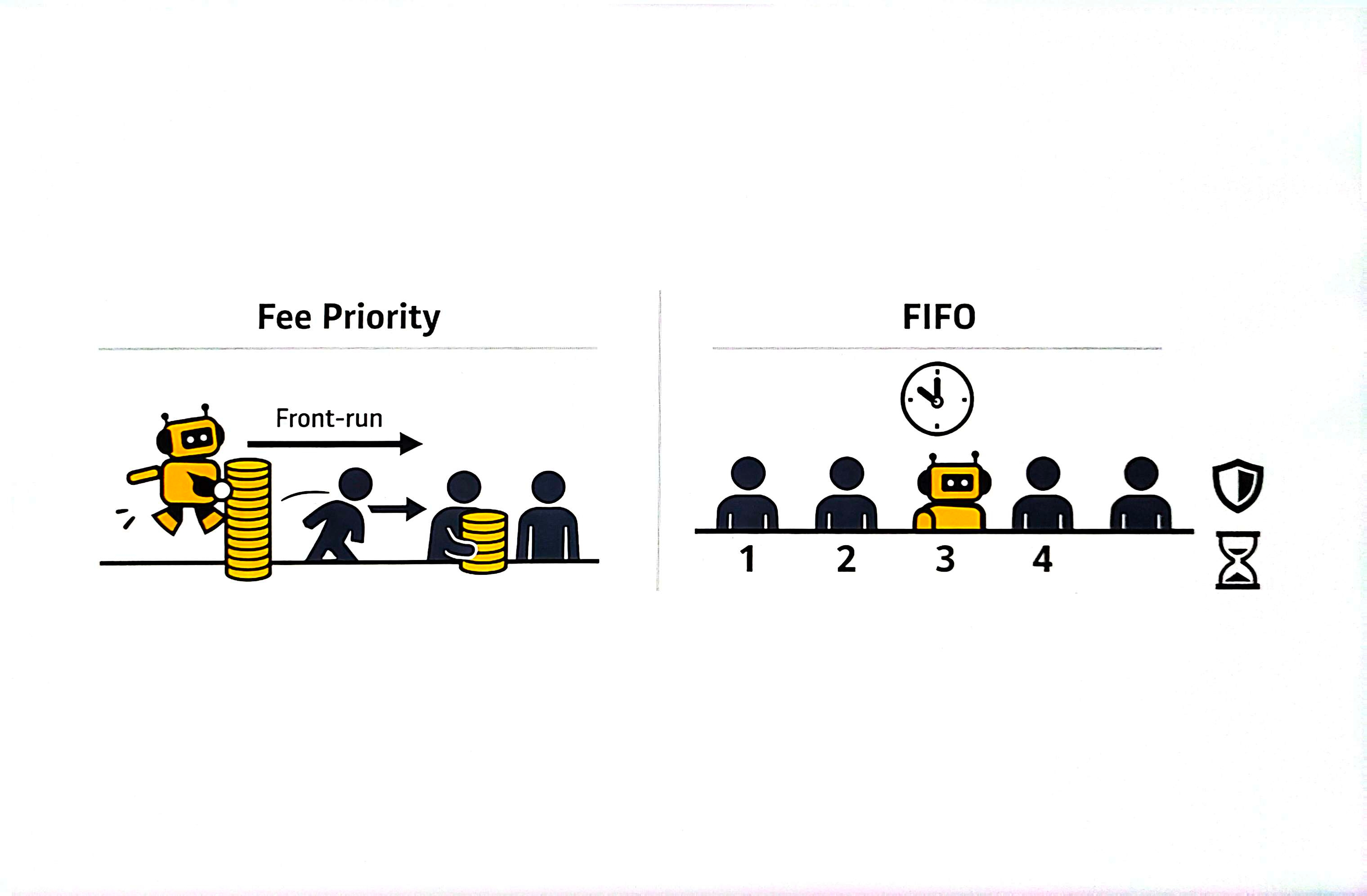
Majority of the chains are based on the most gas-paying customer. Bots front-run users at a premium fee. The MEV extractors cash in on the ordering. Values to regular users vanish each time they make a swap without understanding the reasons.
Vanar operates on a First-In-First-Out. Transactions are done in arrival order and not in who paid more. The advantage is that the front-running is made structurally difficult. The sacrifice is the there is no fast lane. In the peak times all people wait equally. Liquidations that are time sensitive lose their time advantage.
Burning
It is at that point that the use of $VANRY tokenomics can be associated with the reality of use. VANRY is billed as gas charges per transaction. But there is the second demand layer. Neutron and Kayon are the artificial intelligence tools created by Vanar and they require VANRY to gain access to the premium. An alleged the portion of AI subscription revenue has bought back VANRY in the open market and permanently burns it.
The strength is that token demand is related to product adoption, but not unnatural schedules. The tradeoff is, it is all conditional with the adoption of AI. The burn rate will be low and under-delivering, in the event that the growth of myNeutron subscriptions is the rate of growth is slow.
Tensions
Price signals are not safeguarded by spam as there are fixed fees. Tiered pricing is one way of solving this issue, but a more advanced attacker flooding blocks with mid-tier transactions will still destabilize the network. FIFO eliminates only one MEV but not all. Delay-based strategies with bots submitting milliseconds prior to the user continuing to work in case of delay variations in a node. Subscription funded burns only scale. Pressure is made by ten thousand subscribers. One hundred do not.
Measuring
Also measure average and peak gas price at peak operating periods. It is a report-out of the violation of FIFO at the site and equity in making of order-making complaints that are communal. VANRY was decreasing in monitor AI subscriptions/circ. supply. new members of myNeutron quarterly that are active subscribers. Track discrete smart contracts Deployments Track discrete smart contracts are deployed monthly which is a sign of confidence on the part of the developer. Competitiveness Vanar DEXs and other chains experience slipping.
Coherence
#Vanar is more predictable than is price-based rationing. A system comprising of fixed charges, fair orderings and burns depending on the number of times used yield a system in which builder costs remain constant, users receive fair execution, and the quantity of tokens a given number issued becomes limited to actual demand. These are the mechanisms that give more reward to high adoption and less reward to low adoption as compared to the floating-fee models. The structure is compounded against the ecosystem when it is developed.