I’ve stopped trusting the word “fast” the moment it shows up in a Layer-1 pitch. Not because speed doesn’t matter, but because most of the time it’s treated like a paint job: glossy numbers on the outside, familiar bottlenecks underneath. What makes Fogo interesting is that it reads less like a brochure and more like an operations plan—especially if you come at it from the mindset of someone who has watched markets punish delay, not in theory, but in lived P&L.
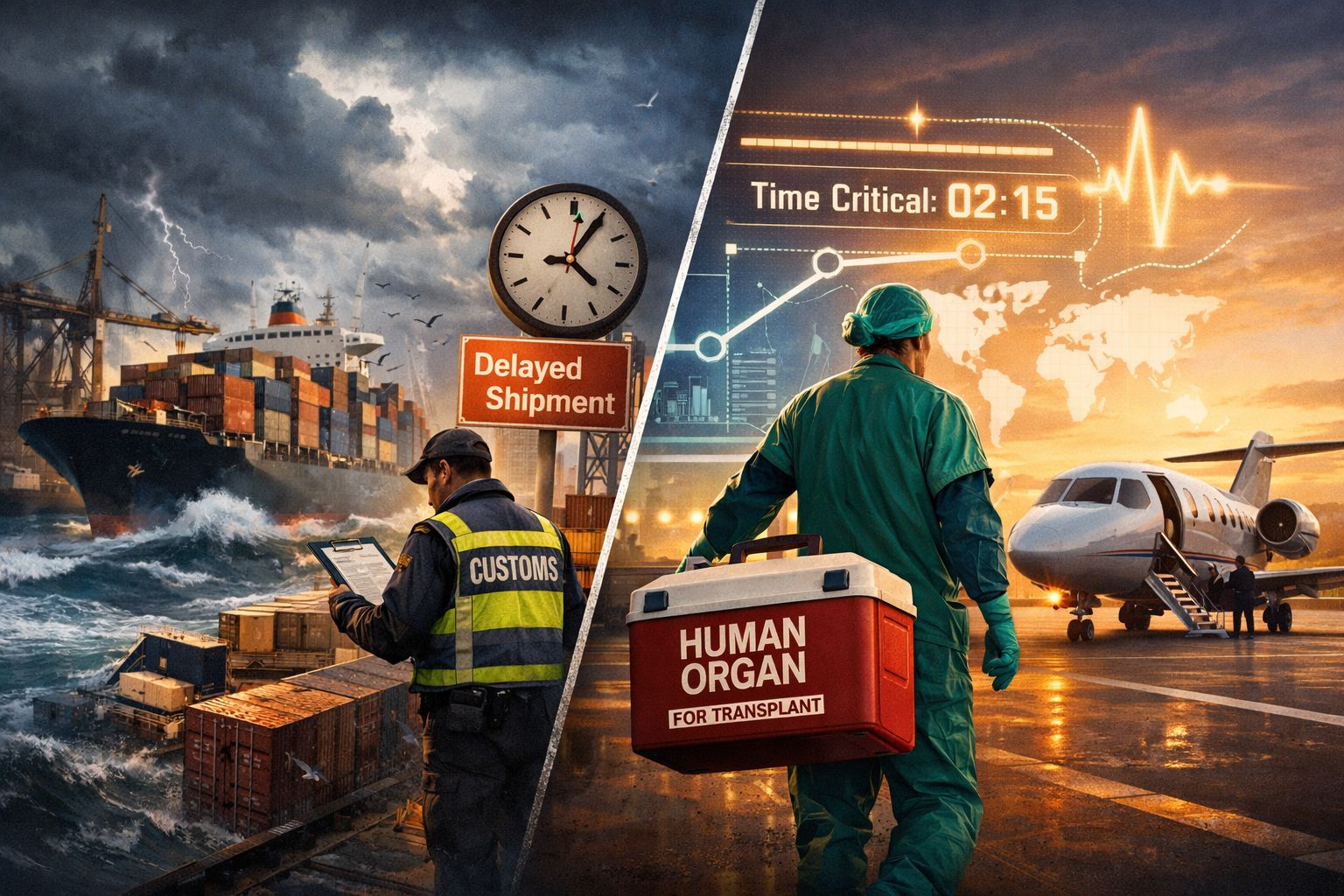
Here’s the analogy that kept returning while I dug through coverage: most blockchains feel like international shipping—containers moving between far-flung ports, with schedules and “average transit times” that hide the messy truth of storms, customs, and missed connections. Fogo feels closer to a specialized organ-transplant courier system: fewer hubs, stricter routing, a bias toward predictability over romance. The point isn’t to brag that a plane is fast; it’s to make sure the organ arrives within a narrow window, every time.
A big part of that mindset comes from where Fogo sits in the stack. It’s built around the Solana Virtual Machine, which means it’s not asking developers to abandon familiar runtime assumptions or tooling the way a totally new VM might. Third-party explainers repeatedly frame this as compatibility first: keep the execution environment recognizable so effort goes into applications rather than relearning the world. That choice alone isn’t a personality—plenty of networks can claim “compatible”—but it sets up the more unusual bet: coordination design.
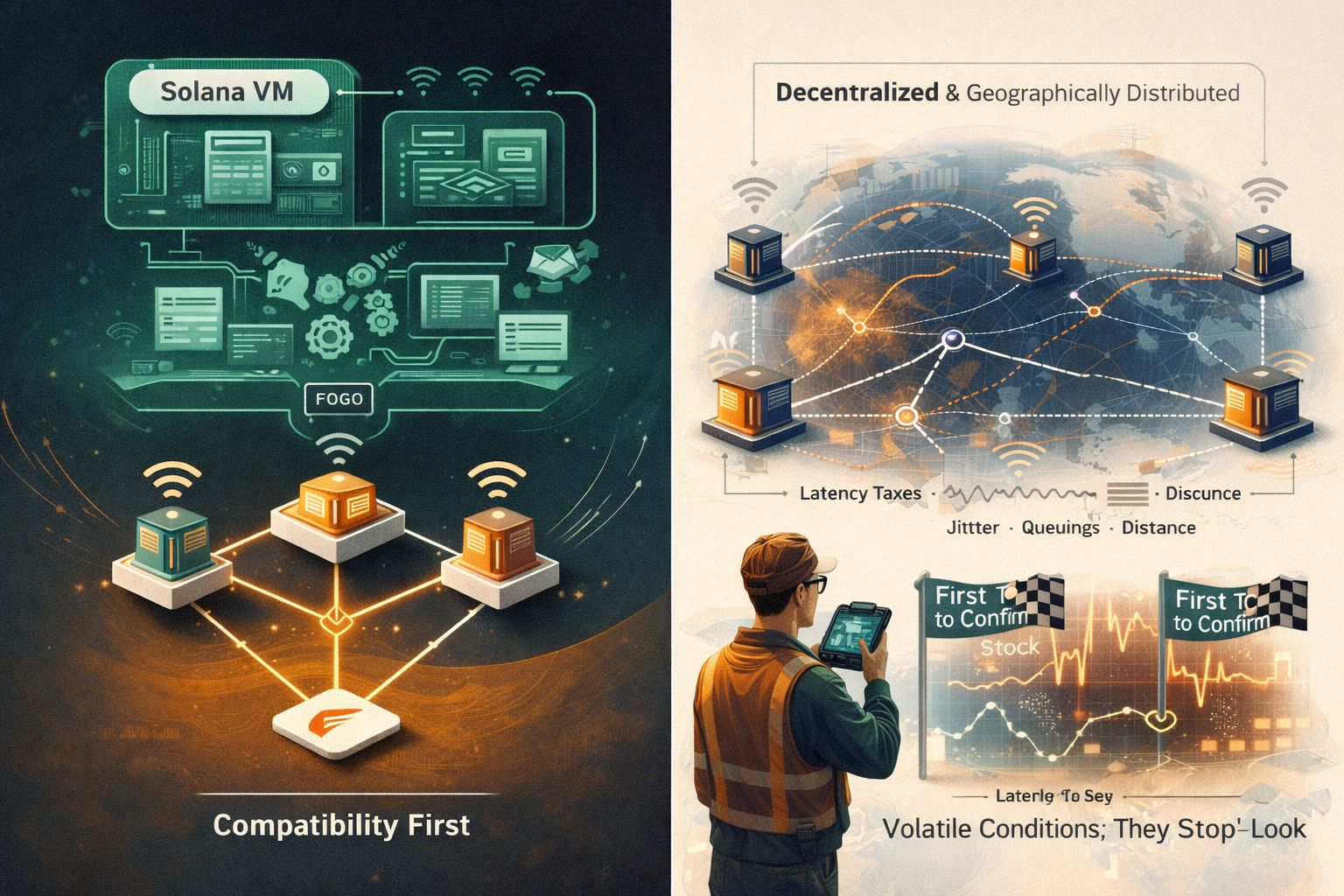
Most chains implicitly accept a tradeoff: decentralize geographically, then live with the physics tax. Signals don’t teleport; they queue, jitter, and take scenic routes through the real internet. In calm conditions, those delays can look small. In volatile conditions, they stop looking small and start looking like a market structure problem—because the difference between “I saw it first” and “I confirmed it first” is where edge lives
Fogo’s answer, as described across multiple recent deep dives, is to focus less on “maximum throughput everywhere” and more on reducing latency variability by being deliberate about where the active validator set operates at a given time—using zone-based operation rather than a permanently global spread. In plain terms: instead of pretending a worldwide choir can always sing on beat, you sometimes put the choir in the same room so the harmony is tight, then you rotate rooms with planning rather than chaos. That doesn’t eliminate tradeoffs—nothing does—but it makes the tradeoff explicit, engineered, and measurable: optimize for consistent execution timing, which is what traders actually feel.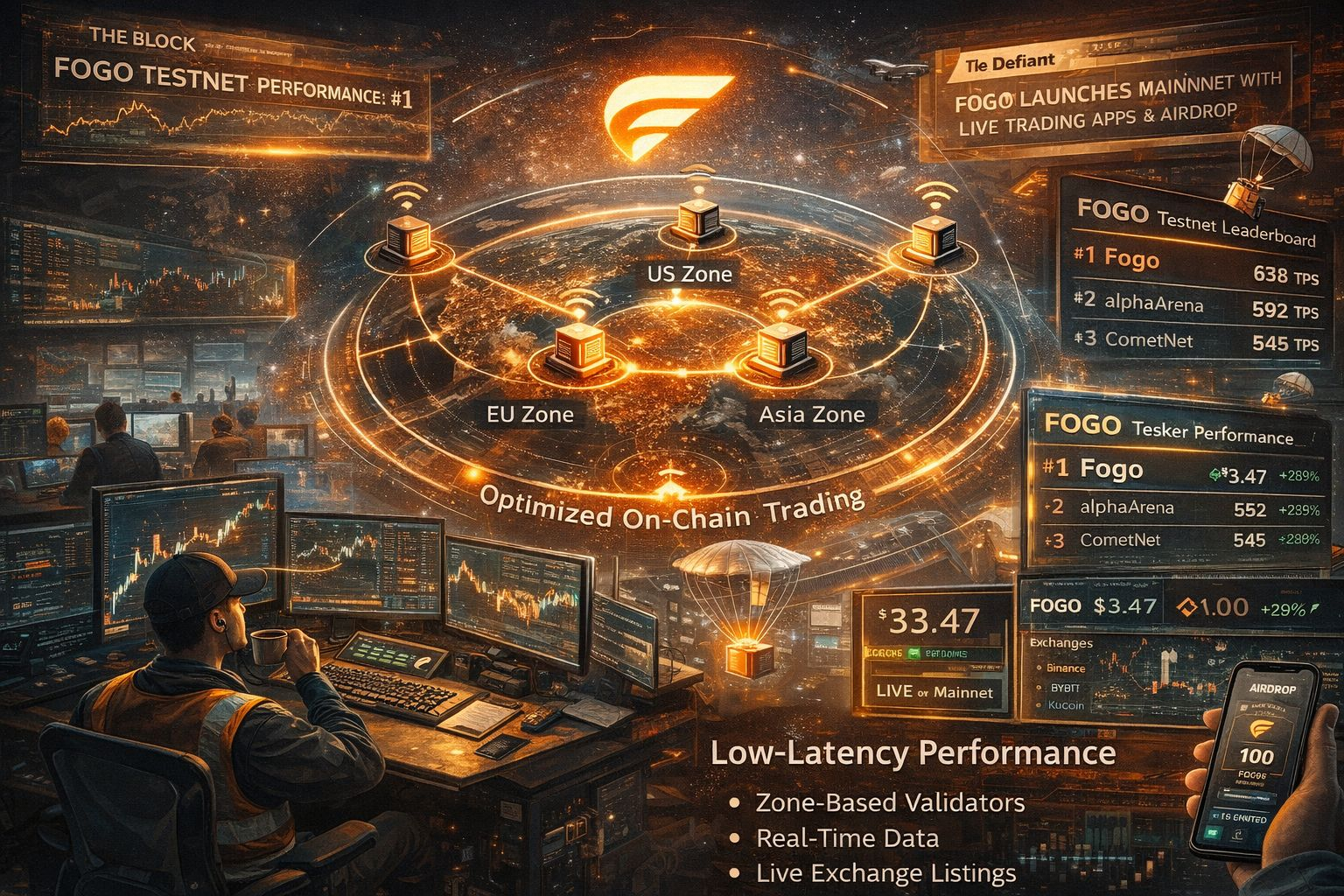
This is also why so much writing around Fogo keeps returning to trading as the “native” workload. Not “trading” as a vibe, but trading as an environment where microstructure matters: bursts of message traffic, adversarial ordering games, and sudden surges where a chain’s behavior under stress is more revealing than its behavior in a lab. The Block’s reporting around launch framed the project as explicitly targeting onchain trading and highlighted how its testnet performance was being tracked on public leaderboards prior to mainnet. The Defiant, covering the same period, emphasized that mainnet arrived with live apps, exchange listings, and an airdrop—signals that the team cared about “day one” market reality rather than a long, quiet runway.
On the timeline, the public narrative tightened quickly in mid-January 2026. Different outlets place the mainnet/TGE window slightly differently—some put it on January 13, 2026, while others reported January 15, 2026—so the safest reading is that the network’s public mainnet rollout and token events landed in that mid-January window, with reporting variance depending on what each outlet counted as the “go-live” moment. That’s not just trivia: if you’re evaluating a chain built for time-sensitive users, you learn to respect exact definitions of “live,” “public,” and “available,” because markets punish fuzzy language.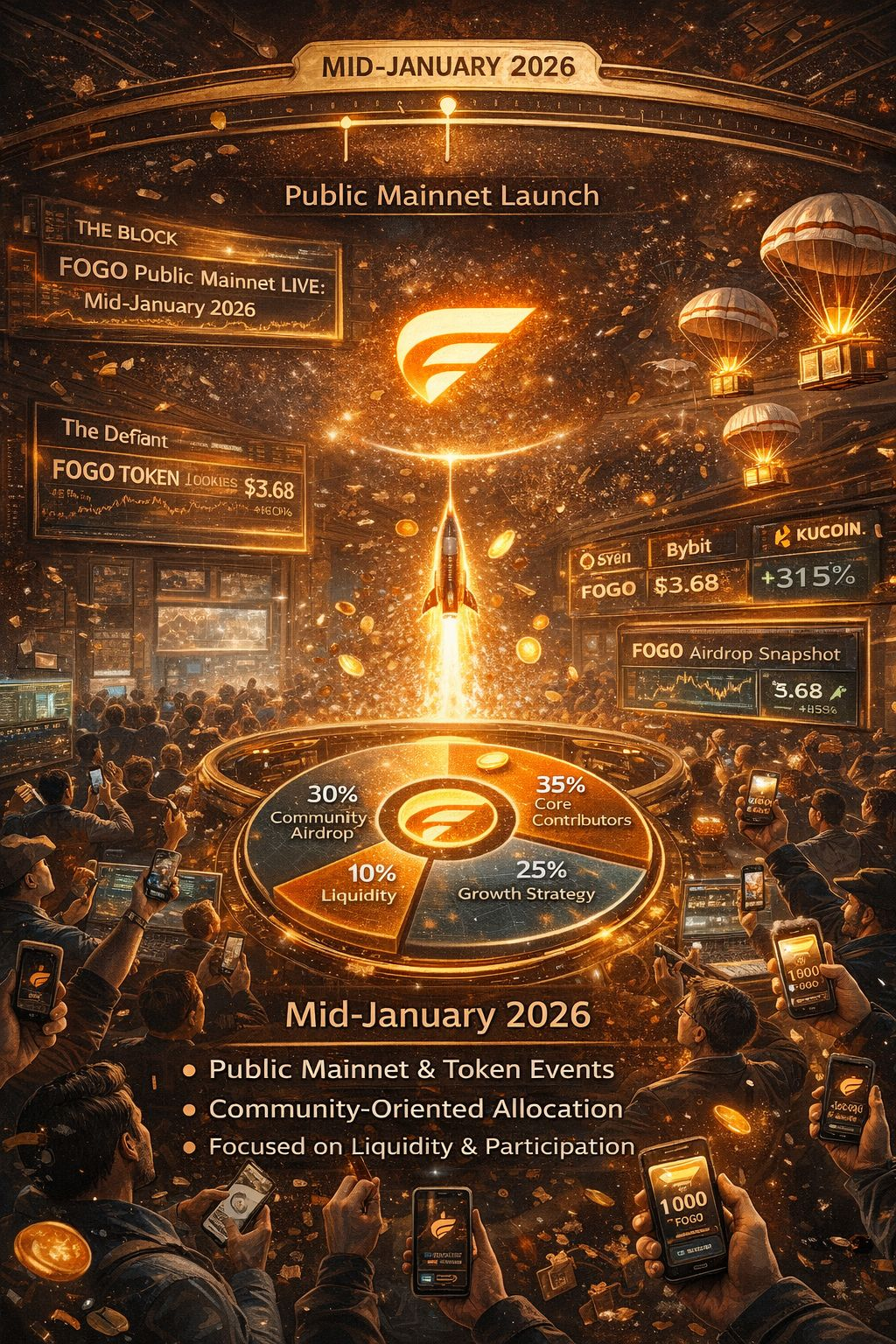
There’s also a distribution story that, regardless of how you feel about token politics, is at least specific. Recent coverage has focused on the project’s decision to redirect value that would typically be captured by early buyers into community-oriented allocation mechanisms, including an airdrop snapshot tied to the launch window. You don’t have to treat that as morality; you can treat it as incentives engineering. If you want liquidity and real usage early, you can’t only recruit spectators—you need participants who can actually touch the system and care about it enough to stress it.
What I find most grounding, though, is the way Fogo’s design choices implicitly admit something many chains avoid saying out loud: “speed” is not a single number. There’s raw execution, yes, but there’s also the felt experience of execution—how consistent the system is when the crowd shows up, whether confirmations wobble when volatility hits, whether the chain behaves like a steady heartbeat or like a strobe light. The recent exchange-education style pieces (including those published in late January and early February 2026) keep circling the same theme: the target is not only low latency, but low variance in latency, because variance is what turns a strategy into a coin flip.
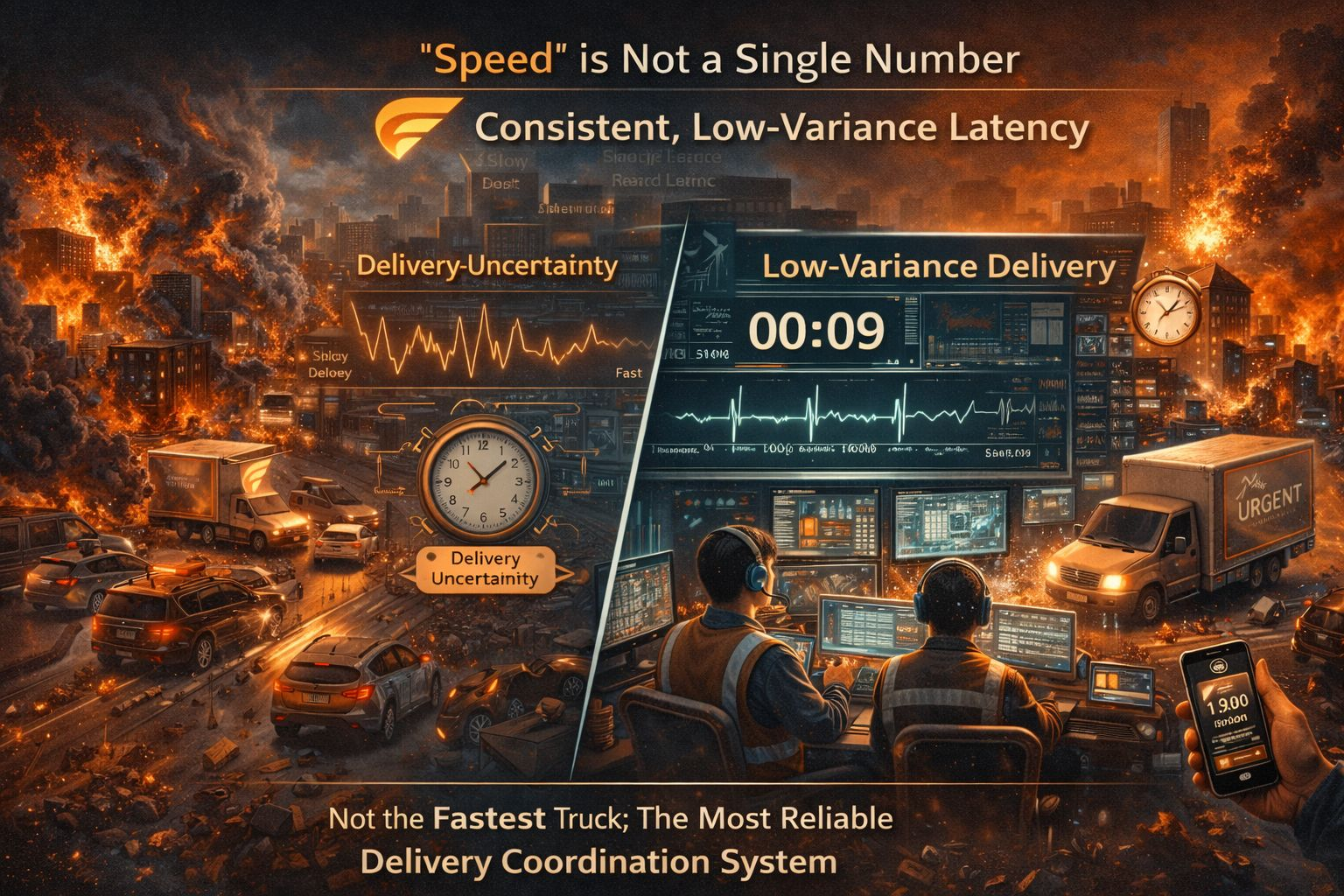
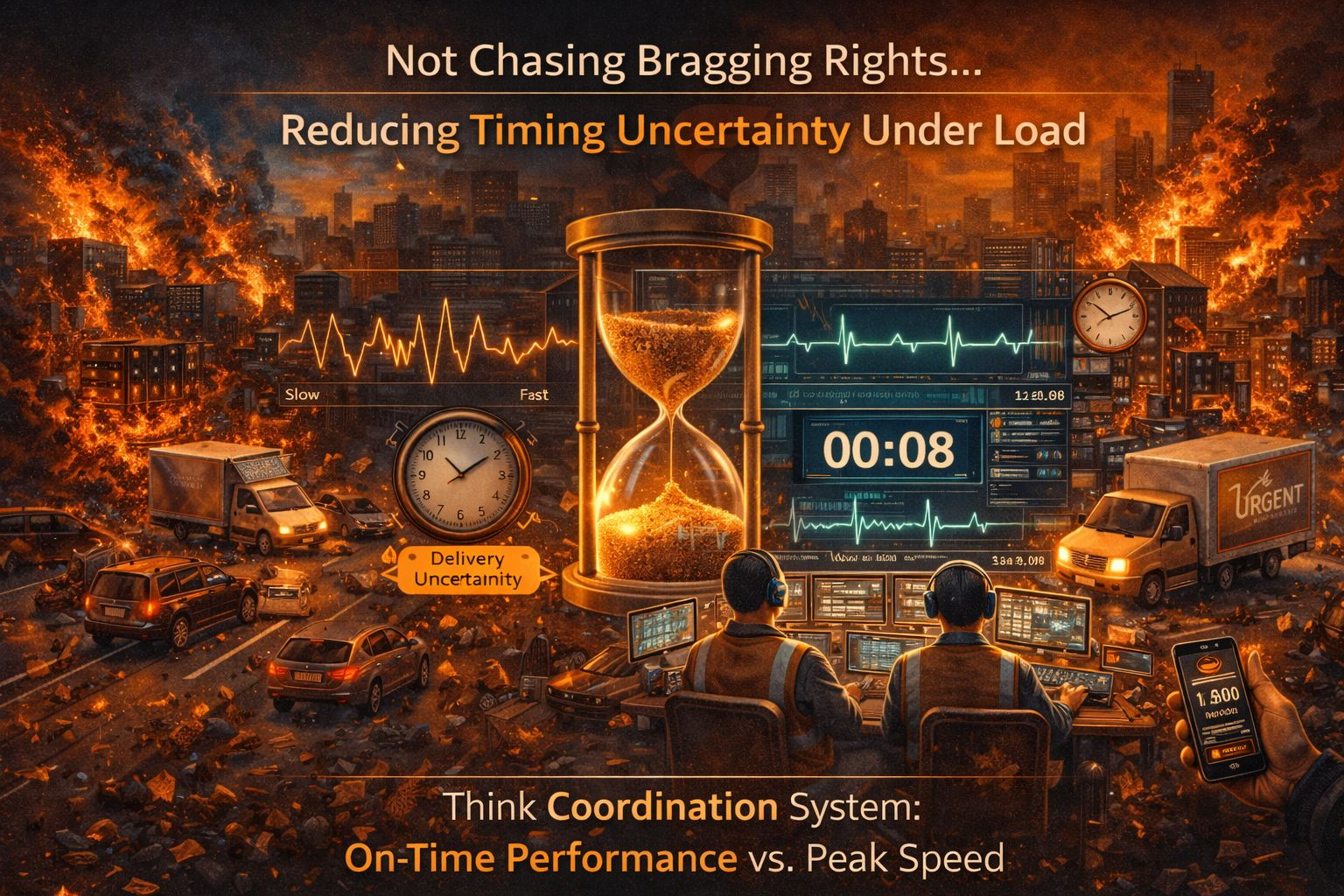
If you want one mental model to carry forward, it’s this: Fogo isn’t trying to be the fastest truck on an infinite highway; it’s trying to be the dispatch system that makes sure the delivery arrives inside a narrow time window even when the city is on fire.
Fogo is most compelling when you judge it as a coordination system built to reduce timing uncertainty under load, not as a chain chasing bragging rights.@Fogo Official $FOGO #fogo