
#StrategyBTCPurchase #USACryptoTrends #WriteToEarnOnBinanceSquare

$ETH BeInCrypto
CryptoRank
US Iran War Could Start Anytime: Will Bitcoin $BTC Crash to $50K?
Oil War Risk Premium Surges as US-Iran Tensions Escalate – Rabobank Warns of Market Volatility
Yesterday
Today
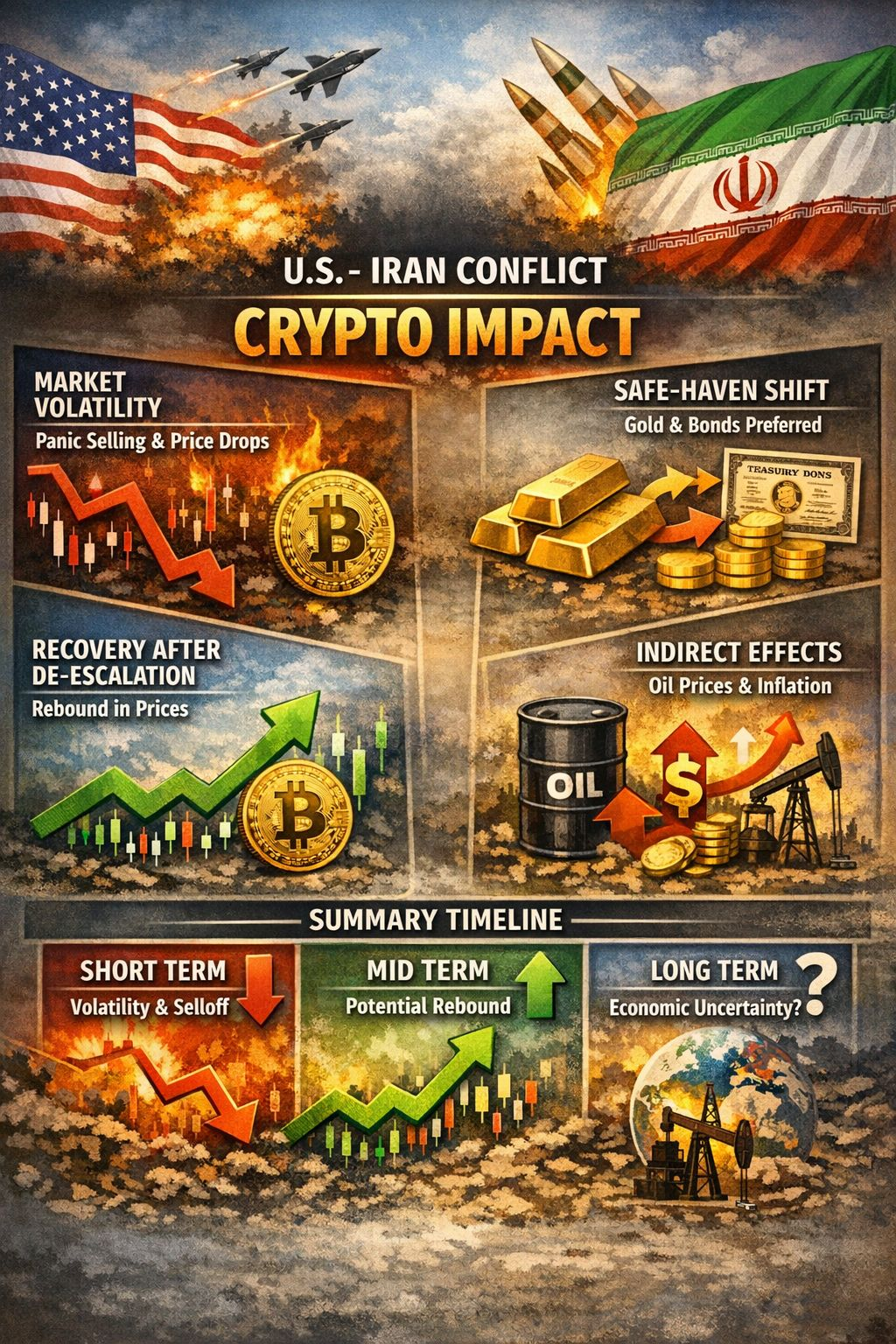
🧠 1. Short-term Market Volatility
When tensions between the U.S. and Iran rise, crypto markets often get very volatile (prices bouncing up and down). For example:
Bitcoin and other major cryptocurrencies have sometimes fallen sharply amid fear and panic selling as investors move money out of riskier assets. �
Analytics Insight +1
Volatility can spike especially when there’s news of potential conflict or military action. �
BeInCrypto
This is similar to how the stock market reacts — uncertainty makes investors nervous.
📉 2. Price Drops During Escalation
Historically during Middle East conflicts, crypto prices have often pulled back as traders sell off assets:
Bitcoin has dropped by several percent in response to conflict escalation. �
IG
Broader markets sometimes see large liquidations of leveraged crypto positions, which pushes prices lower. �
Sanbase
This happens because many traders see crypto as risky in moments of global instability and prefer safer investments.
📈 3. Safe-Haven Assets vs. Risk Assets
In many geopolitical crises (like a war), investors flock to traditional safe-haven assets such as gold or government bonds rather than crypto. �
SignalPlus
Cryptocurrency sometimes moves like a risk asset — meaning it falls when people seek safety. �
IG
However, some people talk about Bitcoin as a “digital gold” — a store of value — but this behavior isn’t consistent: it doesn’t always act as a safe haven during a major geopolitical crisis.
📊 4. Market Recovery After De-Escalation
If tensions cool down or peace agreements happen, crypto markets have in the past rebounded after an initial drop:
Bitcoin and other coins regained value when geopolitical risk subsided. �
Outlook Business
So while prices might fall short-term, a return to calmer conditions can lift them again.
⚠️ 5. Other Indirect Effects
A war involving the U.S. and Iran can also affect crypto indirectly through:
Oil price spikes, raising inflation concerns which influence global investment flows. �
Reuters
Central banks changing interest rate expectations, which can shift money between stocks, crypto, and other assets. �
CoinGape
📌 Summary of Likely Impacts
Short-Term (days to weeks):
Higher volatility
Price drops, panic selling
More movement into traditional safe assets
Mid-Term (weeks to months):
Recovery if tensions ease
Possible renewed investor confidence if conflict stabilizes
Long-Term:
Harder to predict — depends on global economic conditions, regulatory responses, and how markets overall react to prolonged conflict
If you want, I can also explain how war risk affects crypto compared to traditional markets (like stocks and gold).