
When Fogo launched its mainnet, it entered the Layer-1 arena with a focused and ambitious claim ultra-low latency infrastructure built specifically for high performance on-chain trading. In a market filled with blockchains advertising high TPS, Fogo’s message is different. It emphasizes milliseconds execution precision & deterministic finality rather than just raw throughput numbers.
At the center of Fogo’s narrative are block times around 40 milliseconds and near instant transaction confirmation. In theory this brings blockchain execution closer to the standards expected in traditional financial markets. For DeFi traders especially those using perpetual futures on-chain order books, or arbitrage strategies latency directly affects outcomes. Faster execution can reduce slippage improve liquidation accuracy and minimize the hidden costs associated with MEV and delayed transaction ordering.
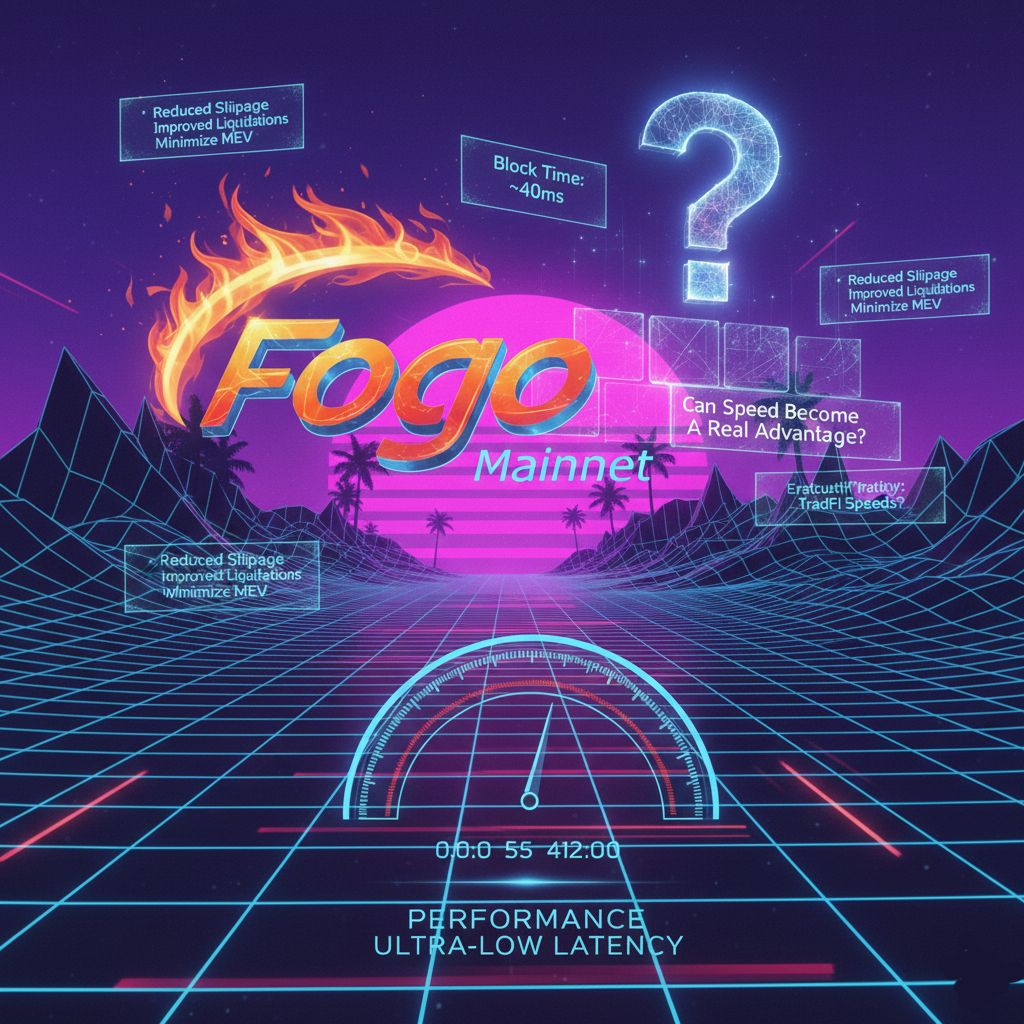
Rather than positioning itself as a general purpose chain for every use case Fogo focuses on optimizing trading environments. The idea is simple if decentralized finance continues to mature execution quality will matter more than headline scalability metrics. A chain that finalizes quickly and predictably under real trading conditions may provide a meaningful advantage.
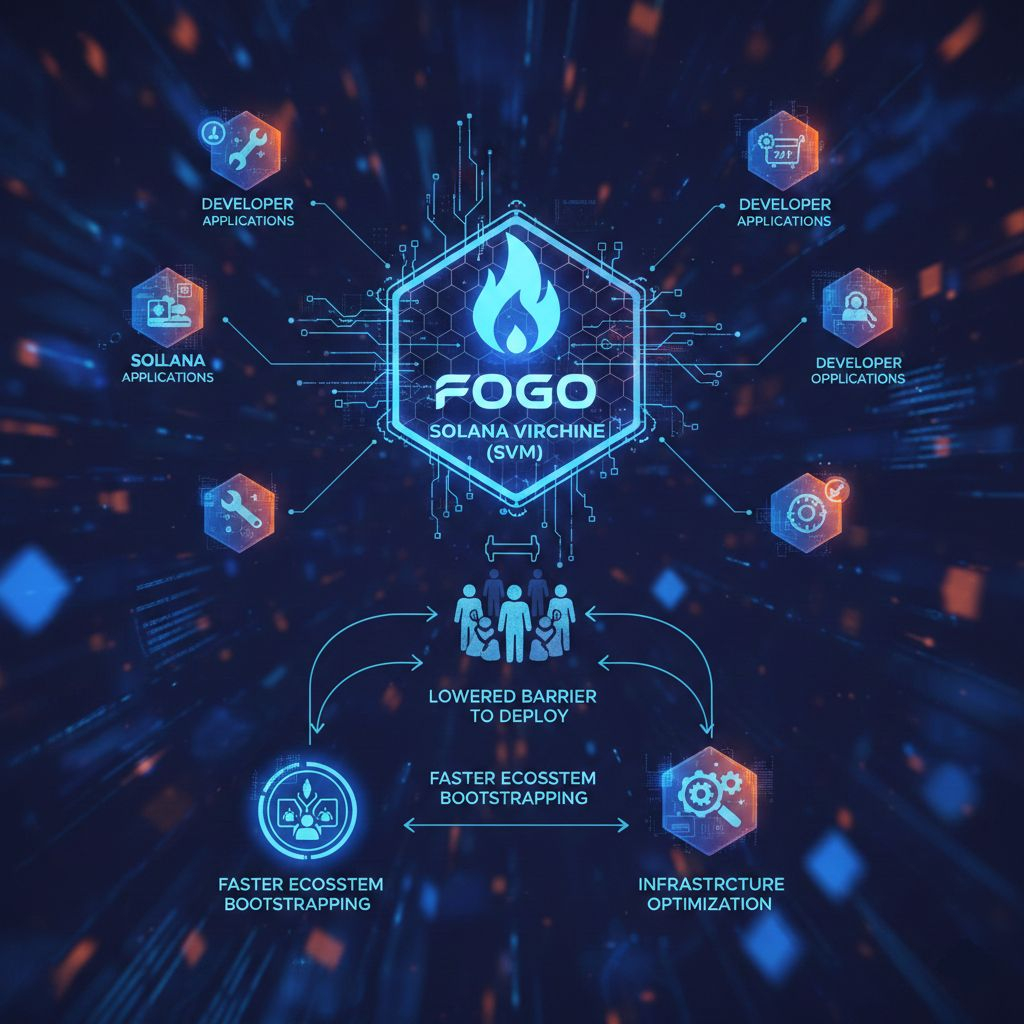
Technically, Fogo leverages Solana Virtual Machine (SVM) compatibility. This lowers the barrier for developers familiar with Solana’s ecosystem to deploy applications. Instead of building an entirely new programming environment Fogo attempts to refine execution performance within an existing and proven framework. This strategic choice supports faster ecosystem bootstrapping while keeping the spotlight on infrastructure optimization.
However ambitious performance claims inevitably invite scrutiny. The real test of any blockchain begins after mainnet launch when real capital unpredictable user behavior, and adversarial trading strategies stress the network. Observers are closely watching whether Fogo’s block times remain consistent under load and whether its performance advantages translate into measurable trading improvements.
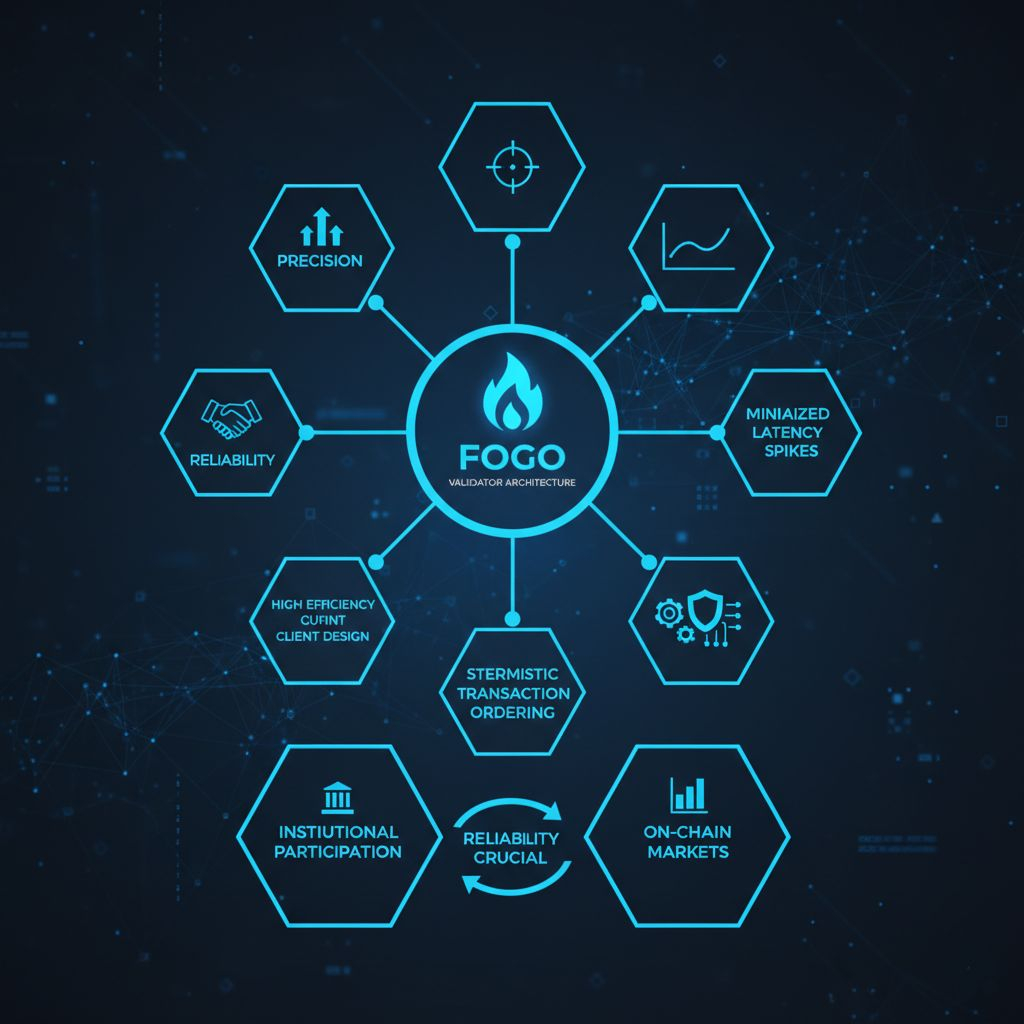
Another key element of the narrative is its performance oriented validator architecture inspired by high efficiency client design. Fogo not focus only on speed but precision minimizing latency spikes ensuring deterministic transaction ordering & maintaining the stability during volatility. As institutional participants gradually enter on-chain markets reliability becomes just as important as decentralization.
Fogo’s challenge lies in proving that Fogo’s speed advantage produces tangible ecosystem benefits. Liquidity & adoption ultimately determine success. If major DeFi protocols market makers & trading desks settle good volume on Fogo its performance narrative will get strength naturally. But if activity remains limited technical superiority alone may not sustain long term momentum.
The broader context is important. The crypto industry appears to be shifting from a “scale at all costs” phase toward an era of execution quality. Early blockchains competed on decentralization. Later networks competed on throughput. Now, the focus is gradually moving toward latency, determinism, and real world trading efficiency.
Fogo’s mainnet launch represents a live experiment in that shift. It is betting that milliseconds matter that in modern DeFi markets, infrastructure precision can become a defining differentiator. Whether this strategy results in durable adoption will depend on sustained performance, ecosystem growth and the network’s ability to translate technical claims into real economic value.
