There is a noticeable shift happening in blockchain infrastructure. For years the focus was decentralization first and performance second. Now some networks are trying to close that gap, aiming to deliver confirmation speeds that feel closer to traditional financial systems. @Fogo Official is part of that shift, positioning itself as a performance-oriented Layer 1 built around the Solana Virtual Machine, but with tighter control over execution and validator design.
The phrase “sub-second finality” sounds technical, yet the idea is simple. Finality means the point at which a transaction cannot be reversed. On many chains, even if a block is produced quickly, traders still wait several seconds to feel confident that the transaction will not be reorganized. FOGO’s architecture is designed to reduce that waiting time to under a second in normal conditions. In practical terms, that means an order can move from submission to irreversible confirmation in roughly the time it takes to blink.
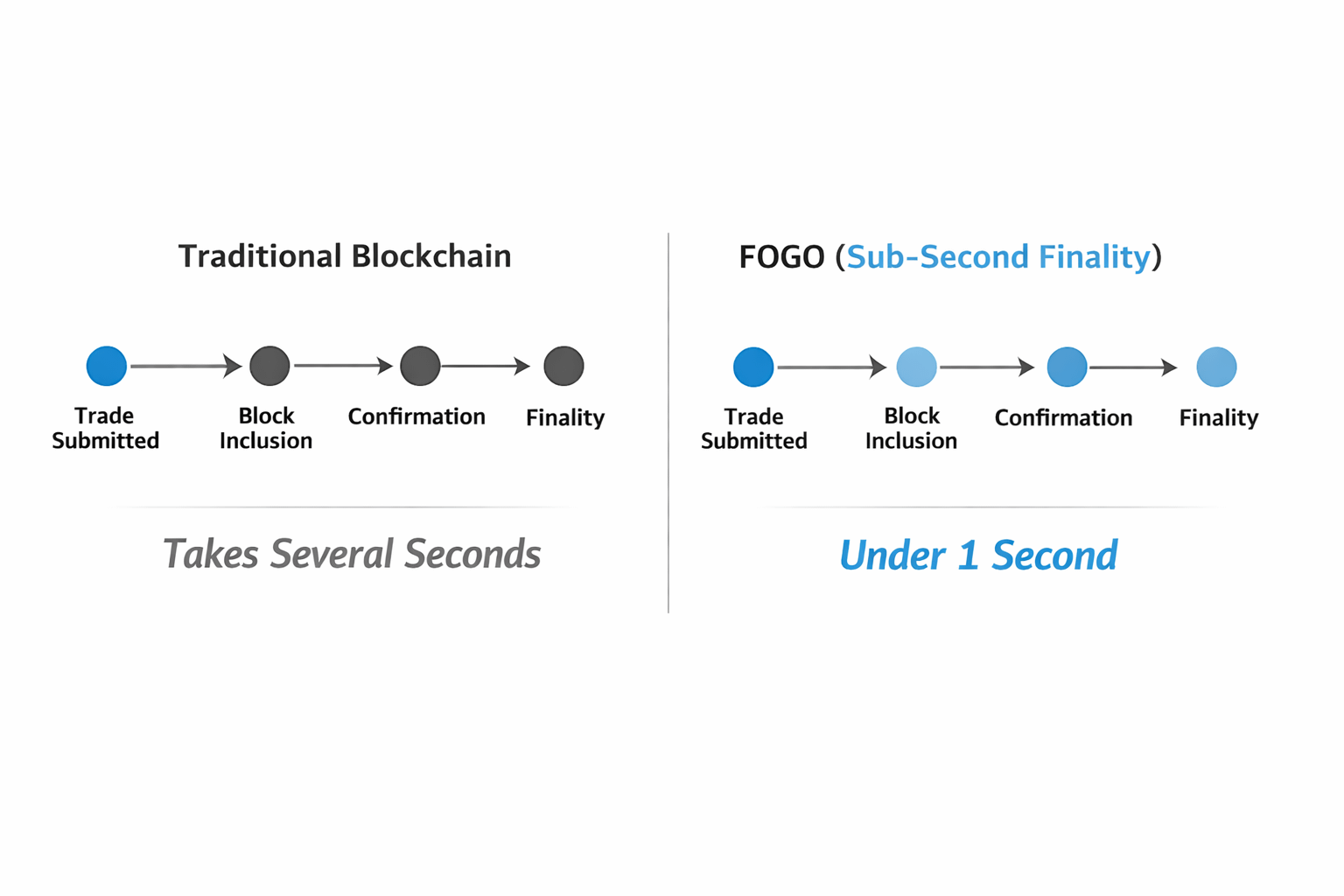
That matters most for high frequency trading, often shortened to HFT. In fast markets, the difference between 400 milliseconds and two seconds can change profitability. On slower networks, traders either accept latency risk or compensate by widening spreads. When finality drops below a second, it changes behavior. Strategies that rely on rapid arbitrage, cross venue hedging, and quick position adjustments become more viable on-chain rather than being limited to centralized systems.
FOGO achieves this by optimizing validator coordination and narrowing the performance target. Instead of trying to maximize geographic dispersion at all costs, it focuses on structured validator zones and high performance hardware. This design reduces communication overhead between nodes and helps blocks reach agreement faster. The tradeoff is clear though. Tighter validator requirements can raise concerns about decentralization. If participation is limited to well resourced operators, the network may lean toward performance at the expense of broad distribution.
Recent benchmark discussions around FOGO highlight consistent block production times measured in hundreds of milliseconds under controlled testing conditions. These are lab style benchmarks rather than chaotic real world stress events. That distinction is important. Performance under ideal load does not always translate perfectly during volatile market spikes. Still, the early data suggests that the chain is capable of handling rapid order flow without the visible congestion that older networks often experience.
For HFT style participants, sub-second finality reduces several types of risk. There is less exposure to chain reorgs. Inventory can be rebalanced more quickly. Market makers can tighten spreads because they are not waiting multiple seconds for confirmation. In theory, this can improve overall liquidity and create more efficient price discovery.
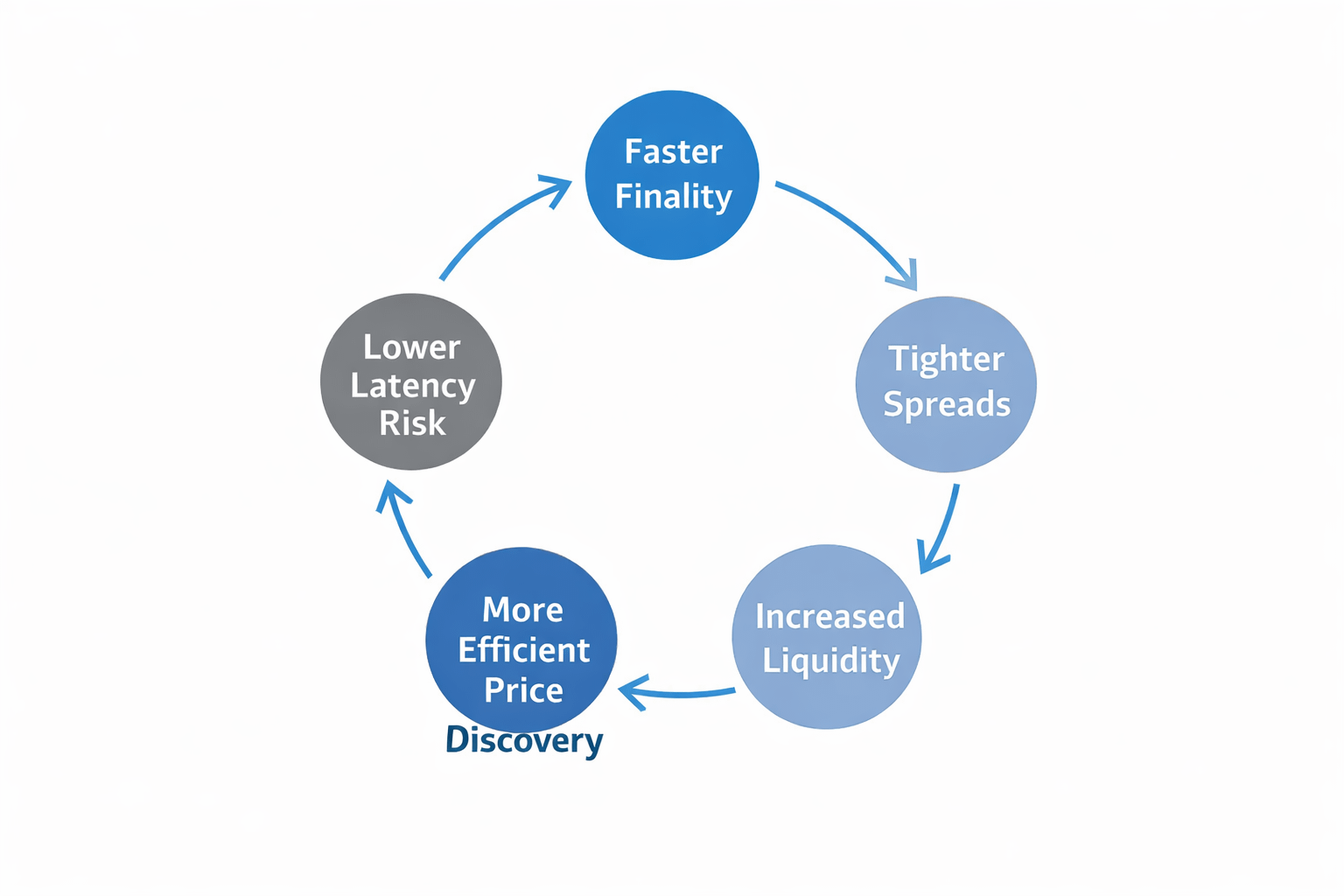
But speed introduces new risks as well. Faster settlement compresses reaction time for everyone, including less sophisticated traders. If algorithmic players dominate block space, smaller participants may struggle to compete. There is also infrastructure risk. High performance networks depend heavily on stable connectivity and coordinated validators. A disruption in a key region or a software level bug could have amplified effects precisely because the system is optimized so tightly.
Another consideration is ecosystem maturity. Sub-second finality alone does not guarantee deep liquidity. Exchanges, wallets, and trading interfaces must integrate cleanly with the network. Tooling for risk management and monitoring also needs to evolve. If these layers lag behind, the raw performance advantage may not translate into meaningful market depth.
Regulatory dynamics cannot be ignored either. As on-chain trading begins to resemble traditional high speed markets, scrutiny may increase. Operators running large scale trading strategies on a fast settlement chain may face compliance questions similar to those seen in conventional finance.
So what does sub-second finality on FOGO really mean. It signals a push toward making blockchain settlement competitive with established electronic trading venues. It narrows the performance gap that once made decentralized infrastructure feel slow and experimental. At the same time, it brings forward new tradeoffs around decentralization, fairness, and systemic resilience.
FOGO’s approach reflects a broader industry direction where execution quality is becoming just as important as ideology. Whether it can sustain these speeds under real economic pressure will determine how meaningful the benchmarks become. For now, the project offers a glimpse of what high speed on-chain markets could look like when latency is no longer the primary constraint, but governance, risk management, and network design still quietly shape the outcome.