

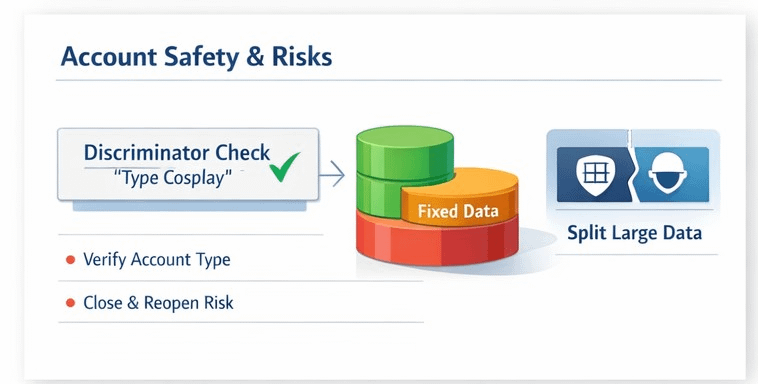
I used to think “data layout” was a boring implementation detail. Working in account-based systems changed that: the way I pack bytes today decides what things cost and how they can fail tomorrow. On Fogo, state lives in accounts, and an account’s data is just a byte array that programs interpret. The nudge to care is economic. Fogo mirrors Solana’s rent model, charging for the storage space accounts consume, and most users avoid ongoing rent by funding accounts to the rent-exempt minimum. The litepaper makes the scaling pressure explicit: rent is 3,480 lamports per byte-year, and rent exemption is typically computed over a two-year window, so bigger accounts require a bigger upfront balance. So “keeping accounts small” is mostly about refusing accidental growth. You allocate the size up front, so any slack bytes are dead weight until you migrate. In Anchor, you even start with an unavoidable overhead: 8 bytes reserved for the account discriminator. After that, I watch variable-size fields like a hawk. Anchor’s own space reference is plain: String is “4 + length,” and Vec<T> is “4 + (space(T) * amount).” When I need unbounded data, I try not to glue it to the account that every instruction touches. Splitting “hot” state from “cold” state isn’t glamorous, but it keeps routine work fast and predictable. Safety is where layout stops being bookkeeping and starts being defensive programming. Because account data is just bytes, a program can be tricked into treating the wrong account type as the right one unless it has a way to tell them apart. Solana’s security lessons call this “type cosplay,” and the remedy is simple: store a discriminator and check it before trusting the rest of the data. Anchor’s discriminator check helps here, but it’s not the whole story—state transitions still have to be explicit. One subtle example: Solana’s fee docs note that garbage collection happens after a transaction completes, so an account closed earlier in a transaction can be reopened later with its previous state intact if you didn’t clear it. That surprised me the first time I saw it, and it’s exactly the kind of “bytes versus intention” gap that layout decisions can widen or close. This topic is getting louder now because performance expectations are tightening. Fogo’s own design story is centered on low latency and predictable behavior under load. When you’re chasing real-time interactions, oversized accounts and heavy deserialization become a visible tax. Anchor’s zero-copy option exists to reduce that tax by avoiding full deserialization and copying for large accounts, but it also demands stricter, more careful struct layouts. And permission patterns are shifting too: Fogo Sessions describes time-limited, scoped permissions backed by an on-chain Session account that enforces constraints like expiration and spending limits. If those guardrails live in bytes, then the shape of those bytes—small, unambiguous, and easy to validate—ends up being part of your security model, not just your storage plan. I’ve learned to treat layout like a promise.
@Fogo Official #fogo #Fogo $FOGO
