
The first thing I noticed after spending a few years on-chain was not the complexity. It was the hesitation.
You see it in yourself. You open a wallet, hover over a button, and pause. Not because you do not understand what a swap is, but because every click carries a question. Did I approve the wrong contract? Is this the real site? Why is this asking for a signature again?
It is a strange experience. Crypto is designed to remove intermediaries, yet every action feels heavier than clicking a button on a centralized exchange. I have traded on both for a long time, and the difference is not really about speed or liquidity. It is psychological weight.
On a centralized exchange, you think in actions. Buy, sell, transfer. The platform handles the mechanics invisibly. On-chain, you think in consequences. Every action feels permanent because you are aware of the machinery behind it.
The wallet is where that feeling begins. A wallet is technically simple, it signs transactions, but mentally it feels like a security device, a bank vault, and a legal contract all at once. The signing window is the moment where many users freeze. The language is formal, gas estimates are unclear, and permissions are abstract. Even experienced users sometimes read the contract address twice before confirming.
Approvals are especially revealing. When you approve a token spend, you are not performing a trade, you are granting future authority. That is a very unusual mental model for most people. It is closer to giving someone your debit card with an unspecified limit than executing a trade order. Many users do not fully grasp this, but they feel the risk intuitively, which is why people check revoke.cash more often than they admit.
Gas also changes behavior more than technology discussions acknowledge. Gas fees are not just a cost, they are a timer and a stress factor. When a network becomes busy, you start rushing decisions. You confirm faster, you read less carefully, you worry about being stuck halfway through a transaction. Ironically, the moments when users should slow down are the moments they speed up.
Latency is another invisible problem. Not transaction speed, but confirmation uncertainty. After you click confirm, there is a waiting phase. During that waiting phase, you are unsure whether you are safe, pending, or about to fail. This uncertainty accumulates across swaps, bridges, approvals, and liquidity actions. It makes people mentally tired.
This is where centralized exchanges quietly win. It is not that they are more advanced technically. They reduce cognitive load. They compress many hidden steps into a single visible action. When you press buy, you are not thinking about signatures, settlement layers, or state transitions. You are thinking about intention.
On-chain systems historically require users to understand execution. Centralized systems let users express intent.
The gap between those two models is larger than most technical debates about throughput or TPS. A trader does not really want to perform a transaction. A trader wants a position.
After interacting with newer infrastructure designs, including the ideas around Fogo, I started noticing that some chains are no longer trying to simply increase performance. They are trying to change how a user expresses intent.
Cross-chain usage exposes the current design problem clearly. Today, using multiple chains feels like moving between separate countries. Different wallets, different bridges, different gas tokens, and sometimes different security assumptions. Even experienced users build habits around avoiding certain chains simply because the process is mentally draining.
A normal trading workflow now often looks like this. Bridge funds, wait, confirm arrival, approve token, swap, adjust slippage, sign again, and occasionally repeat because the first transaction fails. None of these steps relate to the trader’s actual goal. They relate to infrastructure coordination.
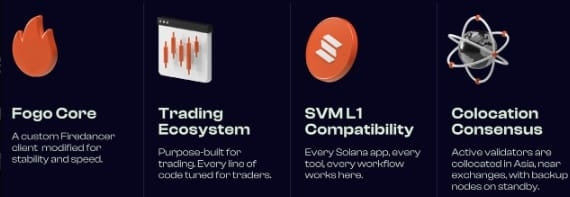
Fogo’s idea of a trader centric chain is interesting to me not because of speed claims, but because it tries to flip the workflow. Instead of the user executing every step, the user expresses a desired outcome, and the system handles the path.
This is where intent based models begin to matter. In simple terms, an intent means telling the network what you want, not how to do it. For example, instead of manually bridging to another chain and swapping, you specify that you want to end up holding a specific asset. The routing becomes a background task handled by solvers or relayers.
This changes behavior immediately. When users do not have to think about bridges, they stop worrying about which chain they are on. The network stops being geography and starts becoming infrastructure.
Sessions and permissions are another subtle but important shift. Traditional wallets treat every action as a fresh approval, which maximizes security but minimizes flow. Session based permissions allow a wallet to authorize a limited scope of activity for a period of time. Not unlimited control, but bounded trust.
That sounds small, but it addresses a real psychological friction. Users do not fear one transaction, they fear repeated exposure. Every signature feels like another chance to make a mistake. Reducing the number of signing moments reduces anxiety more than reducing transaction time.
Account abstraction plays into this as well. When the account itself becomes programmable, wallets stop being passive key holders and start behaving like interfaces. Gas can be sponsored, transactions can be bundled, and error handling becomes possible. For the user, the experience shifts from operating a machine to using a service.
Security perception also changes. Interestingly, users often trust centralized exchanges not because they believe they are safer, but because they understand who is responsible. Responsibility clarity is a powerful comfort. On-chain systems distribute responsibility, which is philosophically elegant but emotionally stressful.
If a transaction fails on-chain, you blame yourself. If a trade fails on a centralized exchange, you blame the platform.
Infrastructure that reduces decision complexity reduces fear. When users feel they only need to decide what they want, not how to execute it, participation increases naturally. Not because of marketing, but because mental effort decreases.
Cross-chain design matters here. If assets and actions become portable without user intervention, the concept of choosing a chain becomes less relevant. Chains become execution layers rather than identities. That is a subtle but important shift. Today people say, I use this chain. In a more seamless system, they would simply say, I use crypto.
What I find most interesting is that none of this is really about faster blocks or larger throughput. It is about cognitive ergonomics. The barrier to adoption is not only technical complexity, it is the feeling that every action could permanently go wrong.
After enough time trading, you realize the biggest friction in DeFi is not liquidity fragmentation or slippage. It is hesitation. Every additional confirmation box creates a pause, and every pause is a reminder that the system still feels experimental.
If infrastructure like Fogo succeeds at anything, it may not be measured by transaction metrics. It may be measured by how little users think about the chain they are using.
The moment a trader no longer remembers which network they interacted with, and only remembers the decision they made, crypto usage will feel different. Not simplified, but natural.
I sometimes think the real competition is not between chains. It is between mental models. One model asks users to operate a protocol. The other lets them express intent and move on with their day.
Maybe the future of crypto is not about making users more technical. Maybe it is about making infrastructure quiet enough that they do not have to be.