
In recent weeks, the United States has sent a major military force into the Middle East amid rising tensions with Iran.
This deployment includes aircraft carriers, fighter jets, warships, and missiles — the largest since the Iraq war era.
This buildup comes at a time when diplomatic talks with Iran over its nuclear program are ongoing, but unresolved.
The question many people are asking is simple:
Is this posture preparing for war, or is it a show of strength meant to shape negotiations?
Below we look at what’s happening, why it matters, and the possible outcomes — written in clear language without jargon.
What the U.S. Is Doing Now
Over the past weeks, the United States has moved significant military assets into the Middle East:
• Two aircraft carriers including USS Abraham Lincoln and USS Gerald R. Ford
• Around a dozen warships
• Over 50 fighter jets and support aircraft
• Radar and air defense systems
• Thousands of troops across bases from Jordan to the Persian Gulf
The U.S. has also evacuated nonessential diplomats from some regions like Lebanon, highlighting how serious officials see the current situation.
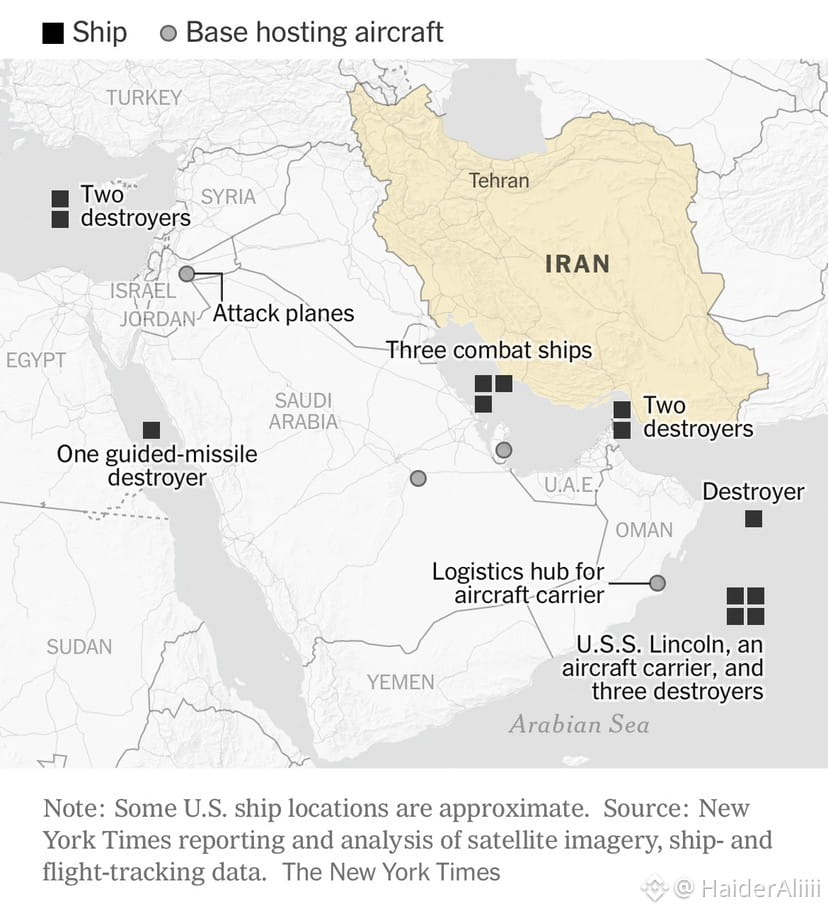
Caption:
U.S. military buildup near Iran is the largest seen in years.
Why This Buildup Matters
This buildup is not just a show.
Military analysts note that the size and strength of the deployed forces would support not only defense and deterrence but also a sustained kinetic campaign if ordered.
However, top U.S. military officials have warned that a major strike against Iran would carry high risks. Such a campaign could strain U.S. munitions, risk personnel, and lack sufficient allied support.
In simpler terms:
• Pushing Iran militarily is not easy
• It is costly in terms of equipment and lives
• It could lead to retaliation both in the region and beyond
This is why U.S. leaders are weighing their options carefully.
A Diplomatic Backdrop
At the same time as the buildup, diplomats are still talking. There are scheduled indirect talks between U.S. and Iranian representatives aimed at resolving parts of the nuclear dispute.
Iran has publicly called the U.S. military buildup “unnecessary and unhelpful” and argued that a fair deal is possible.
This contrast — strong military pressure paired with ongoing diplomacy — shows there are two paths ahead:
• One leads to escalation
• The other leads to negotiated solutions
Potential Outcomes
There are a few realistic paths for what could happen next:
1.
Diplomacy Breakthrough
If negotiators find common ground, tensions could ease.
This would likely reduce the chances of a direct conflict and calm markets.
A diplomatic solution would be positive for global risk sentiment.
It could reduce demand for traditional safe havens like gold and give risk assets like stocks and crypto a lift.
2.
Limited U.S. Air Strikes
If diplomacy fails, limited strikes targeting specific capabilities are possible.
This would not be a full war but could spark retaliation.
Iran could respond through missiles or proxy forces, which would quickly widen the conflict.
Such a scenario would lead to sharp increases in oil prices and global risk aversion.
3.
Prolonged Conflict
A worst-case outcome is a broader war.
This could pull in regional players and proxy forces.
Iran’s missile arsenal and network of allied groups could strike U.S. bases, allied countries, or shipping routes.
Such an escalation would be economically disruptive and dangerous.
Why Trump’s Role Matters
President Donald Trump has publicly embraced the possibility of regime change in Iran and has warned of consequences if a nuclear deal is not reached.
This stance adds political complexity.
Trump faces pressure from different sides:
• Hardliners who favor military pressure
• Diplomats who want a negotiated solution
• Allies who are cautious about a broader war
In this context, military deployment is both a signal and a tool.
It tells Tehran that the U.S. is serious, while giving Washington leverage in talks.
Regional and Global Implications
The risk of conflict in the Middle East affects more than just regional stability.
Markets react to uncertainty.
Risk-off moves like gold rallies and dollar strength often follow geopolitical risk spikes.
Risk assets like tech stocks and crypto can weaken in the short term.
But if tensions ease, markets can rebound quickly.
This dynamic shows how geopolitics now plays a direct role in global financial behavior.
Final Take
The deployment of U.S. military assets near Iran is significant, but it does not guarantee war.
It reflects a complex mix of:
• Diplomatic pressure
• Strategic deterrence
• Political signaling
• Risk management
What happens next depends on the decisions of leaders in Washington and Tehran.
A diplomatic breakthrough could calm markets.
Escalation could lead to lasting instability.
As these developments unfold, understanding both the military posture and the negotiations matters more than watching any single headline.
Tell me what you think — will diplomacy prevail, or are markets underestimating the cost of conflict?