
The coffee was too cold this morning, the kind that sits forgotten while you stare at a screen longer than intended. I pulled up the SIGN campaign on Binance Square's CreatorPad anyway—verified account, task list open, the usual drill of writing a post with the hashtag SovereignInfra, tagging $SIGN , minimum 100 characters, aiming for those reward points. Nothing special, just another box to check.
But scrolling through the requirements, something caught and wouldn't let go. There it was, right in the task description: create content about the project, mention the official @SignOfficial l account, push the narrative of sovereign digital infrastructure. The moment I read that phrase—"global infrastructure for credential verification and token distribution"—and realized the task wanted me to frame SIGN as this grand, nation-scale trust layer, a quiet unease settled in. Here we are, incentivized to broadcast how blockchain can underpin government systems for identity, money, capital—tamper-proof, auditable, controllable—and yet the reward mechanism itself relies on mass, coordinated promotion from individual users like me.
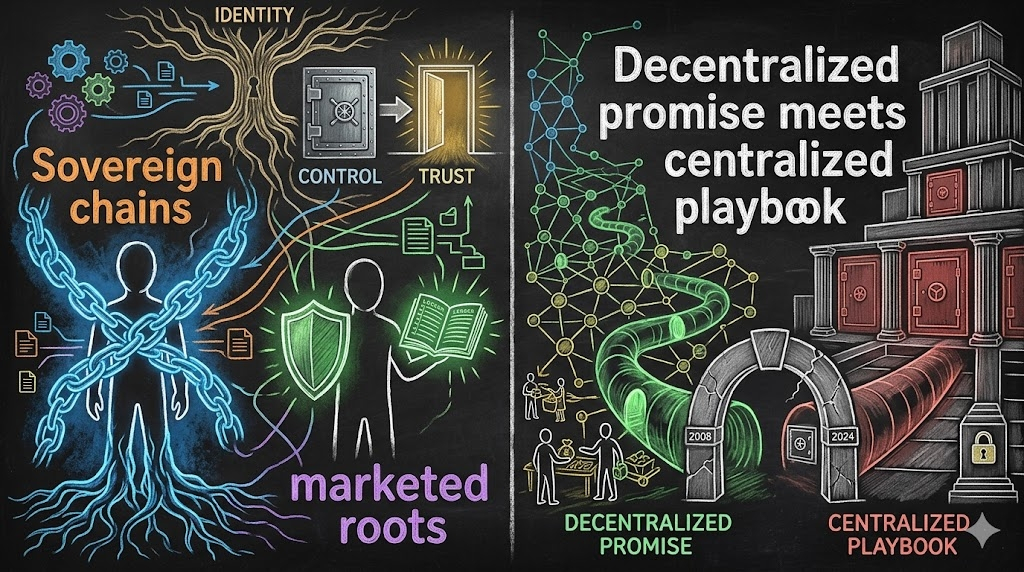
That disconnect hit harder than expected. The common belief in crypto is that decentralization means freedom from centralized control, that tokens empower communities to build bottom-up alternatives to traditional systems. But performing this task made it plain: projects positioning themselves as sovereign infrastructure—bridging nations and blockchains—often lean heavily on the same old centralized playbook of campaigns, rewards, and scripted messaging to bootstrap attention and adoption. It's not organic discovery; it's engineered distribution. The idea that true sovereignty in digital systems could emerge from such orchestrated hype feels almost contradictory. If the endgame is regulated, inspection-ready ledgers for states, why does the path there still look so much like every other token launch we've seen—dependent on retail enthusiasm funneled through platforms like Binance Square?
SIGN itself illustrates the tension perfectly. It's built to offer enforceable policy controls, privacy with oversight, evidence trails for audits—tools that governments could actually use at scale. Yet to gain traction, it runs CreatorPad tasks that ask everyday users to amplify the vision in near-identical posts. The protocol may be omni-chain, attestation-focused, backed by serious funding and partnerships, but the growth layer feels borrowed from the speculative meme-coin era rather than a new institutional paradigm. That blending of high-minded sovereign architecture with familiar crypto marketing tactics leaves me wondering whether we're truly building alternatives to centralized power or simply re-skinning the same incentive machines with grander language.
The deeper issue goes beyond one project. Crypto has long promised disintermediation—cut out the middlemen, let code and communities govern. But when infrastructure aimed at nations still depends on gamified content creation and token airdrops to spread the word, it suggests the old patterns persist. We criticize banks and states for opacity and control, yet tolerate (even participate in) coordinated promotion that shapes perception before fundamentals can prove themselves. Maybe that's just how adoption happens in a noisy space. Or maybe it reveals that sovereignty—real, enforceable control over digital systems—will always require some form of narrative control to take root.
What bothers me most isn't the campaign itself; it's how normalized this has become. We accept that building trust infrastructure for the world starts with incentivizing strangers to post about it. Does that method undermine the very trust it's trying to create, or is it simply the pragmatic bridge between vision and reality?