
🧨 Major Escalation in the Middle East
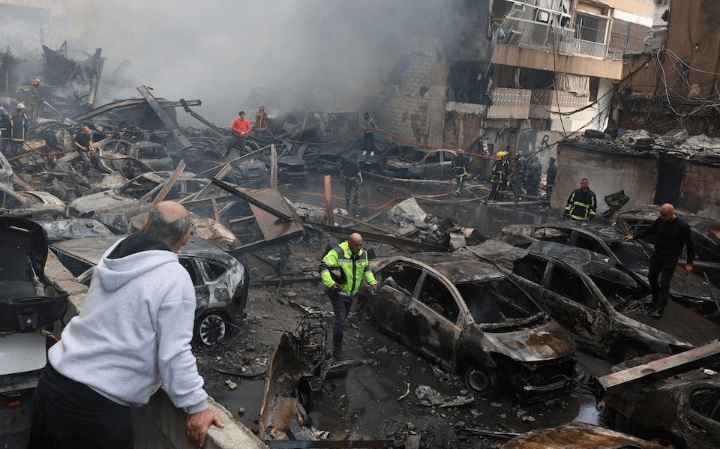
Just hours after a temporary ceasefire was announced between the United States and Iran, Israel launched one of its largest strikes against Lebanon. Israeli forces bombed dozens of locations across Beirut, southern Lebanon, and the Bekaa Valley, claiming they were targeting Hezbollah positions. The scale of the assault has been described as the heaviest bombing in years. Hundreds of people have been killed and many more wounded.
This attack has sent shockwaves through the region and seriously threatened the already fragile ceasefire aimed at pausing weeks of intense conflict involving Iran, Israel, and their allies.
🇮🇱 Why This Matters: Ceasefire Under Threat
The ceasefire announced by the U.S. and Iran was meant to stop hostilities for at least two weeks so diplomats could work toward a longer peace. However, Israel insists that its military campaign against Hezbollah in Lebanon is not part of that ceasefire. The United States has backed this view, saying the Iran–U.S. truce doesn’t cover Israeli strikes in Lebanon.
This has created a confusing situation:
Iran and Pakistan (which helped broker the deal) say Lebanon was supposed to be included,
Israel and the U.S. say it was not.
That contradiction places the ceasefire in serious jeopardy.
🇮🇷 Iran’s Dangerous Response
Iran has responded strongly to the situation:
⚠️ 1. Threat of withdrawal from ceasefire:
Iranian officials have warned publicly that if Israel continues attacking Lebanon, Tehran may pull out of the ceasefire agreement entirely. One Iranian source said they view the continued assaults on Lebanon as clear violations of the ceasefire terms.
⚠️ 2. Preparing military retaliation:
State-linked sources indicate that Iran’s Revolutionary Guard is finalizing plans for a “deterrent” or “response” operation against Israeli military targets, warning that attacks on Hezbollah and Lebanon are seen as attacks on Iran itself.
⚠️ 3. Strait of Hormuz tensions:
Iran has reportedly closed the Strait of Hormuz again in response to the events. This narrow sea passage is a critical route for global oil shipments, and its closure can raise fuel prices and strain global markets a dangerous escalation beyond just regional politics.
📈 What This Could Mean Regionally
The current escalation has several serious implications:
The partial ceasefire may collapse completely if Iran withdraws and hostilities spread.
Iran’s threats to respond could draw the conflict into a new phase with more countries involved.
Lebanon, already devastated by weeks of fighting, has now become a flashpoint that could trigger broader regional conflict.
The closure of the Strait of Hormuz could disrupt global energy markets.
🧠 In Summary
What was meant to be a temporary pause in the Iran-U.S. war has been shaken by Israel’s massive attacks on Lebanon and Iran’s warnings of retaliation. The situation remains highly unstable, with the risk that a broader and more dangerous escalation could follow.
#IranClosesHormuzAgain #Lebanon #freedomofmoney #cryptouniverseofficial #iran


