
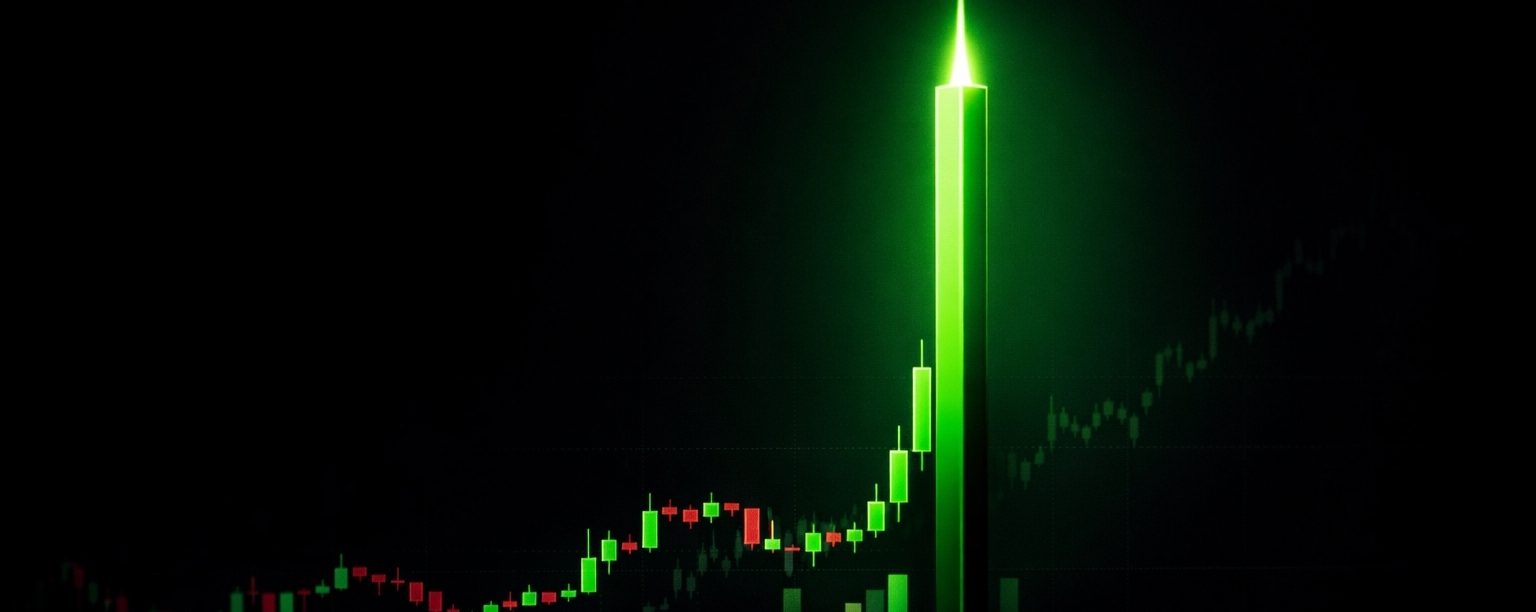
A sudden move like the one seen in $GENIUS pulls attention instantly. A sharp green candle, rising volume, fast mentions — it creates the feeling that something important just happened. And maybe it did. But price alone doesn’t tell you what kind of event it was.
Some moves are built on conviction. Others are built on visibility.
The difference starts showing right after the spike.
When a token moves because of real interest, it doesn’t just go up — it stabilizes. You start seeing smaller pullbacks, not aggressive dumps. Wallet behavior becomes quieter but more intentional. Fewer impulsive trades, more controlled positioning. That’s usually where a narrative begins forming under the surface.
But when a move is driven by attention alone, the structure feels different. Volume comes in waves, not layers. Price reacts sharply in both directions. Early buyers exit into strength, while late participants chase the movement without understanding it. That creates instability, not growth.
Right now, $GENIUS is sitting exactly between those two identities.
It has already crossed the hardest phase — being ignored. That alone changes its position in the market. Once attention arrives, the game shifts from discovery to validation. Now the market is no longer asking “what is this?” but “is this worth staying in?”
That’s where behavior matters more than price.
If you start noticing that dips are getting bought faster, that discussion around it becomes more analytical instead of purely emotional, and that participation doesn’t disappear after the first move — then you’re looking at early signs of something that might sustain.
On the other hand, if engagement fades as quickly as it appeared, if each push upward is followed by equal or stronger rejection, and if the narrative never evolves beyond “it pumped” — then it usually means the move served its purpose already.
What makes this phase important is timing, not direction.
This is where two types of participants separate. One reacts to what already happened. The other studies what is quietly forming.
The first group provides liquidity. The second group builds positions.
And most of the time, they never enter at the same moment.
There’s also something else worth paying attention to. Tokens don’t grow just because price increases. They grow when people start assigning meaning to them. When conversations shift from “how much did it pump” to “why does this exist” — that’s when a token begins to transition from a trade into an idea.
#GENIUS hasn’t fully reached that stage yet. But it’s no longer far from it either.
Which makes this moment less about chasing and more about observing with intent.
Because the market doesn’t usually give clear signals in real time. It gives fragments. Small behaviors. Subtle shifts. And those who can connect them early are often the ones who don’t need to rush later.
So the question isn’t whether $GENIUS moved.
The question is whether this move is the start of attention… or the beginning of structure.
And the answer won’t be found in the candle that already formed.
It will be found in what the market chooses to do next.