
You know that familiar friction that hits when you’re just trying to do something straightforward maybe claim a plot of land in a game world, settle a small trade with another player, or simply move your earnings from last week’s harvest. Suddenly the system wants your complete history. Every wallet address, every transaction, every KYC layer exposed. Regulators demand transparency for “safety,” institutions insist on full audit trails, and builders are forced to build in ways that broadcast far more than necessary.
The problem isn’t new. People have always wanted some degree of privacy in their dealings not because they’re doing anything wrong, but because permanent, public records change how humans actually behave. When everything is visible forever, you start self-censoring. You hesitate to experiment, to take small risks, to coordinate quietly with friends or guild mates. I’ve watched this pattern repeat across different systems: the more total transparency is enforced, the more people look for workarounds. And those workarounds whether mixers, layered custody solutions, or offshore routes almost always end up looking suspicious to regulators, who then crack down harder. The cycle continues, costs rise, and normal users, the ones who just want to play, build, and earn, quietly drift away or stay on the surface, never fully committing.
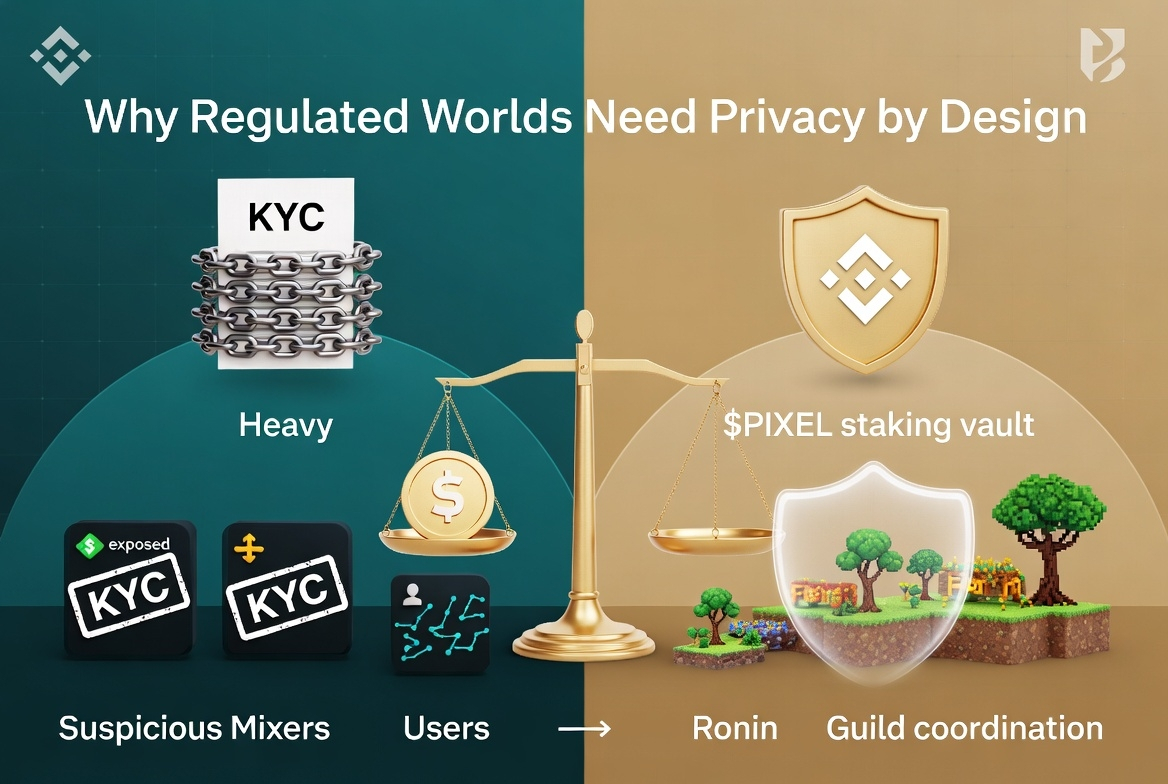
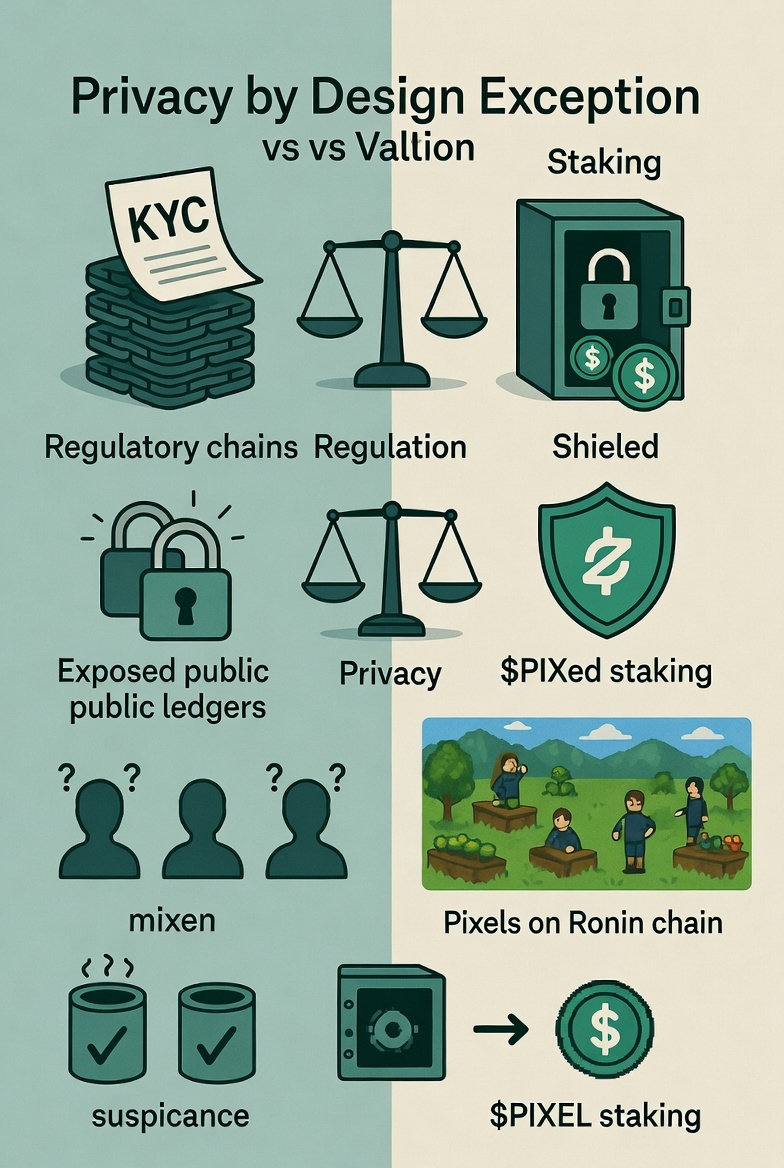
This is where the current approach of “privacy by exception” feels so incomplete in practice. You have to actively request privacy, justify it, or pay extra for it. That creates friction at every step. Compliance teams get nervous about anything that isn’t fully transparent by default. Builders waste time designing around regulatory fears instead of actual user needs. And users end up either over-exposed or stuck using tools that feel shady. I’m skeptical by nature I have seen too many well-intentioned systems collapse under their own weight when they ignore how real humans actually behave under constant observation.
This is the messy space where Pixels and its staked ecosystem quietly operates. Staking PIXEL isn’t presented as some flashy yield opportunity. It feels more like infrastructure you commit tokens to specific parts of the game world, back real development and activity, and in return gain practical advantages: better resource flows, deeper progression paths, and genuine governance weight inside the ecosystem.
What stands out to me is how the staking layer seems designed to support ongoing, persistent participation rather than one-off hype.
You lock PIXEL to signal skin in the game. That commitment helps fund and sustain the world, while the day-to-day actions inside the game farming, trading small plots, building don’t have to turn into a public performance. The design leans into Ronin’s chain in a way that respects persistent ownership without forcing every detail into the open for everyone to see.
Regulation is inevitably coming for everything that touches value transfer, settlement, and digital assets. Tax authorities, gaming commissions, and financial watchdogs will want clear records where money or valuable items move. The question is how those requirements are met.
Forcing privacy only as an exception something you have to switch on or beg for creates exactly the awkwardness and workarounds I’ve seen fail before. Costs go up. Adoption slows among everyday players who don’t want their entire strategy, guild coordination, or personal playstyle permanently recorded. Builders hesitate to innovate because every new feature risks becoming another compliance headache.
Privacy by design, starting from the staking layer outward, feels like a more grounded path. It doesn’t mean hiding everything that would be naive and probably illegal in many places. It means proving what regulators actually need (that you’re not a bad actor, that funds are legitimate, that settlement happened fairly) while letting normal human-scale activity stay efficient and less exposed. You stake to show commitment. The system can verify that commitment where required, but doesn’t force every harvest or small trade into a permanent spotlight.
I’m not certain this will work perfectly. I’ve seen too many projects promise alignment between users, builders, and regulators only to centralize under pressure or lose sight of real usage once yield farmers dominate. It could fail if staking PIXEL becomes detached from actual game activity just another token parked for rewards with no real backing of the world. Or if the team can’t carefully thread the regulatory needle without slowly turning the infrastructure into something heavier and less flexible.
But if it holds if staking remains tied to supporting real development, if privacy is treated as a thoughtful default rather than a suspicious exception then this could actually earn quiet trust. The kind of users who stick around aren’t chasing quick pumps. They’re players who want to farm season after season, smaller builders who care about continuity, guilds that coordinate without broadcasting every move, and even institutions exploring game economies who need compliance without killing usability.
In the end, infrastructure that respects both real human behavior and coming regulatory realities has a better chance of lasting than systems built on excitement or total transparency theater. That’s the part I keep coming back to on these quiet mornings. Not hype, just whether it actually solves the daily frictions people feel when they try to own, build, and play in a regulated world.
