

I’ve been thinking about something that sounds a bit extreme at first…
But the more I look at Stacked, the less crazy it feels.
What if game studios didn’t actually need ads the way they do today?
Not because marketing disappears.
But because the money flows differently.
Right now, the model is pretty straightforward.
Studios spend heavily to acquire users.
That money goes to ad platforms, networks, and algorithms.
And in return, they get traffic… hopefully the right kind.
But anyone who’s been around long enough knows how inefficient that can be.
You pay for impressions.
You pay for clicks.
You pay for installs.
And then you hope those users stick around.
Sometimes they do.
A lot of times… they don’t.
So you spend again.
And again.
And again.
It’s a loop that works, but it’s far from perfect.
What Stacked is doing flips that loop in a way that I didn’t fully appreciate at first.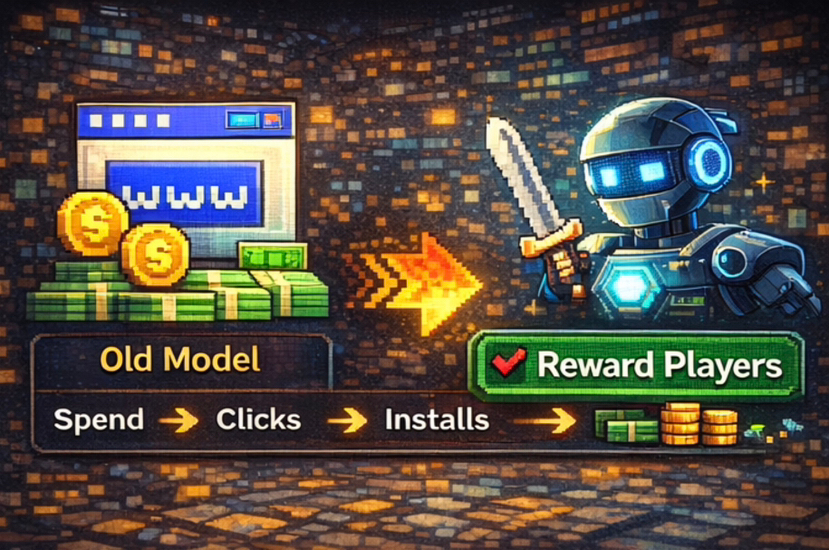
Instead of spending money before engagement…
You allocate rewards after meaningful behavior happens.
That sounds simple.
But it changes everything.
Because now, instead of asking:
“How do we get more users?”
You’re asking:
“How do we deepen engagement with the users who are already here… and attract similar ones?”
And this is where it gets interesting.
Stacked isn’t just a reward layer.
It’s a system that lets studios measure exactly what those rewards are doing.
Retention lift.
Revenue impact.
LTV changes.
This is something I feel like most Web3 gaming still struggles with.
There’s always talk about incentives…
But very little clarity on whether those incentives are actually working.
Here, the feedback loop is tight.
You run an experiment.
You see what happens.
You adjust.
And the AI layer accelerates that process.
Instead of manually digging through dashboards, trying to figure out why players drop off…
Studios can literally ask the system:
Why is this cohort leaving?
What behavior correlates with long-term retention?
Where are we wasting rewards?
And then act on it immediately.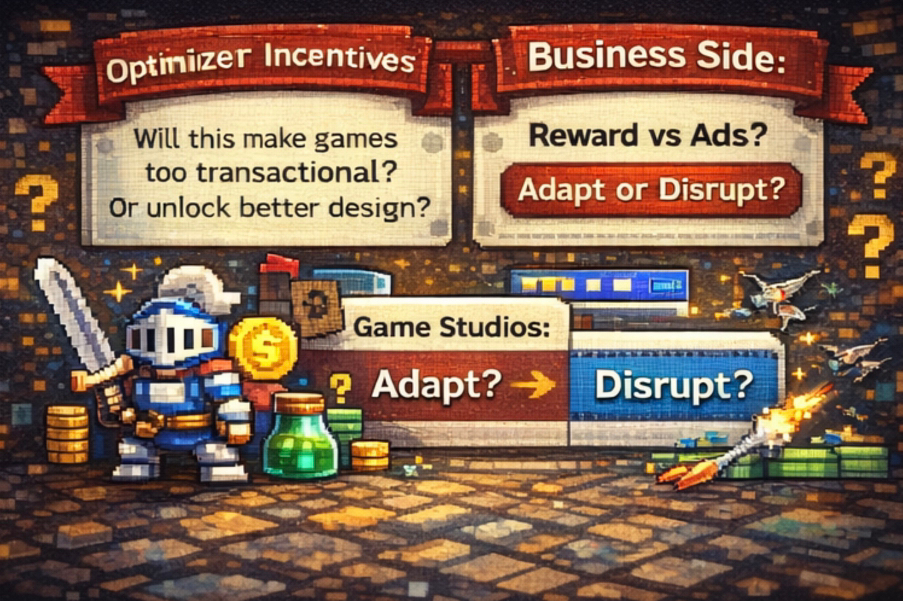
That compression between insight and execution is something I think will matter more than people expect.
Because in gaming, timing is everything.
Catch a player at the wrong moment, and they’re gone.
Catch them at the right moment, with the right incentive…
And they might stay for months.
Maybe longer.
Another thing I keep thinking about is how this changes the role of players.
In the traditional model, players are basically…
targets.
You acquire them.
You monetize them.
And if they leave, you replace them.
But in this model, players become more like participants in the growth loop.
They’re not just consuming value.
They’re receiving part of the budget that used to go elsewhere.
And I think that psychological shift matters.
Because when players feel like they’re actually getting value
Not artificially inflated tokens, but real rewards
