I didn’t expect much when I first opened Pixels. It looked simple, almost too simple to hold my attention for long. A bit of farming, some movement across a pixel world, a few tasks to get started. The kind of experience you try for a while and quietly move on from. But something about it didn’t fade the way I expected. It stayed, and over time, it changed the way I was looking at it.
At the beginning, everything feels familiar. You plant, you gather, you explore a little. There’s no pressure to understand everything at once. In fact, it almost feels like the game is asking you to slow down. That stood out to me because most digital spaces today do the opposite. They rush you, push you to optimize, to keep up, to not fall behind. Pixels doesn’t really do that. It lets you settle in.
But after spending more time with it, I started to notice something subtle. The simplicity wasn’t the full picture. It was just the entry point. Underneath it, there’s a different kind of structure shaping the experience. The effort you put in doesn’t feel as temporary as it does in most games. The things you build and the progress you make feel like they carry a bit more weight.
That shift is difficult to explain in purely technical terms, and maybe it doesn’t need to be. In simple language, Pixels connects your in-game actions to a system where your time and effort are not just stored and forgotten. They are part of something you can step away from and return to without losing that sense of continuity.
Why does that matter? Because for a long time, digital spaces have been built on a model where users contribute value without really owning any part of it. You spend time, you create something, you participate, but the system itself holds all the control. If it changes or disappears, so does everything you built. It’s something most of us have accepted without thinking too much about it.
Pixels quietly challenges that idea. It doesn’t present itself as a solution to everything, but it offers a different approach. It suggests that digital environments can be designed in a way where user contribution is acknowledged and preserved in a more meaningful way. Not perfectly, not completely, but enough to shift your perspective.
I remember one moment that made this clearer to me. I had been away from the game for a while. Not intentionally, just life getting busy. But instead, everything was just there. My progress, my space, the small things I had built over time. It didn’t feel like catching up. It felt like returning.
That feeling is easy to overlook, but it changes how you interact with the system. When you know your effort isn’t easily erased, you approach things differently. You become more patient. As that continues, the question of ownership becomes more important. Who benefits from that effort? Who controls the value that is created?
Pixels doesn’t answer those questions in a grand or final way. Instead, it brings them into a space that feels accessible. You don’t need to understand complex systems to experience the difference. You just need to spend time in the world and notice how it feels.
The farming loop is a good example of this. On the surface, it’s repetitive. You plant, you wait, you harvest. But over time, it becomes something more than a task. It becomes a rhythm. You return to it, not out of obligation, but because it feels like part of something ongoing. That sense of continuity is rare in digital environments, where everything often feels temporary and fast moving.
Exploration adds another layer. You’re not confined to one place. You move, discover, interact with different parts of the world. But it doesn’t feel like a checklist. It feels more open, more personal. You choose your pace. You decide what matters.
At the same time, it’s important to stay grounded. Systems like this are still developing.
Personally, I don’t see Pixels as something to rush into with expectations. I see it as something to observe, to learn from. It offers a perspective on what digital spaces could become if they start valuing user effort in a more direct way. That doesn’t mean it’s perfect or complete. It just means it’s worth paying attention to.
There’s also a human side to this that often gets overlooked. When you feel a connection to what you’re building, even in a simple environment, it changes your relationship with it. You care a bit more. You think a bit more before acting. It becomes less about passing time and more about spending it in a way that feels intentional.
I noticed that I wasn’t checking the game constantly. I wasn’t worried about missing out. I just returned when I wanted to, and each time, it felt consistent.
These are questions that don’t have simple answers, but they are becoming more relevant as digital and economic systems continue to evolve.
In the end, Pixels starts as something simple. That’s what draws you in. But it doesn’t stay simple for long. Not because it becomes complicated, but because it changes how you see what you’re doing. It turns small actions into something that feels connected, something that carries forward.
And maybe that’s the real shift. Not in the mechanics, but in the perspective.
If digital spaces begin to treat our time and effort as something that actually stays with us, how do you think that will change the way we choose to spend our time online?

Статия
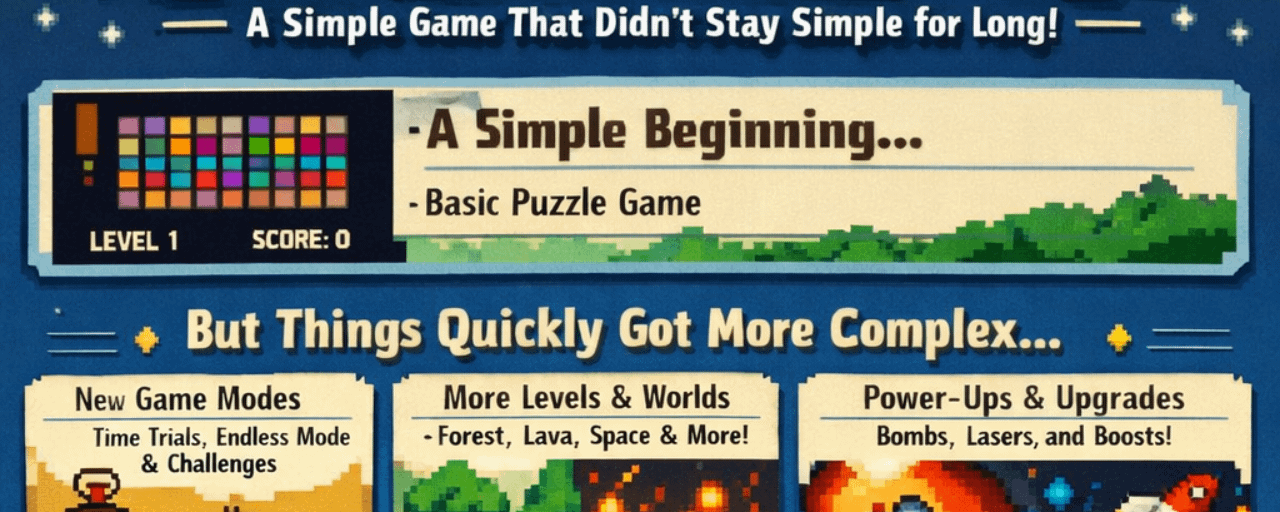
Starting pixels: a simple game that didn’t stay simple for long
Отказ от отговорност: Включва мнения на трети страни. Това не е финансов съвет. Може да включва спонсорирано съдържание. Вижте Правилата и условията.