
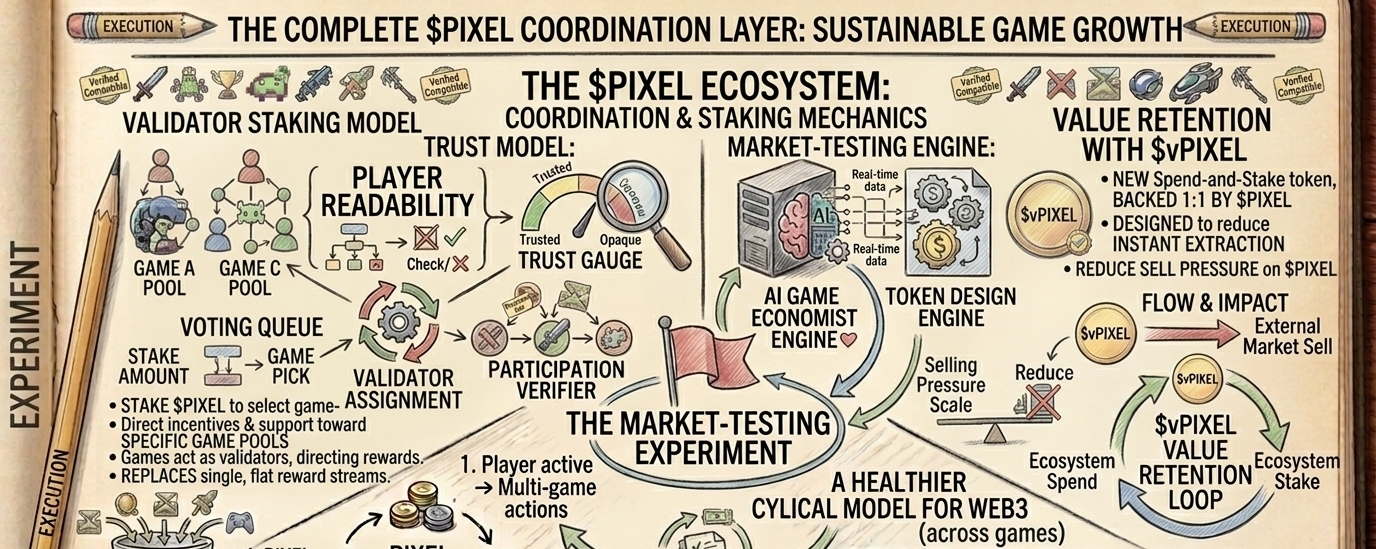
Most Web3 games still reward activity the lazy way. More clicks, more emissions, more selling pressure, and eventually less reason to stay. That is exactly why @Pixels has become more interesting to watch. The real story is no longer just the farming loop. It is the attempt to build a smarter reward system around Stacked and the wider $PIXEL ecosystem. Pixels’ own materials now frame the project as broader than a single game, with staking and ecosystem mechanics designed to align players and games more directly.
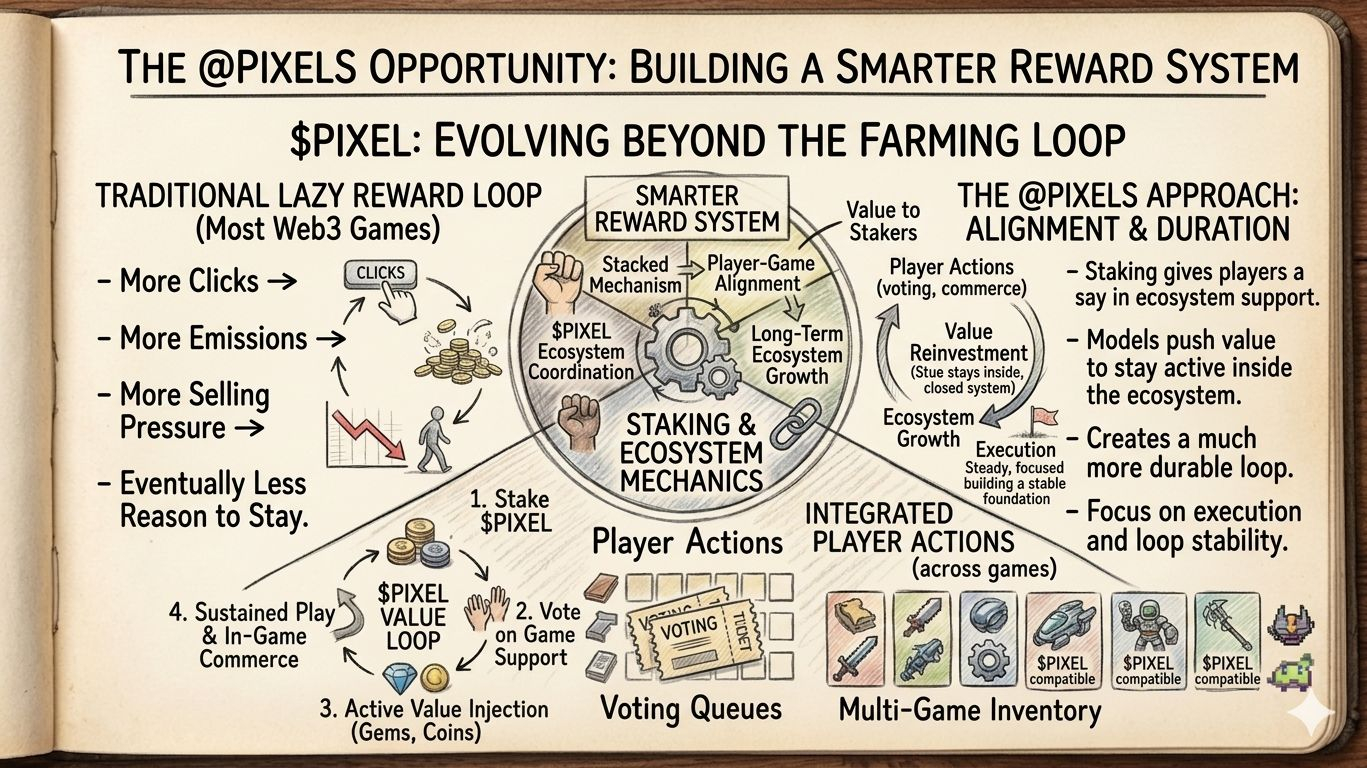
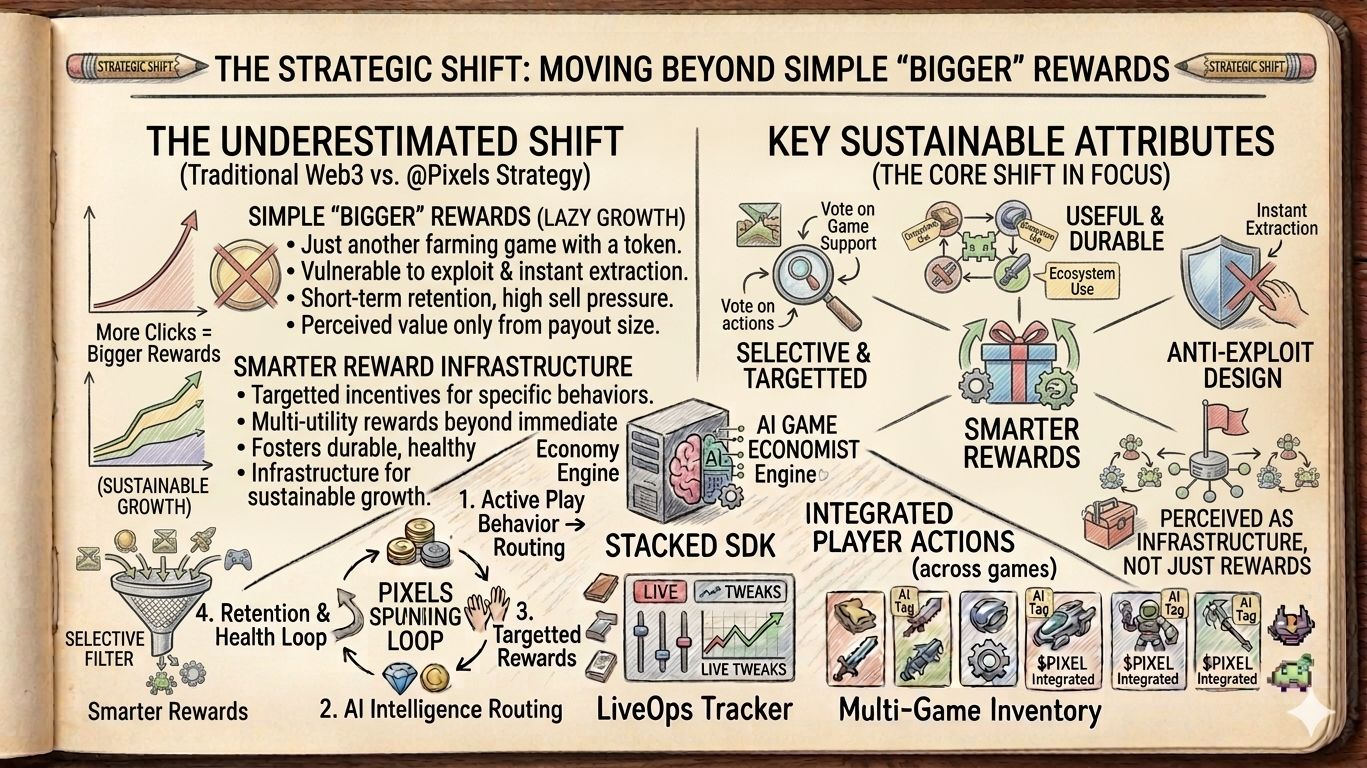
What makes Stacked stand out is that it is not being presented like a normal add-on. Public descriptions position it as an SDK tied to rewarded LiveOps, supported by an AI game economist that can make live suggestions and tweaks. That changes the conversation. Instead of treating rewards like a fixed faucet, the idea is to route incentives more intelligently toward the behaviors and moments that actually strengthen retention and ecosystem health.
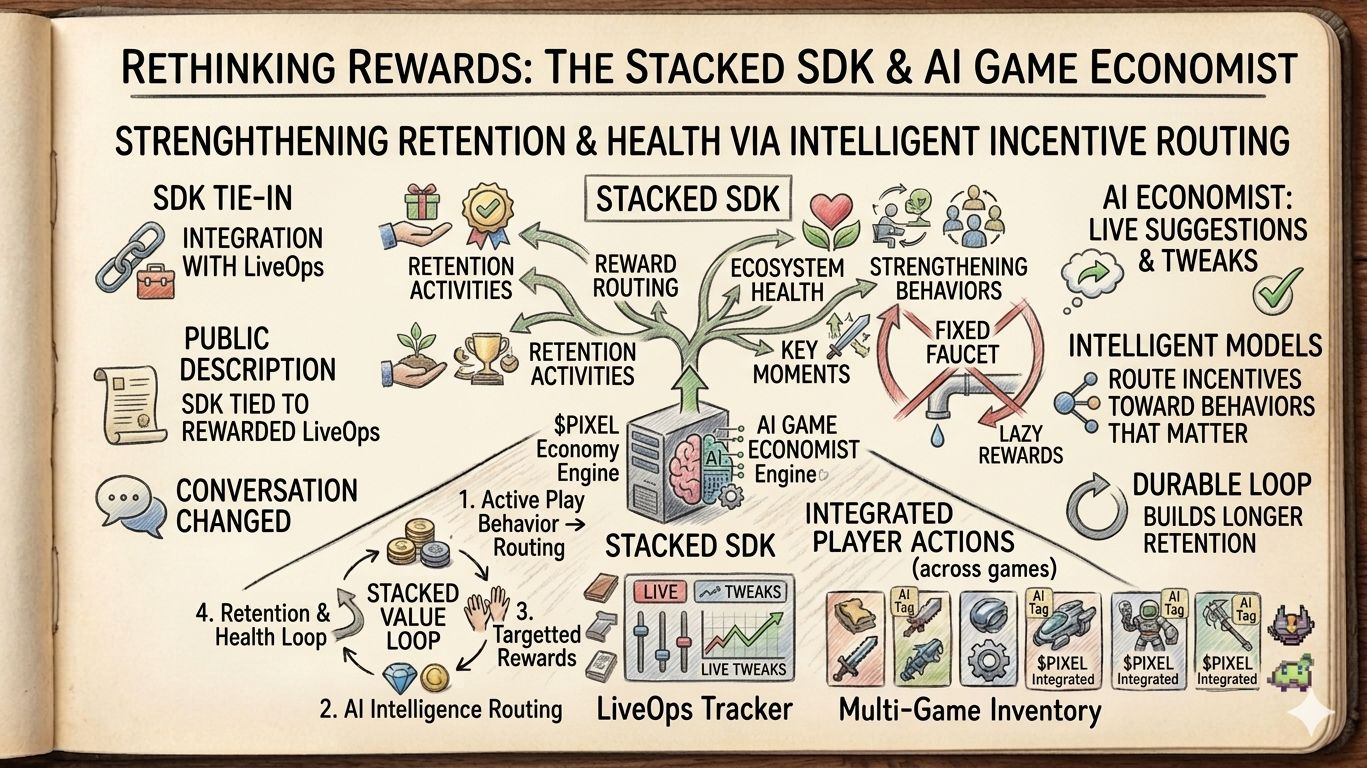
That is where the long-term case for $PIXEL starts to look stronger. Pixels’ whitepaper describes a staking model where games act like validators, letting stakers direct support and incentives toward specific game pools rather than treating the ecosystem like a single flat reward stream. On top of that, Pixels has introduced $vPIXEL as a spend-and-stake-only token backed 1:1 by $PIXEL, specifically to reduce instant extraction and sell pressure while keeping value active inside the ecosystem.
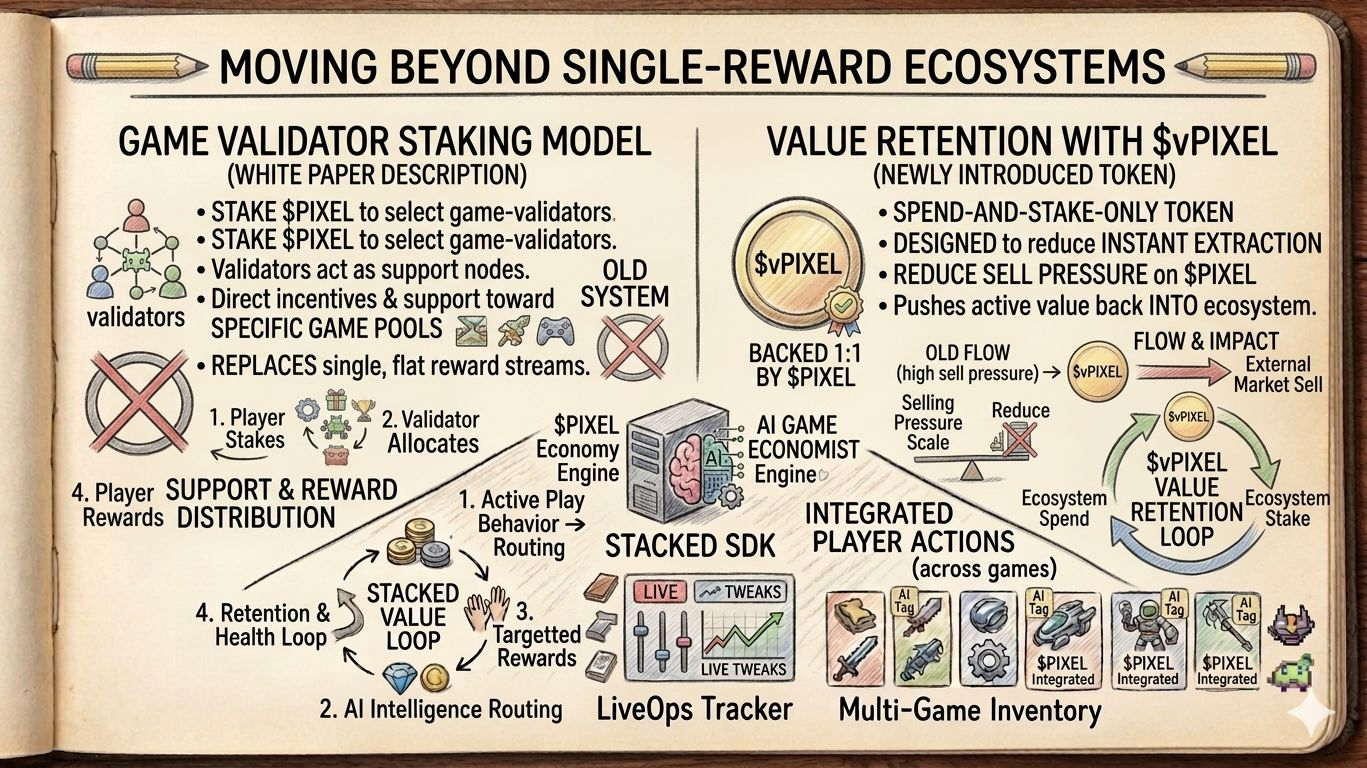
To me, that is the part many people are still underestimating. @Pixels is not simply trying to make rewards bigger. It is trying to make them more selective, more useful, and harder to exploit. If Stacked works the way the team hopes, then the project stops looking like “just another farming game with a token” and starts looking more like infrastructure for sustainable game growth.
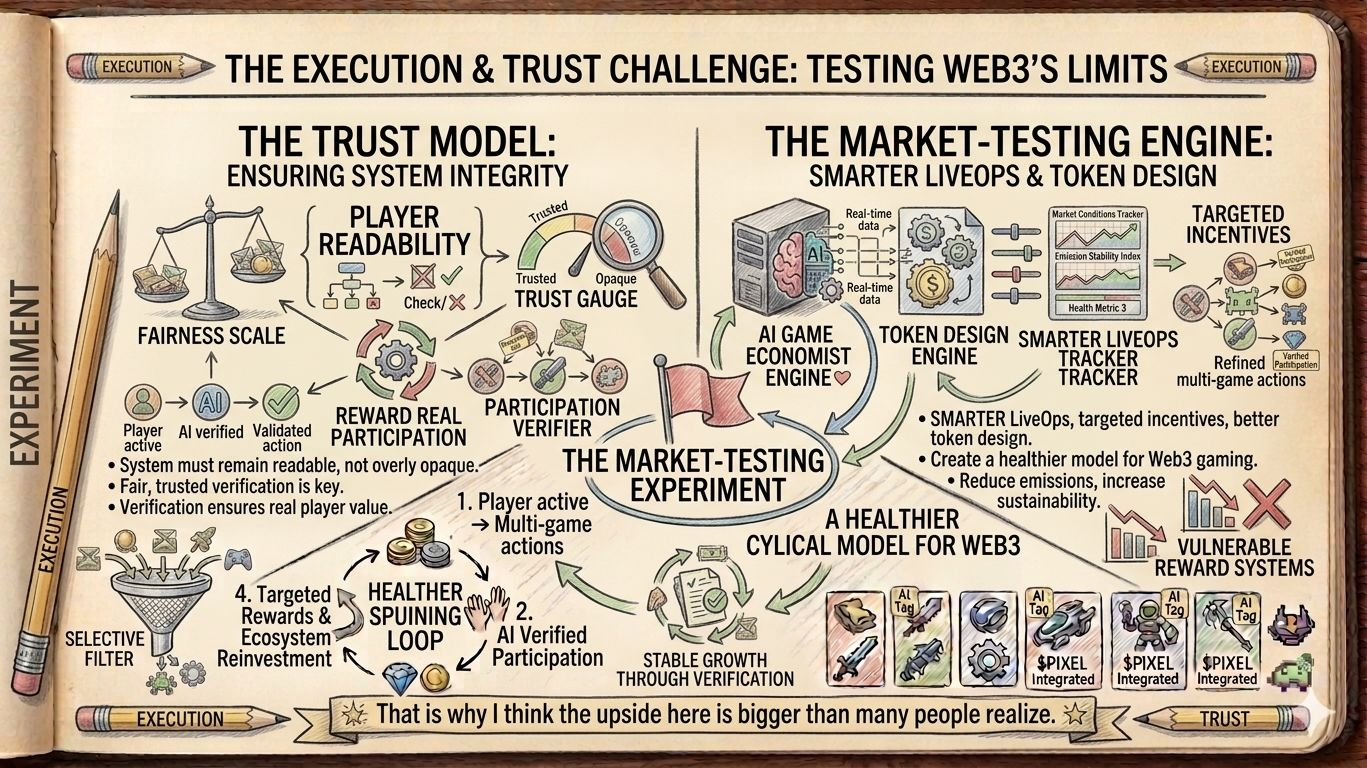
Of course, execution still matters. A system like this has to stay fair, readable enough for players to trust, and strong enough to reward real participation without feeling overly opaque. But that is exactly why this experiment matters. In a market full of reward systems that collapse under their own emissions, Pixels is testing whether smarter LiveOps, targeted incentives, and better token design can create a healthier model for Web3 gaming.
That is why I think the upside here is bigger than many people realize.
If Stacked keeps improving reward efficiency, and if $PIXEL keeps expanding as the coordination layer across the ecosystem, then @Pixels may end up being remembered less for farming and more for proving that Web3 rewards do not have to be dumb, inflationary, or short-lived.