
Web3 gaming is changing—but not in a loud, dramatic way. It’s a slower, quieter shift. If you’ve spent time around blockchain games, you’ve probably noticed how the early phase worked. Big launches, strong hype, reward systems everywhere. For a while, it felt exciting.
But that excitement didn’t always last.
Most games were built around earning first, and playing second. So when the rewards slowed down, the experience lost its pull. People didn’t leave because they were impatient—they left because there wasn’t much to stay for.
That’s the lesson the space is finally starting to understand.
Games Are Starting to Feel Like Games Again
Over the next five years, Web3 gaming is likely to move in a much simpler direction. Not simpler in technology, but simpler in feeling.
Players won’t care as much about whether something is “on-chain” or not. They’ll care about whether the game feels worth their time. Blockchain will slowly move into the background, and the experience will move to the front.
The best Web3 games won’t feel like crypto products.
They’ll just feel like games you enjoy opening.
And that’s where social casual games come in.
Why Social Games Fit This Future So Well
Social casual games have a natural advantage. They’re easy to start, easy to understand, and easy to return to. You don’t need to invest hours every time you log in. You just show up, do a few things, interact a little, and leave.
But over time, those small actions turn into habit.
That’s something Web3 has been missing.
Ownership only starts to matter when players actually stay. If someone logs in once and leaves, it doesn’t matter what they own. But if they return every day, even small ownership starts to feel meaningful.
That’s why social games may quietly become the strongest part of Web3 gaming.
Where Pixels Sits in All of This
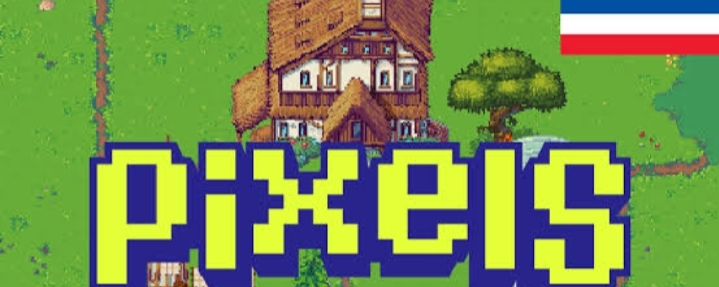
Pixels feels like an early version of this direction.
It doesn’t try to overwhelm you. You log in, you farm, you move around, you interact with other players, and you slowly build your space. Nothing feels forced. Nothing feels too heavy.
It’s simple, but in a way that works.
The important part is that Pixels doesn’t depend entirely on its economy to keep people engaged. The game itself is doing a lot of the work. The token, the rewards, the ownership—they’re there, but they don’t take over everything.
That balance is what gives it a better chance at lasting longer.
What the Next Five Years Might Look Like
If things continue in this direction, Web3 gaming will start blending into normal gaming. Players won’t even think about the blockchain side most of the time.
Games like Pixels could evolve in a few key ways:
They might expand into larger ecosystems instead of staying as one single game.
They might connect multiple experiences under one shared identity.
They might give players more ways to use what they earn beyond just trading or selling.
At the same time, the economy itself will likely change.
Instead of being the main attraction, tokens will become more about utility—unlocking features, supporting progression, or adding small advantages. Less pressure, more purpose.
The Real Challenge: Keeping Players, Not Just Attracting Them
One thing that won’t change is how difficult retention is.
Getting attention is easy in Web3. Keeping it is not.
Pixels, like every other project, will still face that challenge. The question is not how many players try the game. The real question is how many players come back when there’s no hype pushing them.
That’s where design matters the most.
If the gameplay stays simple but meaningful, if the world continues to feel social and comfortable, then Pixels has a real chance to stay relevant longer than most.
A More Human Direction for Web3 Gaming
In the end, the future of Web3 gaming doesn’t look more complicated. It actually looks more human.
Less focus on extracting value.
More focus on spending time.
Less pressure to earn.
More space to enjoy.
Pixels fits into that future not because it’s the biggest or the most advanced, but because it understands something many early projects missed:
People don’t come back just for rewards.
They come back for how a place makes them feel.
And if Web3 gaming continues to move in that direction, then Pixels isn’t just part of the trend—it’s a glimpse of what the space is slowly becoming.
