
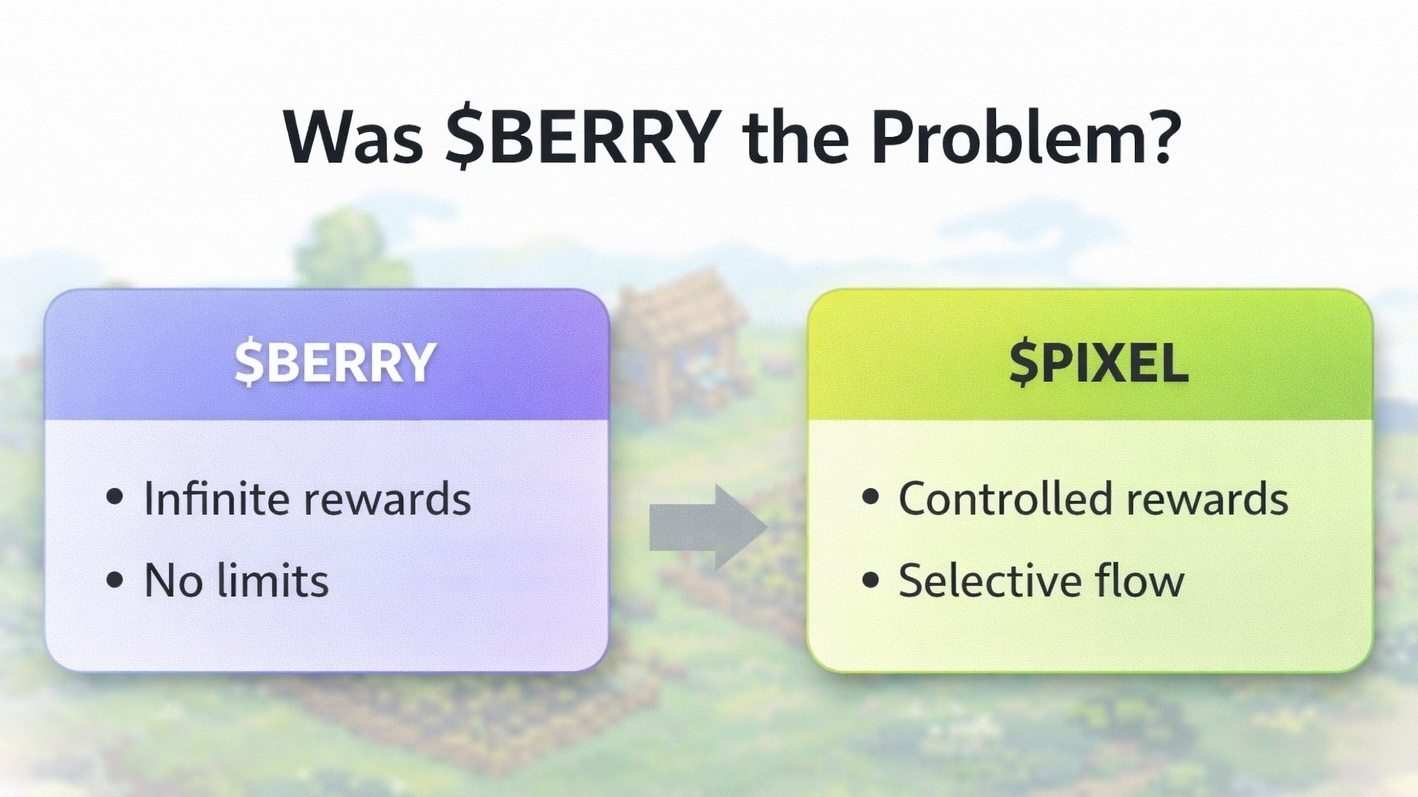
I remember there was a time when Pixels didn’t feel restrictive at all.
Everything was seamless, rewards came often, and there was continuous progress.
This was the $BERRY era.
It seemed ideal on paper. Players could farm, earn, and stack their rewards with ease. But underneath, the system had a problem it couldn’t hide forever.
There was no real limit.
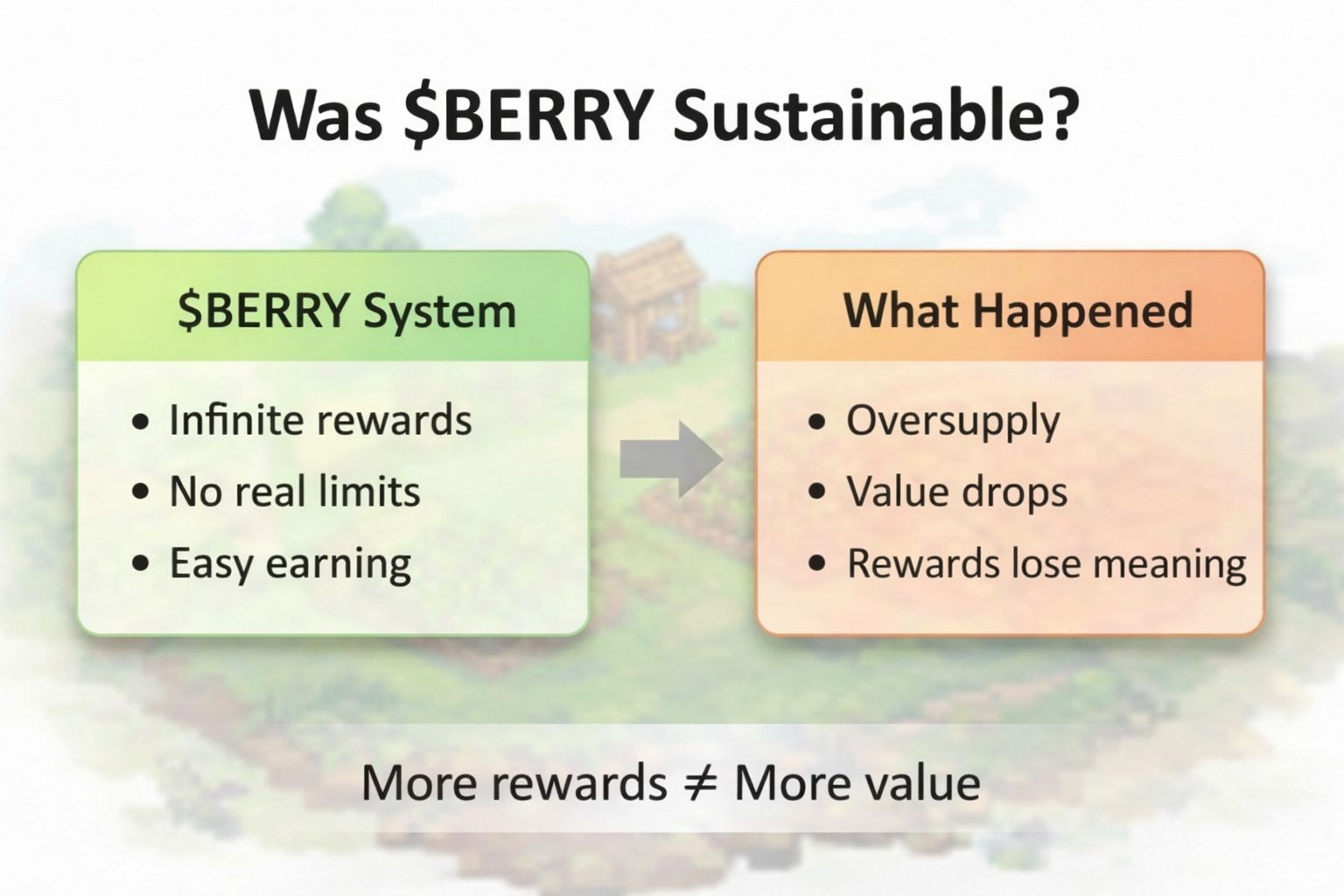
$BERRY was designed like an infinite loop. More activity meant more tokens, but there weren’t enough ways to remove them from the system. So value didn’t build it spread thinner over time.
Everyone looked like they were earning.
But the system itself was slowly breaking.
That’s the part most players didn’t notice.
Because when everything is rewarded, nothing holds weight.
At some point, Pixels had to make a decision. Not an upgrade a reset.
$BERRY was quietly removed from relevance, and the system shifted toward $PIXEL
But this wasn’t just about changing tokens. It was about changing control.
Rewards were no longer everywhere.
They became selective.
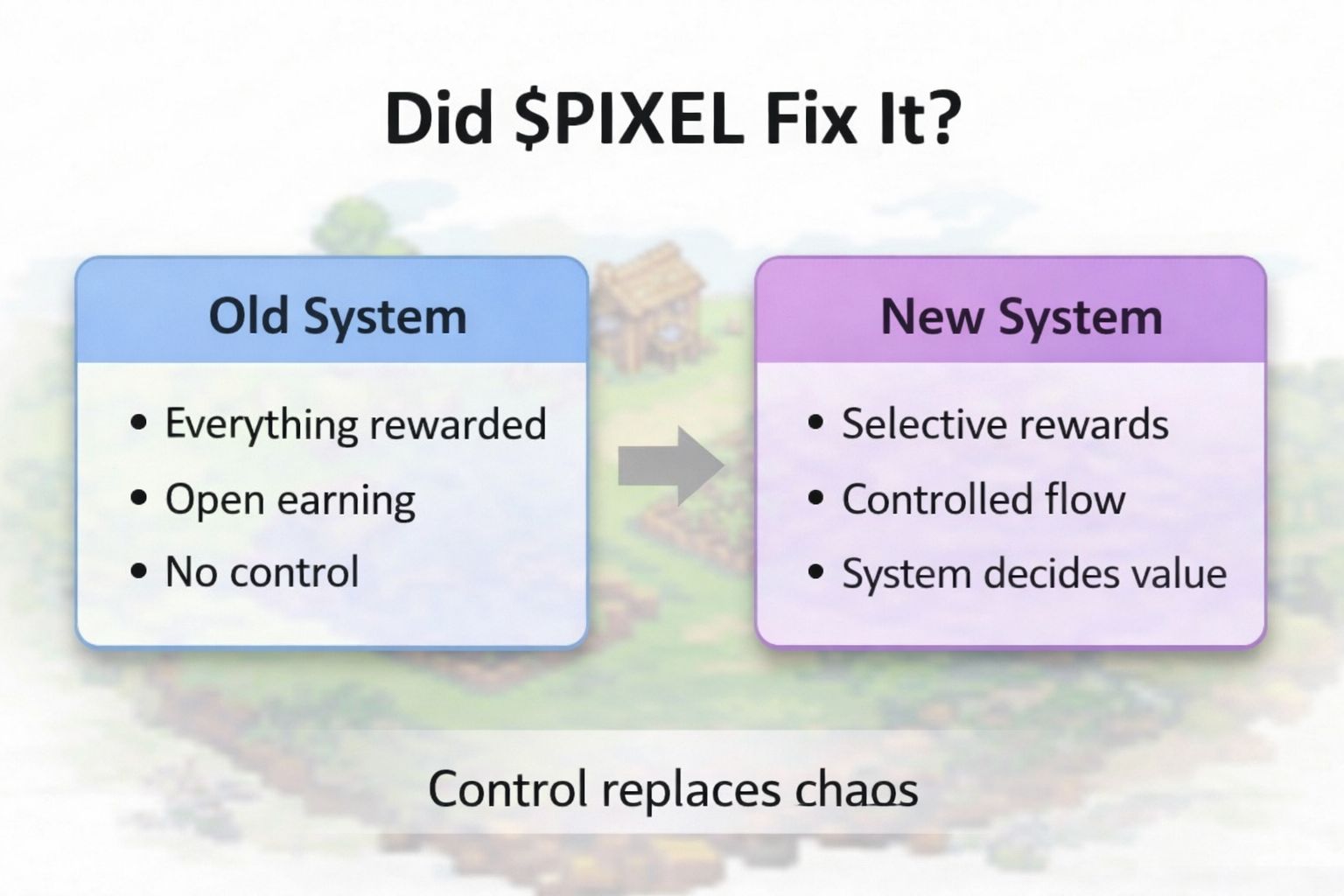
Instead of letting value flow freely, the system started deciding where it should appear.
And now, with Chapter 3 and the industrial shift, that control feels even stronger.
The game is no longer just about farming and collecting.
It’s about how resources move, where effort is directed, and which parts of the system actually connect to value.
It looks more complex.
But complexity doesn’t always mean the problem is solved.
$BERRY failed because everything was rewarded.
Now, not everything is.
That changes the outcome but not necessarily the risk.
Because if the system controls rewards too tightly, players don’t extract value freely.
They operate within it.
So the real question isn’t whether Pixels fixed its economy.
It’s whether it replaced an open system that collapsed with a controlled system that simply hides the pressure better?