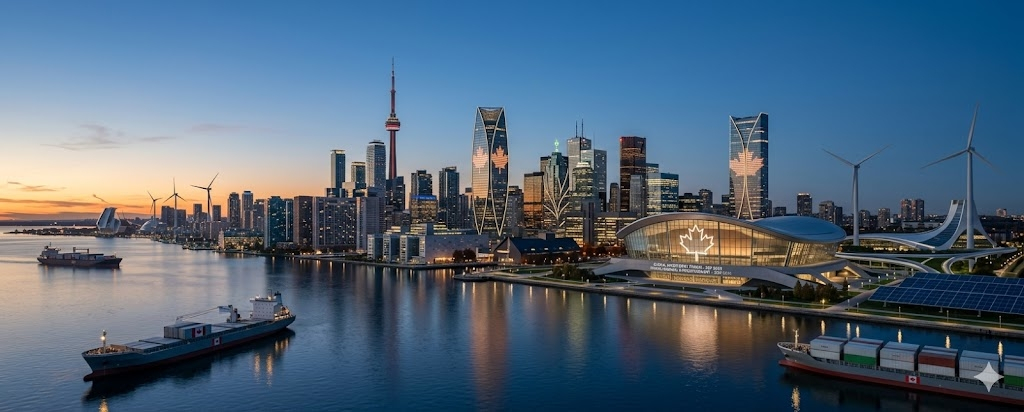

As geopolitical tensions continue to reshape global trade, Canada is making a decisive move to fortify its own house. Prime Minister Mark Carney’s announcement this week—inviting global investors to Toronto this September—isn't just a routine summit; it is a $1 trillion (CAD) declaration of economic independence.
With the U.S. trade climate becoming increasingly volatile under the Trump administration, Carney is leveraging Canada’s status as an "energy superpower" to decouple from a traditional over-reliance on our southern neighbor. The goal is clear: bridge the massive investment gap that has seen $2 exit the country for every $1 that enters over the last decade.
The Strategy: Efficiency and Energy
Carney is betting on two major pillars to win back the market:
Regulatory Speed: The creation of a specialized office to fast-track "national interest" projects—like pipelines and infrastructure—aims to cut approval times to under two years.
Geopolitical Arbitrage: By capitalizing on energy shifts caused by conflicts in Europe and the Middle East, Canada is positioning itself as the stable, ethical alternative for global power needs.
The Hurdles Ahead
The path to $1 trillion isn't without friction. The administration faces a delicate balancing act with Indigenous sovereignty and environmental protections. With the Supreme Court mandating robust consultation and environmental groups ready to litigate, Carney’s "fast-track" office will be the ultimate test of whether a G7 nation can harmonize rapid industrial growth with modern social and legal standards.
Canada is effectively signaling that it is no longer content being a "branch plant" economy. Whether Carney can convince domestic pension funds to keep their $10 trillion in assets at home remains the trillion-dollar question.
#CanadaEconomy #MarkCarney #GlobalInvestment #EnergySuperpower #EconomicSovereignty