
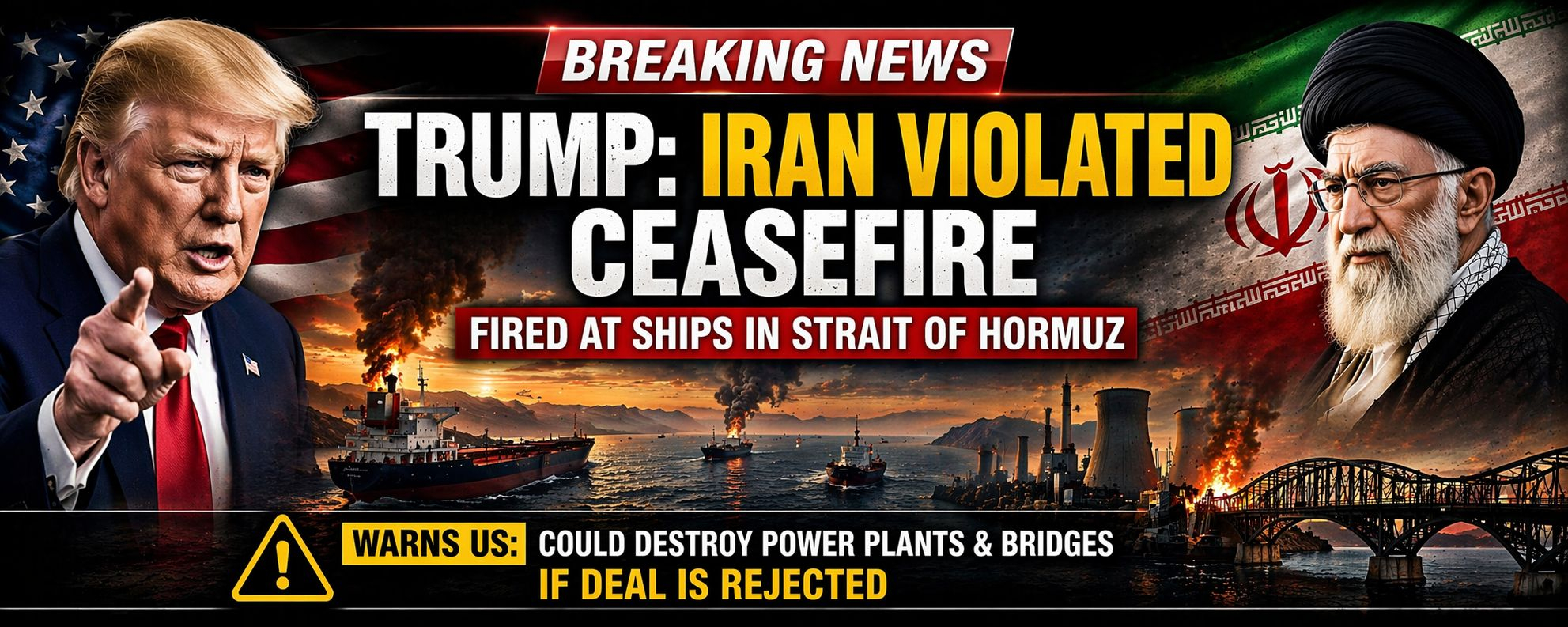

Tensions in the Middle East just took a sharp turn.
Donald Trump has accused Iran of violating a ceasefire after reports of gunfire targeting ships in the Strait of Hormuz — one of the most critical energy routes on the planet.
According to Trump, multiple vessels — including a French-linked ship and a UK freighter — were targeted, raising immediate concerns about maritime security and global trade stability.
But the real escalation is in the warning that followed.
Trump stated that if Iran refuses a proposed deal, the U.S. could take direct action against key infrastructure — including power plants and bridges. That’s not routine political pressure. That’s a signal of potential military escalation.
At the same time, negotiations are reportedly being pushed through diplomatic channels in Islamabad. But the tone suggests we are far from a resolution.
Here’s why this matters more than headlines:
Nearly 20% of global oil supply flows through the Strait of Hormuz
Any disruption instantly impacts oil prices, shipping, and inflation
Markets don’t wait for war — they react to uncertainty
And right now, uncertainty is rising fast.
What we’re seeing isn’t just conflict — it’s leverage.
Control the Strait, and you control a major artery of the global economy.
Trump’s stance is aggressive:
Take the deal — or face consequences.
Iran’s position appears equally firm:
Pressure us — and we escalate disruption.
This is no longer just geopolitics.
It’s a high-stakes standoff with global economic consequences.
Watch this closely. The next move from either side could shift markets overnight.
#ranRejectsSecondRoundTalks #KelpDAOFacesAttack #RheaFinanceReleasesAttackInvestigation