
Most play to earn economies collapse for a simple reason. Rewards are distributed without control.
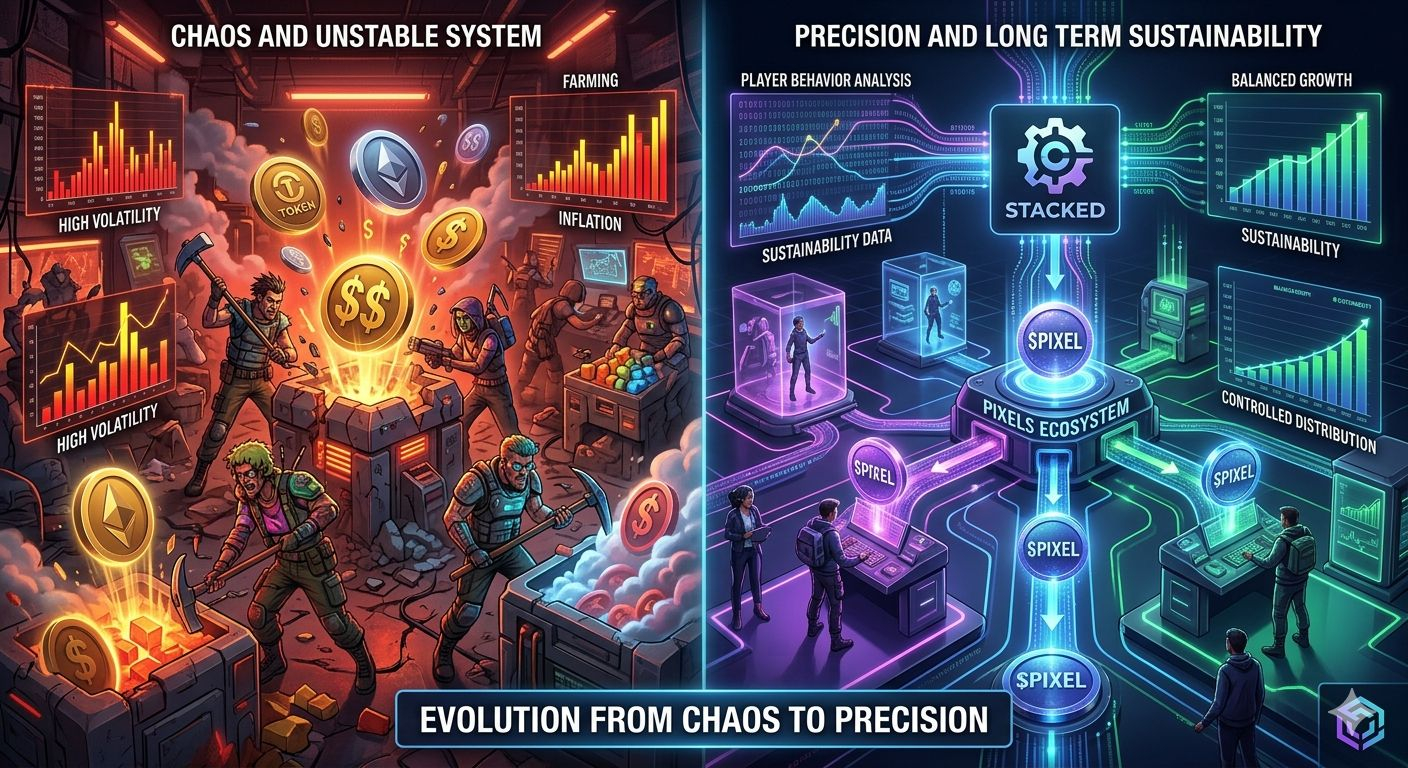
In early systems, players were incentivized to maximize extraction. The more they farmed, the more they earned, and the faster they sold. This created a constant cycle where tokens lost value over time. The issue was not player behavior, it was system design.
This is the exact problem @undefined is trying to address with its evolving reward structure.
Instead of open distribution, $PIXEL is now being integrated into systems where rewards are linked to measurable behavior. Inside the #pixel ecosystem, engagement is not just about activity, it is about contribution. This changes the dynamic from farming to participation.
The introduction of systems like Stacked suggests a more controlled approach. Rewards are no longer given equally, they are targeted. This reduces inefficient distribution and helps protect the economy from constant sell pressure.
However, this approach introduces a different challenge. When rewards become selective, the system needs to accurately identify valuable behavior. If the model fails to distinguish between real players and optimized farming, it risks misallocating incentives.
This is where data becomes critical. By analyzing player patterns, retention signals and interaction quality, @Pixels is attempting to build a system where rewards reflect long term value instead of short term activity.
From a structural perspective, this is a shift from inflation driven economies to efficiency driven systems.
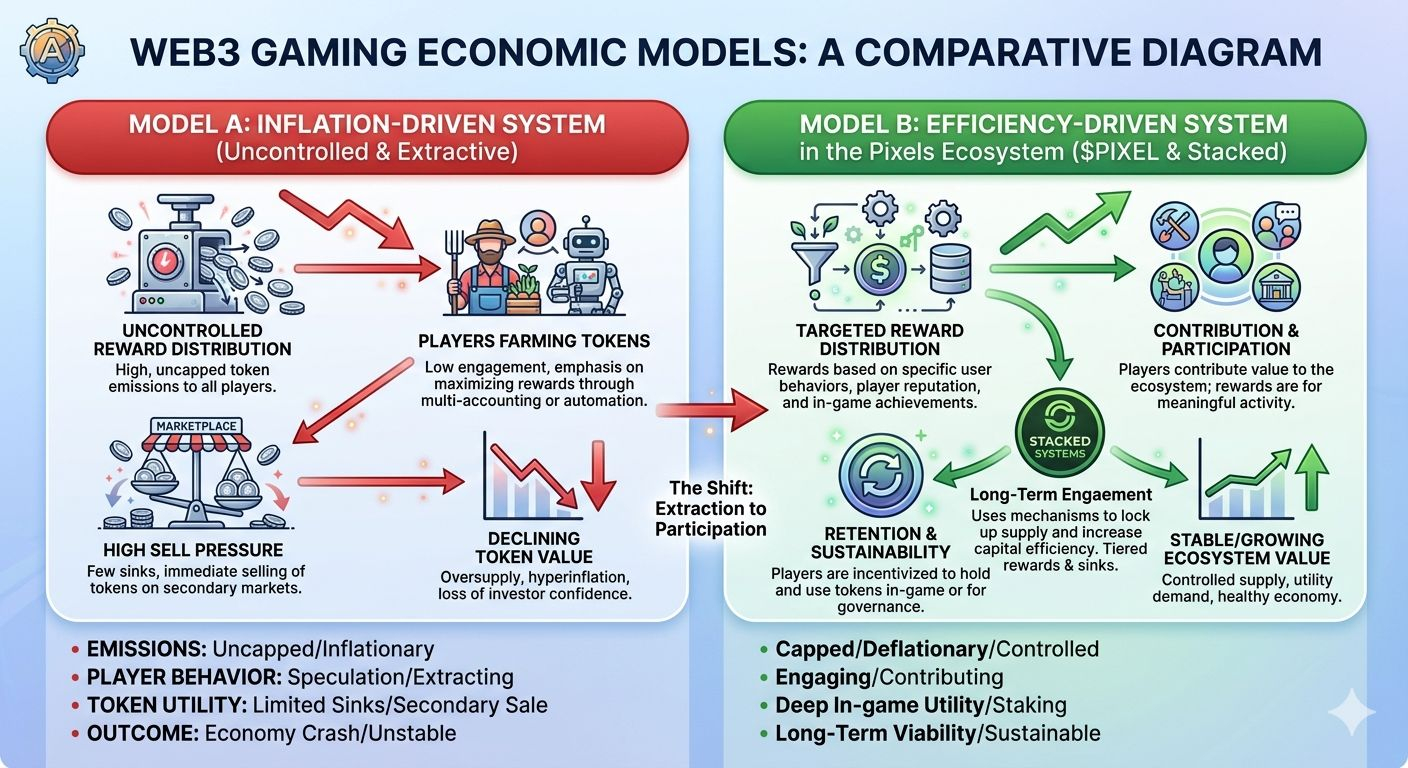
If successful, the #pixel ecosystem could demonstrate that sustainable reward models are possible in Web3 gaming. If not, it will face the same pressure that affected earlier play to earn systems.
The difference is that this time, the problem is being addressed at the design level, not after the collapse.