
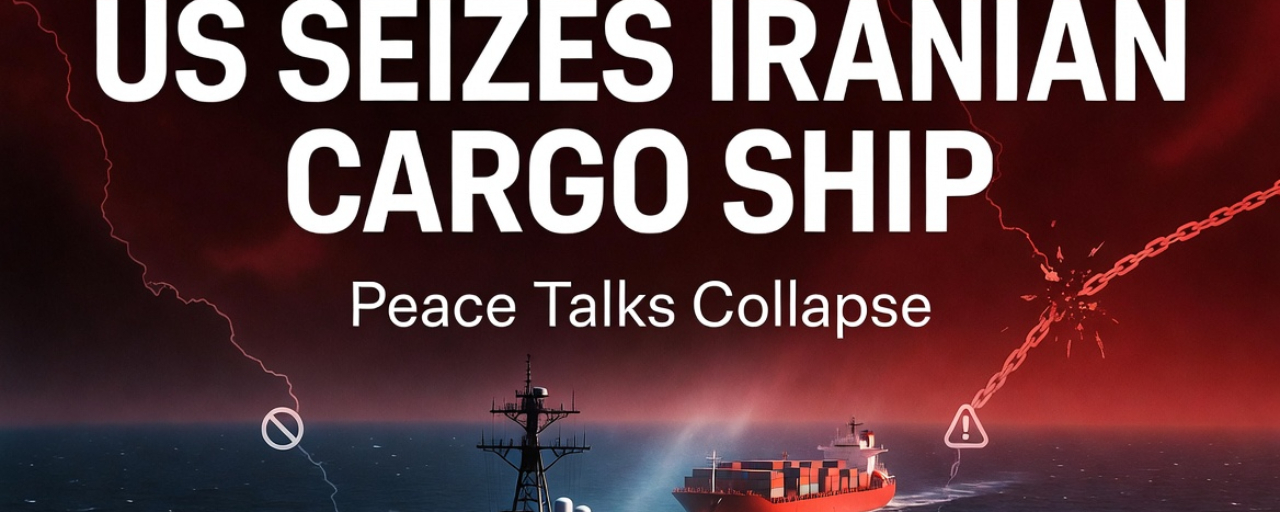
Tensions between the United States and Iran have sharply escalated after American forces seized an Iranian cargo vessel in the Gulf of Oman on April 19, 2026.
Iran has strongly condemned the action, labeling it an act of “piracy” and has officially withdrawn from the upcoming round of peace talks. Tehran stated that it will not return to negotiations until the seized ship is released and the US naval blockade on Iranian ports is completely lifted.
This incident comes at a critical time, just days before the current ceasefire is set to expire. The US had been pushing for a second round of talks to stabilize the situation, but the seizure has broken the fragile trust between both sides.
The Strait of Hormuz remains a major flashpoint. Any further disruption in this vital waterway could severely impact global oil supply and send energy prices soaring.
Role of Major Powers
Russia has openly expressed support for Iran, offering diplomatic backing and reportedly providing intelligence and technical assistance.
China, Iran’s largest oil buyer, has called for calm and restraint while continuing its diplomatic efforts. However, reports suggest Beijing is quietly preparing contingency plans to protect its energy interests, including possible alternative supply routes.
The situation remains highly fluid. Diplomats are still working behind the scenes, but the window for a peaceful resolution is narrowing rapidly.
Markets are watching closely — any further escalation could trigger sharp movements in oil prices and risk assets.