
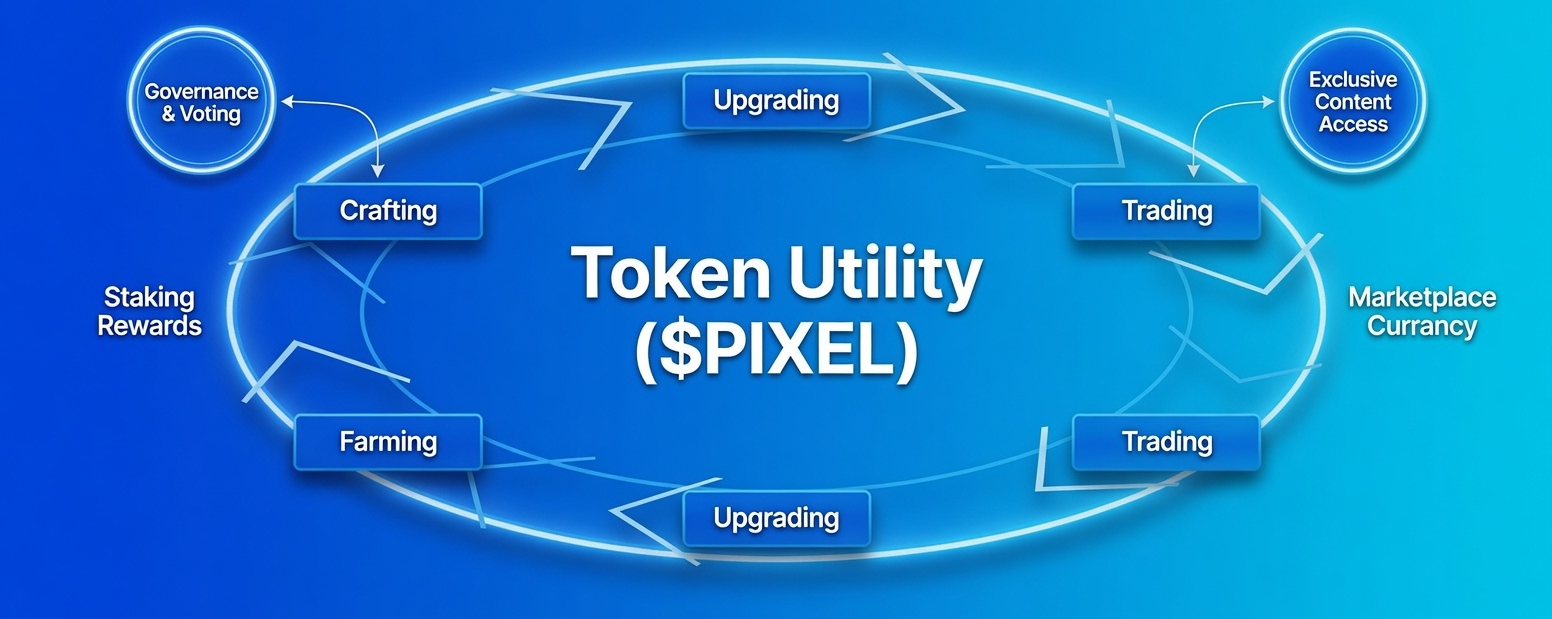
At first glance, Pixels looks familiar. Plant, harvest, craft, repeat. The kind of loop that feels almost automatic if you’ve played any farming game before.
But Web3 games don’t fail because the loop is boring. They fail because the economy can’t absorb the loop long enough.
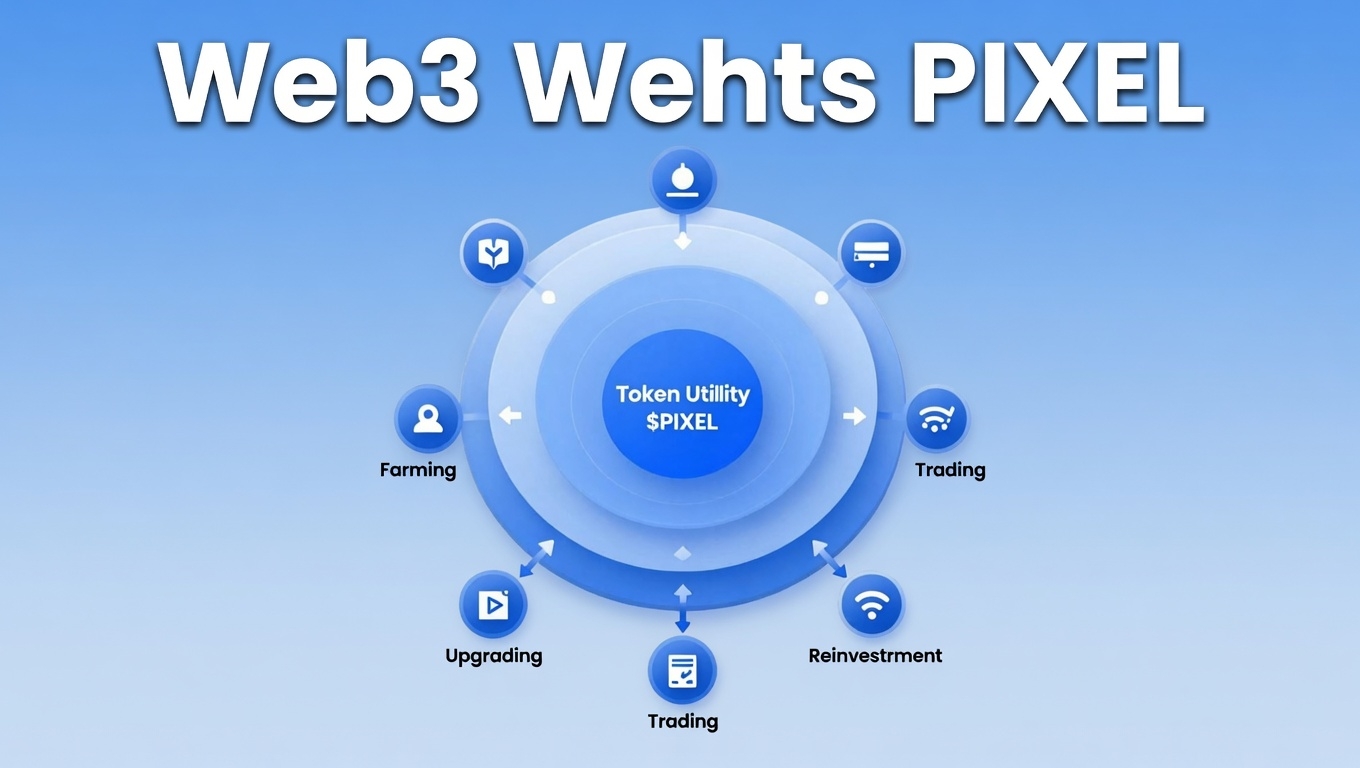
That’s where @Pixels becomes more interesting.
Most GameFi models reward activity directly. More time equals more emissions. The problem is that when emissions outpace absorption, rewards stop compounding and start diluting. Players notice. The economy weakens. Retention follows.
Pixels, built on the Ronin Network, operates inside what it calls a stacked ecosystem. Instead of isolating farming as a single reward stream, the loop connects to crafting, upgrades, asset ownership, and broader participation layers. In theory, this creates internal circulation rather than constant external pressure.
That distinction matters for $PIXEL
If a token only functions as an output of gameplay, it behaves like fuel — consumed, sold, replaced. But if it sits at the center of multiple reinforcing loops, it begins acting more like structural glue. The difference shows up in how long players stay engaged once novelty fades.
Durability in game economies rarely comes from excitement alone. It comes from friction that feels productive rather than extractive. If players reinvest instead of immediately exiting, the token experiences absorption rather than rotation.
Ronin’s infrastructure also changes the equation. A network already optimized for gaming reduces technical friction, which increases the probability that loops feel smooth rather than forced. But infrastructure alone doesn’t guarantee sustainability. The real question is whether player activity transitions from experimental to habitual.
That’s where risk emerges.
If progression becomes too predictable, optimization can compress behavior. Players stop exploring and start maximizing. Economies narrow. Diversity drops. In Web3 games, that shift often precedes stagnation.
On the other hand, if Pixels can maintain loop flexibility while preserving internal value circulation, $PIXEL could benefit from a slower but more resilient growth curve. Not explosive spikes, but compounding participation.
There’s a difference between scaling users and scaling usable activity.
Many GameFi projects focus on the first metric. The second is harder to see but far more durable. If Pixels succeeds in turning player time into recurring engagement rather than one‑cycle extraction, the economy has room to stabilize.
The farming loop is the surface.
The durability of the loop is the real test.
For $PIXEL , the next phase won’t be about how many players arrive — it will be about how many stay once rewards normalize and habit replaces hype.
That’s where game economies either mature… or unravel.