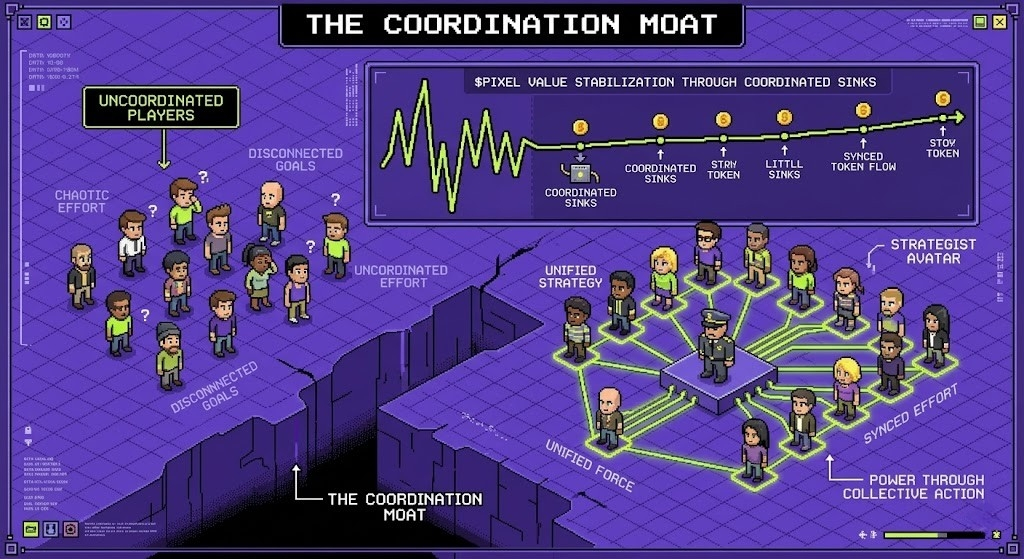
Most Web3 games struggle because they are designed for thousands of independent, uncoordinated actors, making their economies predictable and prone to "extractive" loops. After auditing the Chapter 3: Bountyfall architecture, it is clear that Pixels is moving toward a "Coordinated Actor" model. By introducing Unions, the protocol is shifting from simple farming to complex, group-driven economic warfare.
1. The Death of the "Solo Farmer" Logic
In traditional P2E, each player is a solitary economic unit. In Pixels, Unions transform individuals into a directed economic force.
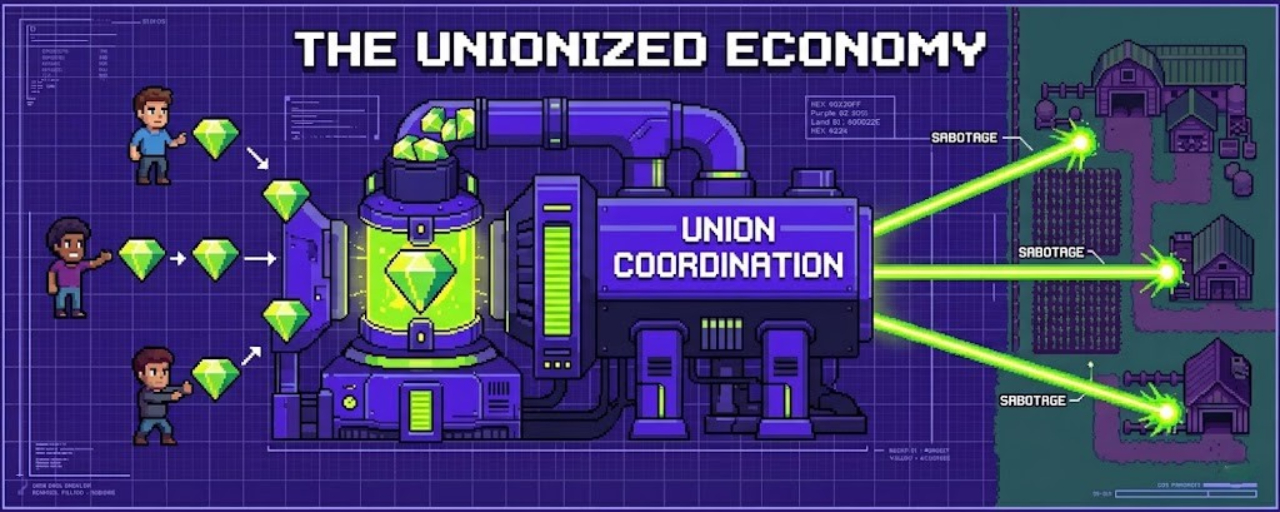
The Coordination Advantage: When 50 players synchronize their focus on a specific resource category via Yieldstones, they create intentional supply shocks. This isn't just "playing"; it is a collective attempt to manipulate market parameters to favor the group.
Strategic Literacy as a Skill: The winning metric has shifted from "clicks per minute" to "strategic interpretation." The most valuable Union members are those who can identify which resource categories are critical for the current competitive phase and redirect the Union’s total productive capacity accordingly.
2. Sabotage: Destructive Sinks as Stability Tools
While most game economies fear destruction, Pixels has turned Sabotage into a core economic stabilizer.
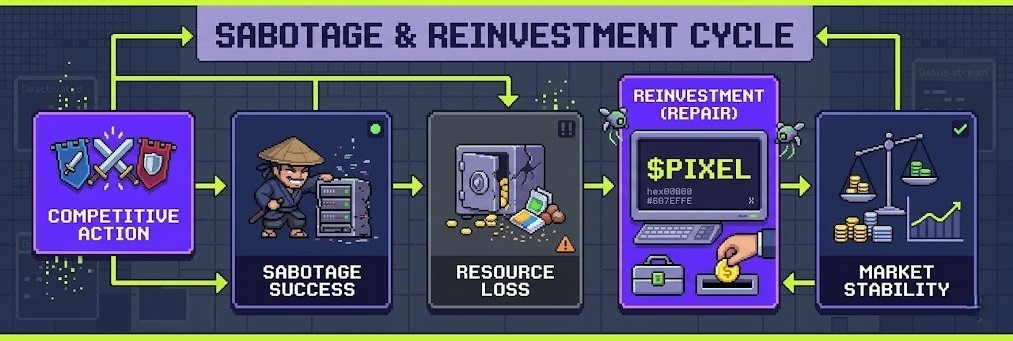
Active Supply Disruption: The ability for one Union to disrupt another’s productive capacity isn't just a PvP feature. It is a tool for removing supply from the market.
The Reinvestment Loop: Sabotage forces rival groups to reinvest $PIXEL into defense and restoration. This creates a constant, non-optional "token sink" that absorbs liquidity precisely when economic competition is highest.
3. Yieldstone Governance: Control Over the Emission Flow
Yieldstones are the first step toward decentralized game management. They are not merely prizes; they are objects of governance.
Capital as a Weapon: Players stake their $PIXEL to Union pools to give their collective weight in the fight for Yieldstones.
B2B Infrastructure: This sets the foundation for external studios to use the Pixels audience as a "coordinated workforce." A studio can launch a game into the ecosystem, and Unions will compete to optimize its resource flow, effectively providing LiveOps as a Service.
Conclusion: From Game to Economic Simulation
Pixels Chapter 3 is a transition from a farming simulator to a geopolitical one. The introduction of coordinated actors and designed disruption makes Pixel rategic resource required for maintaining group dominance, rather than just a reward to be sold.
The era of passive clicking is over. The era of the Economic General has begun.