
OpenLedger is one of those projects that sounds simple when you first hear it, but the more you sit with it, the more layers you notice. It calls itself an AI blockchain. Honestly, that phrase alone already makes you pause a bit. Because okay… what does that even mean in practice?
Here’s the idea. OpenLedger wants to connect AI models, data, and blockchain into one system where everything gets tracked and rewarded. Not in a vague “Web3 future” way, but in a way where contributions actually matter on-chain. Data goes in, models use it, outputs come out, and the system records who contributed what. That’s the pitch.
And yeah, on paper it sounds clean. Almost too clean.
Let’s be real though, the problem they’re trying to fix actually exists. AI today runs on massive piles of data, scraped from everywhere. Websites, code, conversations, you name it. But the people behind that data? They don’t see anything back. No credit, no payment, nothing. Big AI companies take the win and move on.
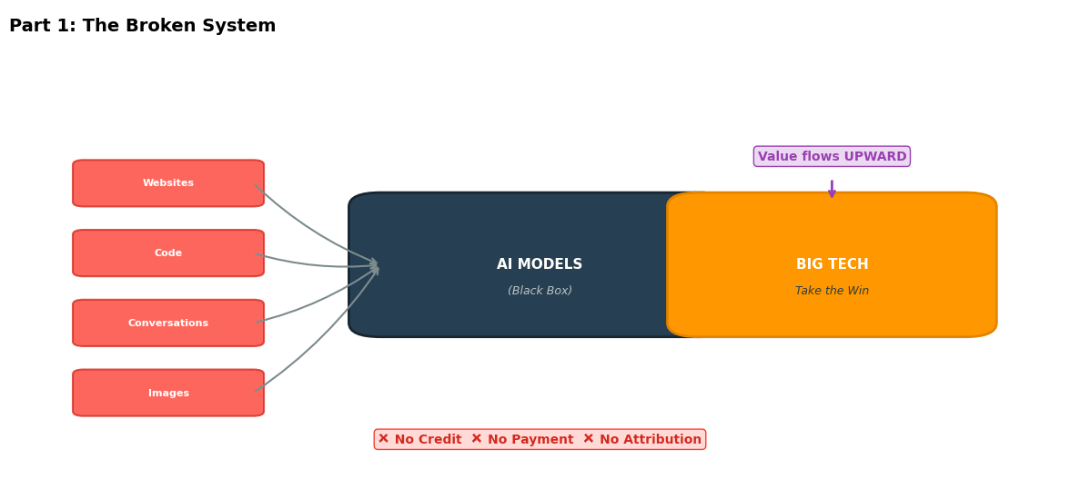
OpenLedger looks at that and says, “yeah, that’s broken.” And I kind of agree. I’ve seen this pattern before in tech cycles. The value flows upward, not back to the source. Always.
So they bring in this idea called Proof of Attribution. That’s basically their way of saying, “we’re going to track where value comes from and make sure it gets distributed properly.” In simple terms, if your data or contribution helps train or improve an AI model, the system should recognize it and reward you.
Sounds fair. The tricky part is execution. Always is.
Now here’s where things get more interesting. OpenLedger doesn’t just want to be another blockchain that hosts AI apps on the side. It wants to become the actual environment where AI runs. Models get deployed on-chain. Agents operate inside the system. Data moves through it. Everything stays connected and traceable.
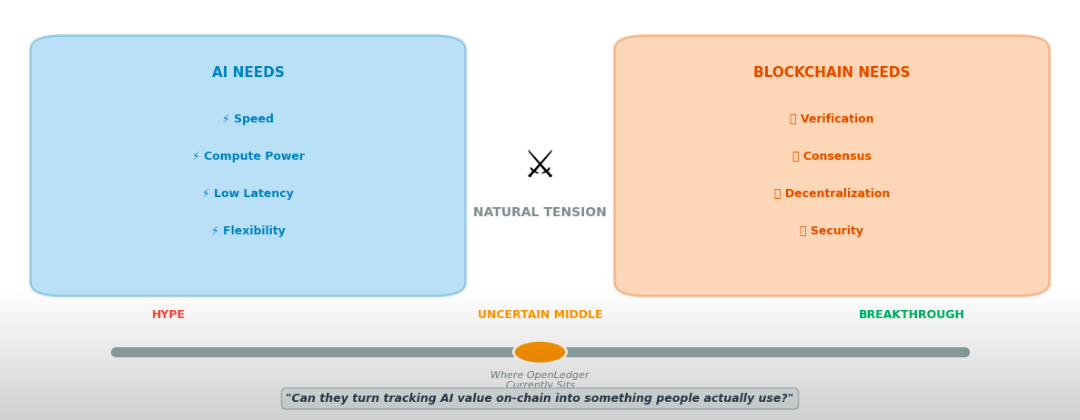
That’s a big claim. Not small. And I’ll be honest, this is the part where my skepticism kicks in a bit. Because running heavy AI workloads on blockchain infrastructure isn’t easy. It’s not just a scaling issue, it’s a design issue. AI systems want speed and compute power. Blockchains want verification and consensus. Those two things don’t naturally like each other.
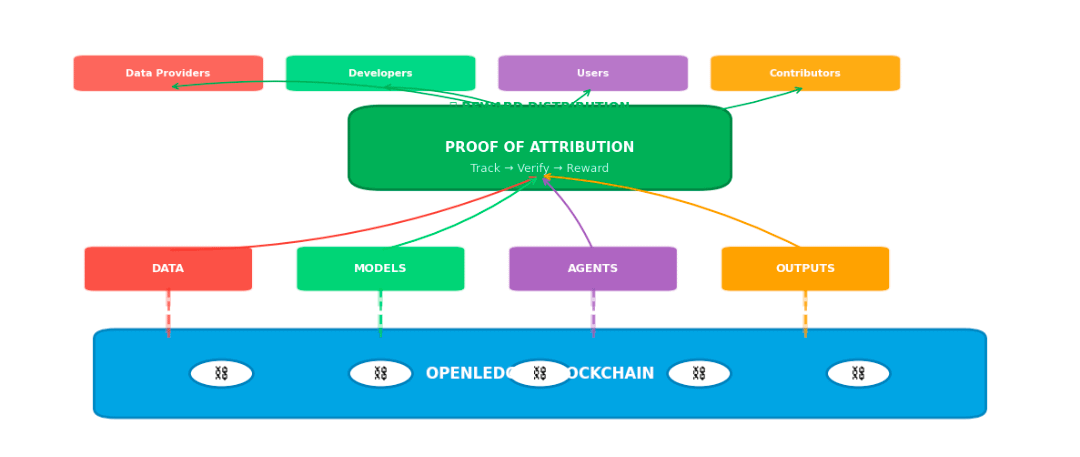
But okay, assume they make it work in a hybrid way. Then you get something closer to what they’re describing: an AI economy where every action leaves a trace, and every trace potentially has value attached to it.
That changes the conversation a bit.
Instead of AI being this black box controlled by a few companies, you get a system where contributions matter at the edges. Data providers, developers, even users interacting with models… they all become part of the loop. That’s the vision anyway.
And look, I won’t pretend this is the first time we’ve heard something like this. I’ve seen similar ideas pop up in other AI crypto projects. Some focused on compute, some on data, some on agents. Most of them struggle somewhere between vision and reality. That gap is real.
Still, OpenLedger gets attention because the timing is right. AI is everywhere right now. Crypto is always looking for its next narrative. Put them together and people start paying attention, sometimes faster than the tech deserves.
So where does that leave us?
Honestly, somewhere in the middle. OpenLedger isn’t clearly a breakthrough yet, but it’s not empty hype either. It sits in that uncomfortable space where the idea makes sense, the demand exists, but the execution hasn’t proven itself.
And that’s usually where the real story starts… or quietly dies.
I guess the only real question is whether they can turn “tracking AI value on-chain” from a concept into something people actually use without it feeling forced or over-engineered. Because if they pull that off, even partially, the conversation around AI ownership changes a lot.
If they don’t, it just becomes another name in the long list of “AI blockchain projects that almost made sense.”