
#USCourtDeniesKalshiPolymarketPause
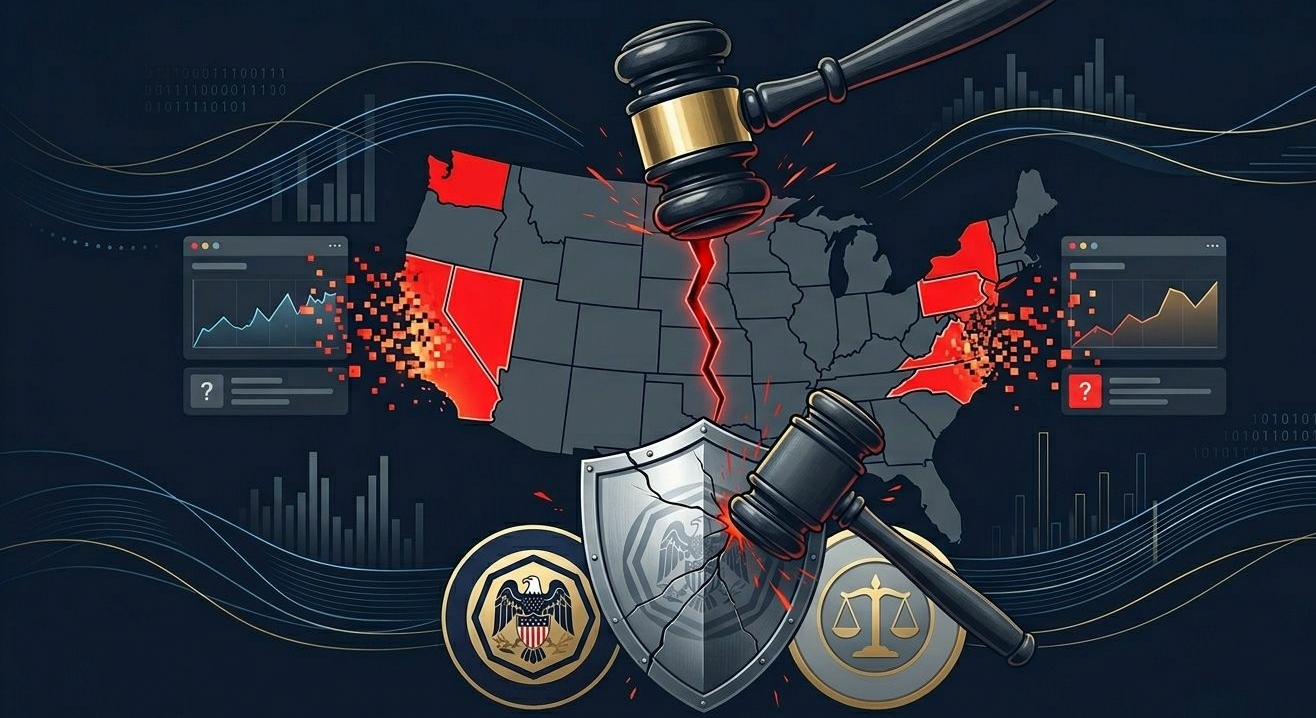
The U.S. Court of Appeals for the Ninth Circuit denied stays for both Kalshi and Polymarket on May 22, 2026, allowing state level gambling enforcement actions in Nevada and Washington to proceed rejecting both platforms' claims that they would suffer irreparable harm if the cases moved forward, and finding neither demonstrated a strong likelihood of success on their federal preemption arguments.
The ruling exposes a structural fault line in U.S. financial regulation. The Ninth Circuit held that federal derivatives oversight through the CFTC does not shield prediction market firms from state gaming enforcement and that raising a federal preemption defense does not, by itself, transfer a case to federal jurisdiction.
The panel was equally unpersuaded by Polymarket's argument that it was effectively acting under federal direction by complying with CFTC requirements, writing that Polymarket's actions merely demonstrate its own compliance with federal law, which cannot alone show that it is acting under a federal officer.
The regulatory landscape is deteriorating rapidly for prediction markets. Nevada filed a civil enforcement action against Kalshi in February 2026 over its lack of a state gaming license, while Washington's Attorney General filed suit against Kalshi in late March 2026 alleging illegal gambling products tied to sports contracts.
At least nine other U.S. states have issued cease and desist letters or filed lawsuits against one or both platforms, with Arizona taking the most aggressive stance by pursuing criminal charges.
Notably, a New Jersey appeals court earlier sided with Kalshi and upheld an injunction blocking state action there creating a growing judicial split across circuits on whether sports-event contracts are federally regulated swaps or illegal gambling products.
💡 Beginner's Corner Federal vs. State Jurisdiction in U.S. Crypto Regulation:
Prediction markets like Kalshi and Polymarket classify their products as federally regulated financial instruments under CFTC oversight while states view the same products as gambling services requiring a state license under gaming laws.
This jurisdictional collision is not a technicality it reflects a foundational gap in U.S. regulatory architecture where financial innovation has outpaced the legal frameworks designed decades before on chain, event linked contracts existed.
💬 With the Ninth Circuit siding with states, is the future of U.S. prediction markets a patchwork of state by state licensing or does the industry need a federal framework that explicitly supersedes state gambling laws to survive at scale?
#USCourtDeniesKalshiPolymarketPause #PredictionMarkets #Kalshi #Polymarket #CryptoRegulation
DYOR | Educational content only | Not financial advice