


A few nights ago I moved a small test position into $OPEN after missing a yield rotation on another protocol by literally a few hours. The annoying part wasn’t that I didn’t know where the better APY was… I actually knew. I was just late. And honestly, that made me rethink what OpenLedger is really trying to solve.

Most people in DeFi think the edge comes from knowledge. Finding the best pool, best chain, best rates. But after staring at OpenLedger’s execution thesis for a while, I’m starting to think the bigger problem is something else entirely: execution delay.
That “yield leak” framing suddenly made sense to me.
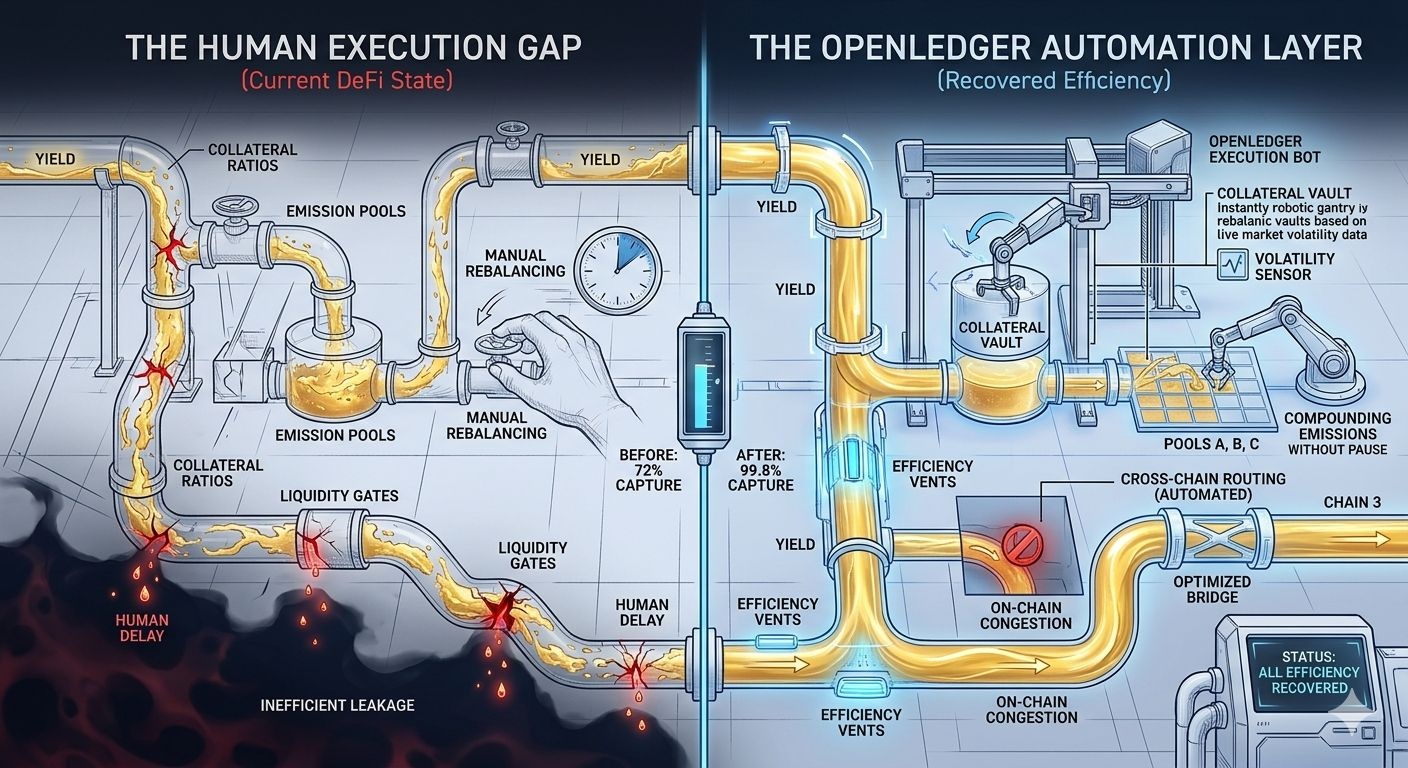
Take collateral management for example. Everyone understands liquidation risk in theory, but real markets don’t wait for humans to react. You go offline for a few hours, volatility spikes, collateral ratio shifts, and suddenly your “safe” position isn’t safe anymore. Same with emission compounding. Reward tokens sitting idle for even half a day quietly reduce overall efficiency, especially across multiple positions.
What caught my attention is that OpenLedger isn’t pitching this like a normal “AI trading bot” narrative. They’re quietly positioning automation as infrastructure. Almost like DeFi itself is becoming too fast for manual participation.
I tested a very small entry because I wanted exposure while watching how the narrative develops, but I’m still skeptical in some areas. Cross-chain routing sounds great on paper until bridges congest, gas spikes, or signal quality turns noisy. And if the execution layer reacts to bad data, automation can amplify mistakes instead of fixing them.
Still… I think the important insight here is this:
OpenLedger may not be trying to create new yield at all. They might be trying to recover lost efficiency that already exists inside DeFi but keeps leaking through human limitations.
That’s a very different angle.
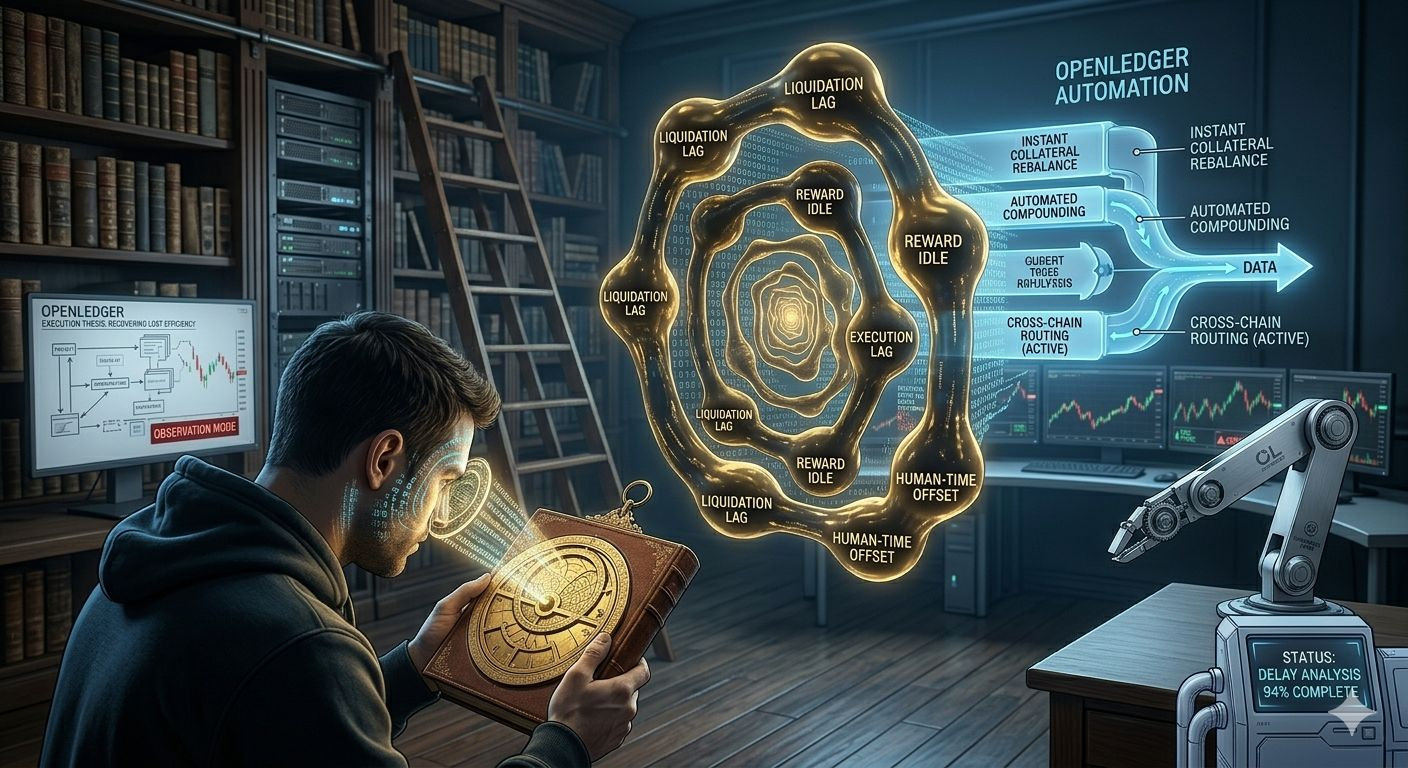
Because if execution speed becomes the real edge, then DeFi slowly shifts from a “who knows more” environment into a “who executes better” environment. And honestly, I’m not fully convinced the system works smoothly yet… but I also don’t think this is something easy to dismiss anymore.
For now I’m just observing, holding a small position, and trying not to confuse a strong concept with a fully solved product. In this market, overconfidence usually hurts faster than being early.