
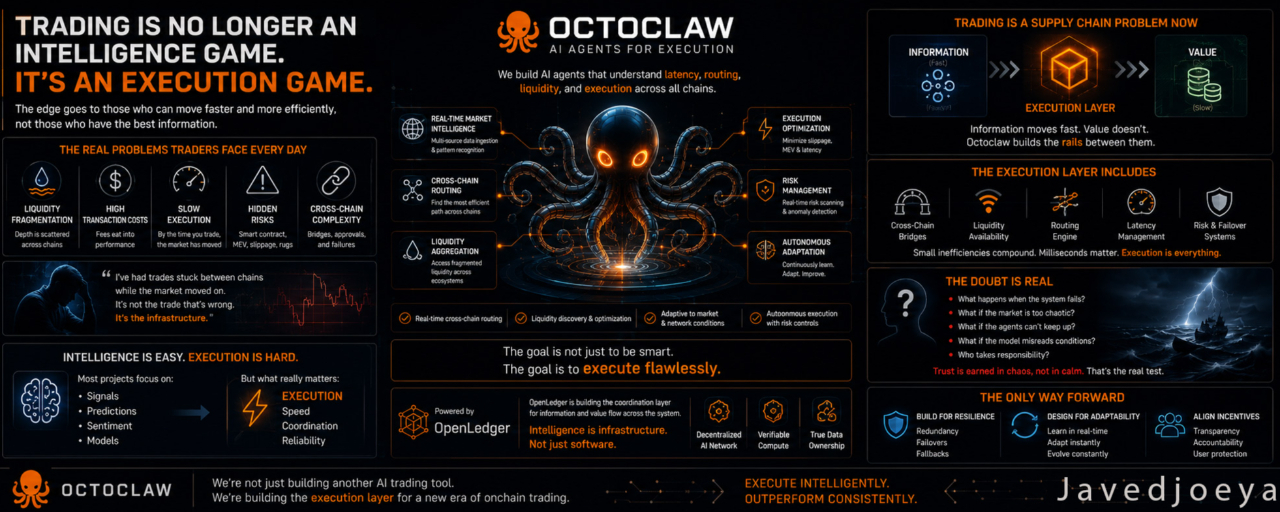
This initially appeared to be just another intelligence and DeFi infrastructure story. To be honest, I mostly disregarded it. I've seen a lot of initiatives promise to have artificial intelligence agents that can assist with trading, but upon closer inspection, the same issues—liquidity issues, costly transactions, sluggish execution, and hidden risks—remain. These initiatives typically fail to address the issues.
I was troubled by anything regarding the #Octoclaw launch. Not because it sounded like a deal, but rather because it appeared as though they were attempting to address the issues that traders deal with on a daily basis. The majority of the time, individuals discuss how trading can benefit from artificial intelligence. They avoid discussing the true problems.
Coordination is more detrimental to trading performance than intelligence. People spend a lot of time analyzing signals, forecasting future events, and attempting to gauge market sentiment. When it comes to actual trading, your ability to execute trades is what matters most. You will lose money if you are unable to enter or exit a trade swiftly.
Octoclaw becomes intriguing at this point. The game will shift if they can actually create intelligence agents that can aid in execution. Who can move more quickly and effectively has the advantage, not who has the finest information.
This is a difficult task. It is challenging for people to execute deals across many chains. Each chain is unique. Things are subject to sudden change. Occasionally, the commerce itself may not be the issue, but rather the link between chains.
There have been occasions when the market had already moved on and I had a trade that was caught between chains. It's an emotion. You seem to be correct about the trade. The infrastructure prevents it from working.
Therefore, whether or not the model is intelligent is irrelevant to me when I hear about the application of artificial intelligence. The system's ability to comprehend latency, routing, and liquidity issues is what matters to me.
These issues are uninteresting, thus most projects don't want to deal with them. The true problem is that trading is now a supply chain issue rather than merely a financial one. Information can spread swiftly. Value is unable to.
#OpenLedger is unique in this regard. They are attempting to arrange the information and value flow between various components of the system rather than merely developing an artificial intelligence product. They seem to realize that intelligence is infrastructure rather than software.
The bridge is a component of the execution layer and is not technical in nature. Latency becomes an issue if artificial intelligence agents are able to control execution and liquidity. Small issues can soon mount up.
However, I remain doubtful. The idea of autonomous execution sounds fantastic. When the system malfunctions, what happens? What happens if the system is unable to keep up with the chaotic market?
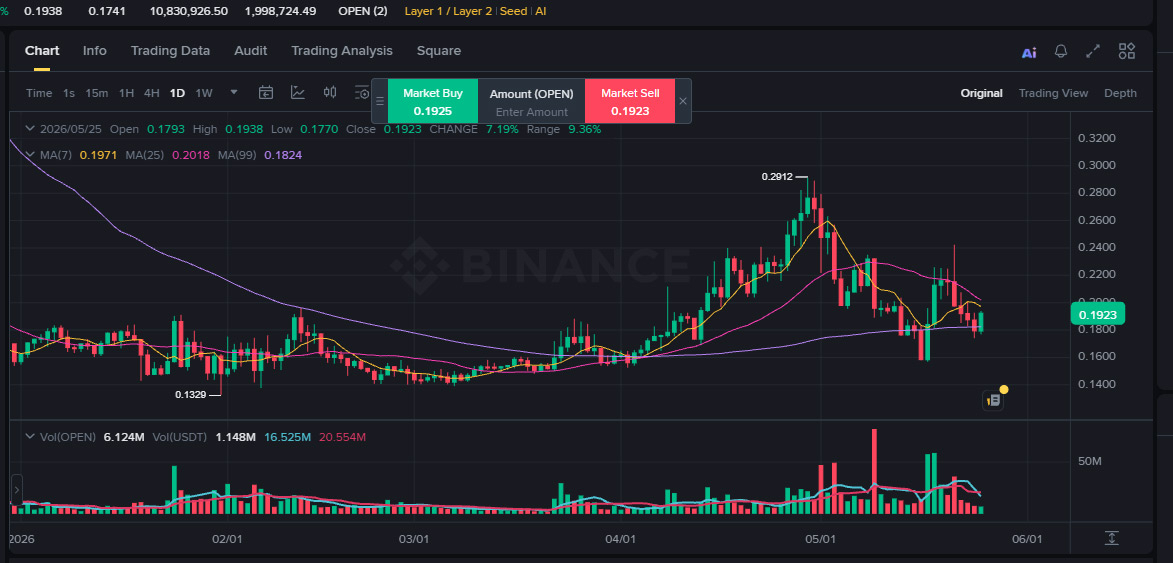
There is another issue that is not being discussed. Who can click or keep an eye on charts for longer won't matter if execution is automated. The advantage lies in the ability to create strategies and systems. Instead of becoming traders, dealers will need to become systems architects.
This is a shift. It implies that creating a good system is more important in trading than responding fast. The idea of whether the token will increase because artificial intelligence is popular does not apply to something like OpenLedger. Whether the infrastructure can actually function is the question.
The majority of blockchain and artificial intelligence initiatives are discrete tools rather than ecosystems. OpenLedger is making an effort. They are attempting to integrate intelligence, liquidity, and execution rather than isolate them.
The value proposition is greater than trade automation if this is successful. It has to do with ownership, economics, and data. Perhaps the market isn't yet prepared for this. Perhaps cross-chain autonomous execution may never be reliable enough. It's possible that users will always desire some degree of control over their transactions.
One thing is still evident. OpenLedger is attempting to address an issue rather than merely create excitement about a coin. For the majority of initiatives, that is more than I can say. I'm still observing and pondering.