
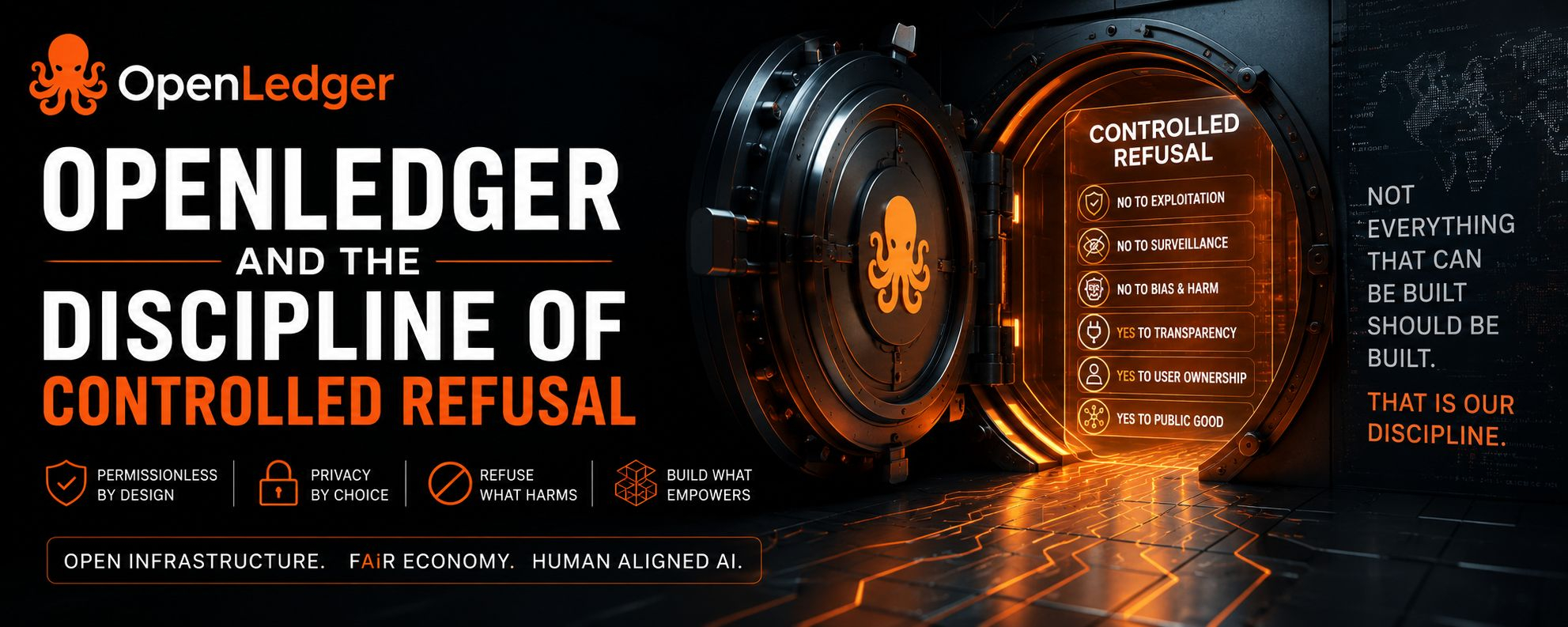

I used to think throughput was the cleanest signal of system maturity. In most environments I’ve observed, that assumption collapses the moment real risk enters the room. The conversations shift. It is no longer about how fast a ledger can move data, but about how precisely it can refuse the wrong kind of movement.
That tension is where OpenLedger becomes structurally interesting to me. It is an SVM-based high-performance L1, but the performance layer is not what I keep returning to. What matters more is the way execution is constrained, not accelerated. The system behaves less like a race engine and more like an access-controlled instrument panel where every action is traceable, bounded, and revocable.
In traditional infrastructure reviews, I have sat through enough risk committee sessions to recognize the pattern. Audits do not fail because blocks were slow. They fail because permissions were too wide, signatures too persistent, and assumptions about custody too casual. The 2 a.m. alerts rarely begin with congestion. They begin with a wallet approval debate that should have happened weeks earlier, not after deployment.
OpenLedger Sessions, in this framing, are not a feature in the usual sense. They are a constraint model. Time-bound, scope-bound delegation becomes the primary unit of interaction rather than perpetual authority. It shifts the surface area of trust from static ownership to ephemeral authorization. In that sense, the system is not asking users to sign less it is asking them to sign more intelligently, within enforced boundaries.
Scoped delegation + fewer signatures is the next wave of on-chain UX.
That line is not cosmetic. It reflects a deeper shift in how execution is treated. The fewer permanent permissions that exist, the fewer irreversible paths a system can accidentally expose. When I map failure modes across ecosystems, the consistent variable is not latency. It is over-permissioned control planes.
Under the hood, modular execution above a conservative settlement layer introduces a deliberate asymmetry. Execution can remain fast and flexible, while settlement remains slow, strict, and defensive. This separation is not elegant in the aesthetic sense; it is operationally conservative. It assumes that execution will fail in unpredictable ways and therefore isolates finality behind stricter validation logic.
EVM compatibility, in this architecture, reads less like a philosophical commitment and more like tooling compatibility. It reduces migration friction, but it does not redefine the trust boundary. The boundary is still enforced by the core system design, not inherited from external execution environments.
The native token functions here as security fuel. Staking is not treated as passive yield logic but as responsibility allocation an explicit alignment mechanism between participation and exposure. In systems like this, capital is not just liquidity; it is a form of operational accountability.
Bridge design, however, remains the most sensitive surface. Every interconnected system inherits external assumptions it cannot fully verify. I have seen enough cross-domain failures to treat bridges as temporary trust extensions rather than permanent infrastructure. Trust doesn’t degrade politely it snaps.
What stands out in this model is not the speed of execution, but the ability to enforce refusal. A system that can degrade access cleanly, revoke authority predictably, and constrain sessions by default changes the nature of operational risk. It moves the center of gravity away from performance marketing and toward permission discipline.
In that framing, OpenLedger is not competing to be the fastest ledger. It is competing to be the least surprising one under stress. And in my experience, systems that remain predictable under pressure are rarely the ones optimized for maximum throughput. They are the ones designed with controlled denial as a first-class capability.
A fast ledger that can say “no” prevents predictable failure.
