
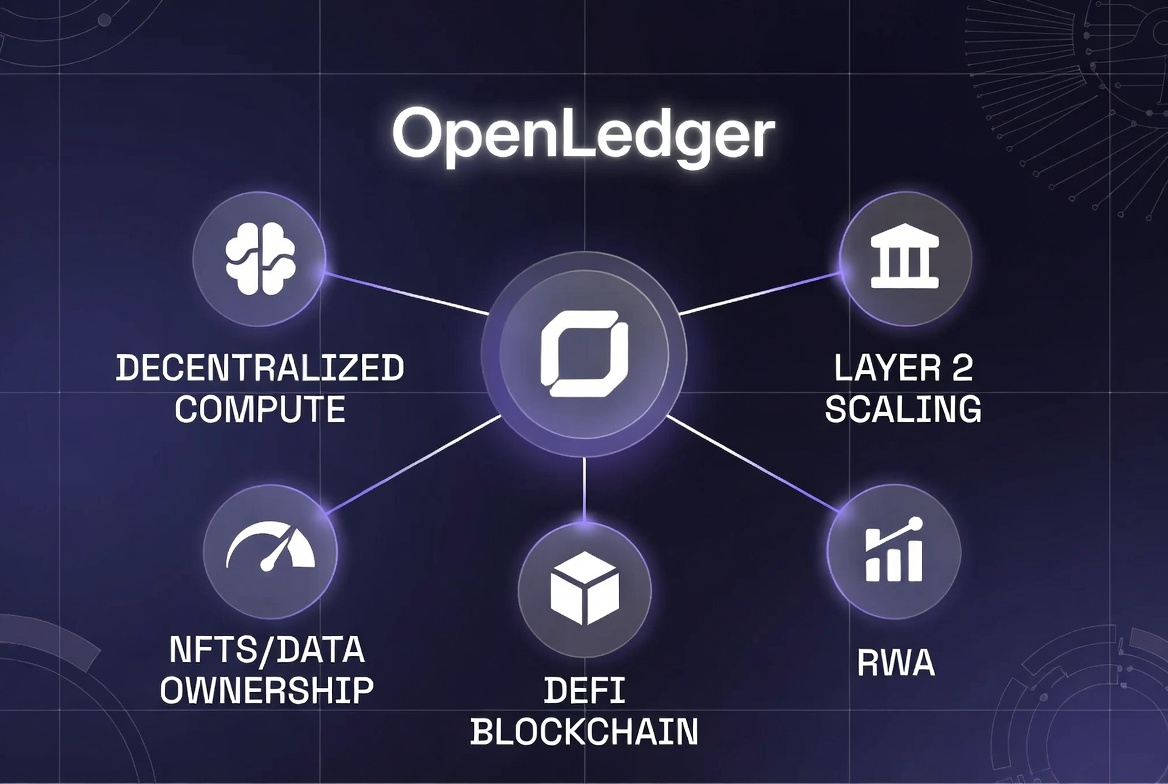
I’ve spent a lot of time digging through different corners of crypto, and one thing keeps striking me: the space is no longer just about payments or smart contracts. It’s becoming this messy, overlapping web of specialized technologies. OpenLedger, with its AI-focused data attribution layer, sits at an interesting crossroads. It’s not trying to be everything, but it touches several major narratives at once. Let me try to map this out honestly.
The AI + Data Ownership Angle
At its heart, OpenLedger is built for the AI era. Using Proof of Attribution, it tries to solve what many consider one of the biggest ethical and economic problems in artificial intelligence: who actually owns the data and models that power everything.
Instead of the usual “scrape first, ask questions later” approach that dominates big tech AI, OpenLedger lets contributors earn when their data or training work gets used. This feels like a natural evolution of NFT logic, but applied to datasets and machine learning models. It’s more granular and functional than most NFT projects, which often stop at collectibles or basic art ownership.
However, this also puts it in direct conversation with projects like Ocean Protocol (now part of ASI) and even some newer data tokenization efforts. The big question remains whether fair attribution can actually drive enough real usage to matter.
How Data Flows in OpenLedger:
Mixing With DeFi and Real-World Assets (RWA)
Here’s where it gets more interesting. OpenLedger isn’t isolated in the AI bubble. Because models and datasets become tokenized assets, they can potentially be used as collateral in DeFi protocols, traded on decentralized exchanges, or even packaged into RWAs.
Imagine a high-performing specialized AI model being used as yield-generating collateral, or a verified dataset becoming a tradable real-world asset for research firms. This kind of crossover between AI and traditional DeFi/RWA infrastructure is still early, but it’s one of the more exciting narratives in 2026. OpenLedger’s Ethereum L2 foundation makes these integrations relatively straightforward compared to isolated Layer 1s.
Of course, not everyone is convinced. Some purists argue that mixing AI hype with DeFi might create new bubbles, while others see it as the logical next step after the NFT boom cooled off.
Scaling, Compute, and the Bigger Picture
On the infrastructure side, OpenLedger benefits from being an OP Stack Ethereum L2 — cheap fees, easy bridging, and familiarity for developers. This puts it in the same conversation as other scaling solutions like Arbitrum, Optimism, and Base, but with a clear vertical focus on AI.
Meanwhile, it complements rather than competes with pure compute networks like Render or Nosana. You still need massive decentralized GPU power to actually train serious models. OpenLedger focuses on the layer above: ownership, attribution, and monetization.
Final Take
OpenLedger isn’t the loudest project in crypto right now, and that might actually work in its favor. While Bittensor chases raw intelligence and big L1s fight for general dominance, OpenLedger is quietly building a specialized piece that could become infrastructure for the next wave — tokenized intelligence that flows through DeFi, RWAs, and ownership markets.
It’s still early, and success will depend on whether developers and users actually adopt the attribution system at scale. But in a fragmented crypto world full of overlapping technologies, focused specialists like this have a real chance to carve out lasting value.
What part of this intersection excites you most the AI data ownership side, the DeFi crossover potential, or something else entirely? Curious to hear your thoughts.