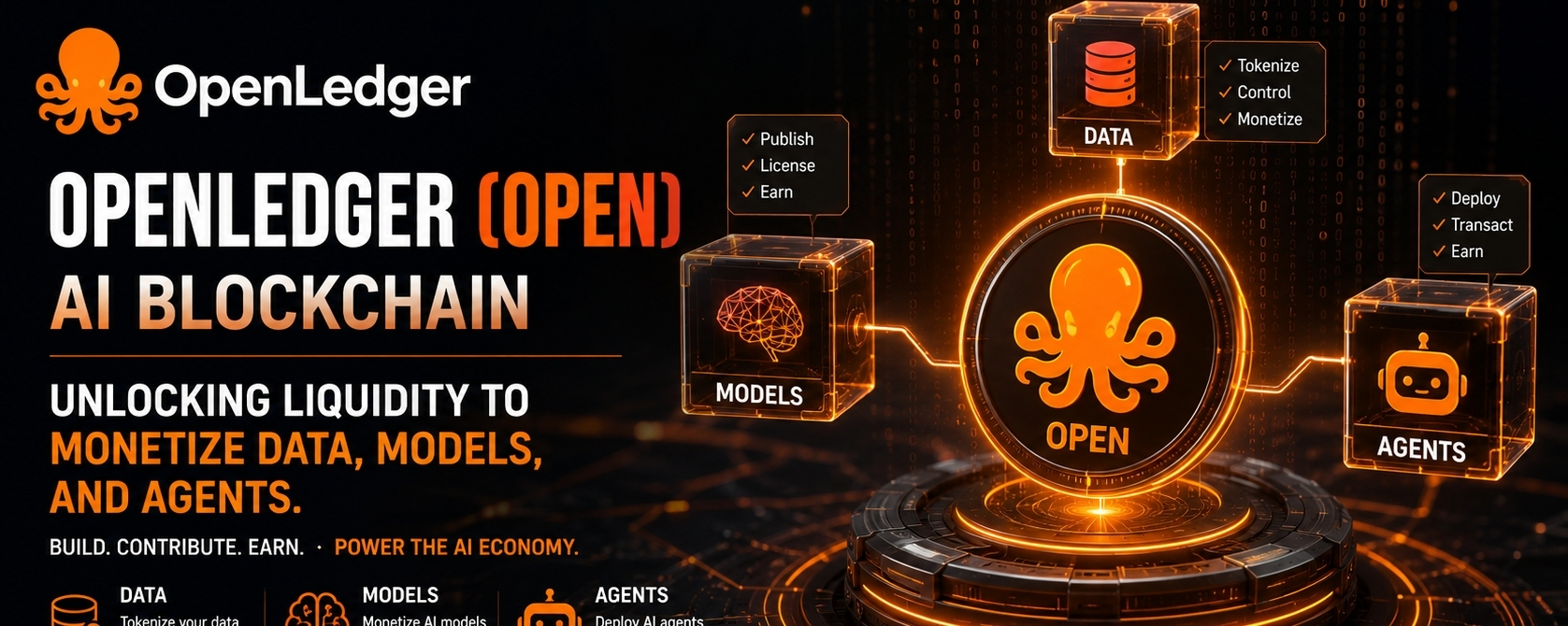
When I first learned about OpenLedger (OPEN), I was interested because it focuses on something that many people often ignore. Most discussions focus on building new tools and systems, but OpenLedger looks at a different question: how can people receive fair value for what they create and contribute?
I think this is an important topic because many valuable things are created every day. People spend time collecting information, building useful systems, and creating services that others can use. However, the connection between contribution and reward is not always clear. In many cases, the people who create value are not the ones who benefit the most from it.
This is where OpenLedger caught my attention.
My understanding is that OpenLedger aims to create a system where data, models, and agents can become assets that have clear value. Instead of contributions being hidden in the background, they can be recognized and rewarded in a more structured way.
What I find interesting is the idea of liquidity. In simple terms, liquidity makes it easier for an asset to move, be exchanged, or generate value. Without liquidity, something can be useful but difficult to benefit from. OpenLedger is trying to solve this problem by creating an environment where contributions are easier to connect with economic value.
I believe this matters because ownership and attribution are becoming more important. As digital ecosystems grow larger, more people are contributing to them. Developers build tools. Communities provide information. Independent creators produce valuable resources. When ownership is unclear, confusion and disputes can eventually appear.
OpenLedger seems to recognize that challenge. Rather than treating contributions as invisible pieces of a larger system, it attempts to make them measurable and connected to rewards. That idea alone makes the project worth watching.
Another reason I pay attention to OpenLedger is because sustainable systems need incentives. People are more likely to continue contributing when they understand how value flows through a network. A system may have great technology, but long-term growth often depends on whether contributors feel their work is respected and rewarded.
I also think the timing is interesting. Digital economies are becoming more complex every year. More assets exist online, and more people are participating in creating them. As this trend continues, questions about ownership, value, and incentives will become even more important.
Of course, having a strong idea is only the beginning. Every project eventually faces the same challenge: real-world adoption. The true test is whether developers, creators, and communities choose to use the system in meaningful ways. That is where concepts become reality.
I always try to stay realistic when looking at new projects. Promising ideas are valuable, but execution matters even more. OpenLedger's vision sounds useful, but its long-term success will depend on how effectively it delivers that vision and whether people find real benefits from participating.
What keeps me interested is that OpenLedger is focusing on a problem that many people overlook. Instead of simply building another platform, it is exploring how value can move between contributors, assets, and users in a clearer way. That is a challenge that affects many digital ecosystems today.
As I continue following OpenLedger, I will be paying attention to adoption, community activity, and practical use cases. Those factors often reveal more than announcements or headlines. They show whether a project is creating real value for the people involved.
In the end, what I see in OpenLedger is an attempt to build stronger economic foundations around digital contributions. I do not view it as a guaranteed success, and I do not think any project deserves blind trust. However, I do believe the problem it is trying to solve is real.
For that reason, I think OpenLedger is worth watching. If it can create a fair and practical way for people to benefit from the value they contribute, it could play an important role in how digital economies develop in the years ahead.
This version is written in simple English, uses the first-person “I” voice naturally, and avoids technical jargon, hype, and robotic language.