
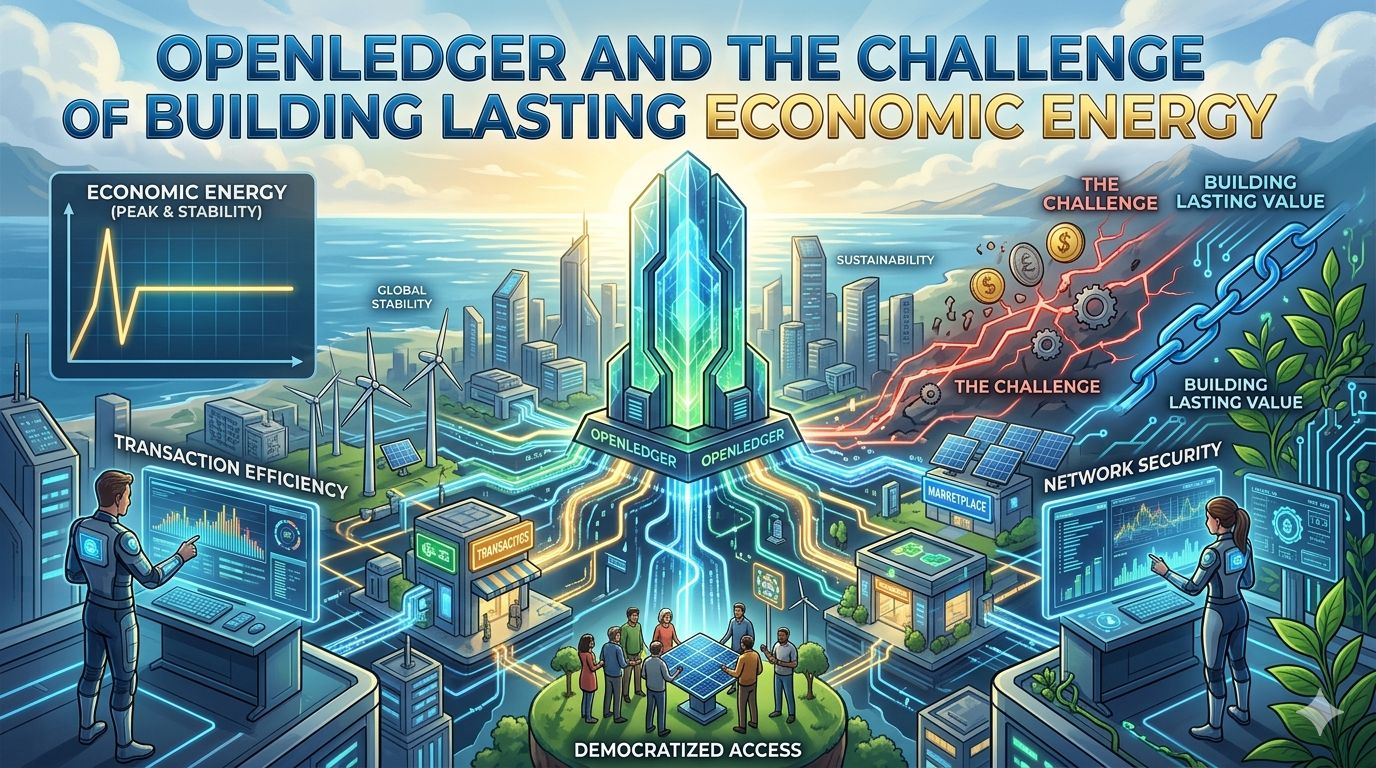
There are cities around the world that were once full of economic activity. People worked there, traded there, built businesses there, and created enormous value. Then the reason for staying disappeared. The mines closed. The factories moved. The opportunities shifted somewhere else. Eventually the buildings remained, but the economic energy that gave those places life was gone.
The reason those places fascinate me is because value and activity are not the same thing. A location can still exist long after the incentive to participate has vanished. The same pattern appears in digital systems more often than people realize.
That thought came to mind while reading about #OpenLedger.
A lot of AI projects focus heavily on creating activity. More users, more models, more outputs, more interactions. Activity looks impressive from the outside. The harder challenge is creating reasons for participation that remain attractive years later instead of only during periods of excitement.
This is one aspect of @OpenLedger that caught my attention. The project spends time thinking about how contributors remain connected to the value they help create. Whether that model succeeds or not is a separate discussion, but the problem itself feels important. Digital ecosystems become surprisingly fragile when participants start feeling replaceable.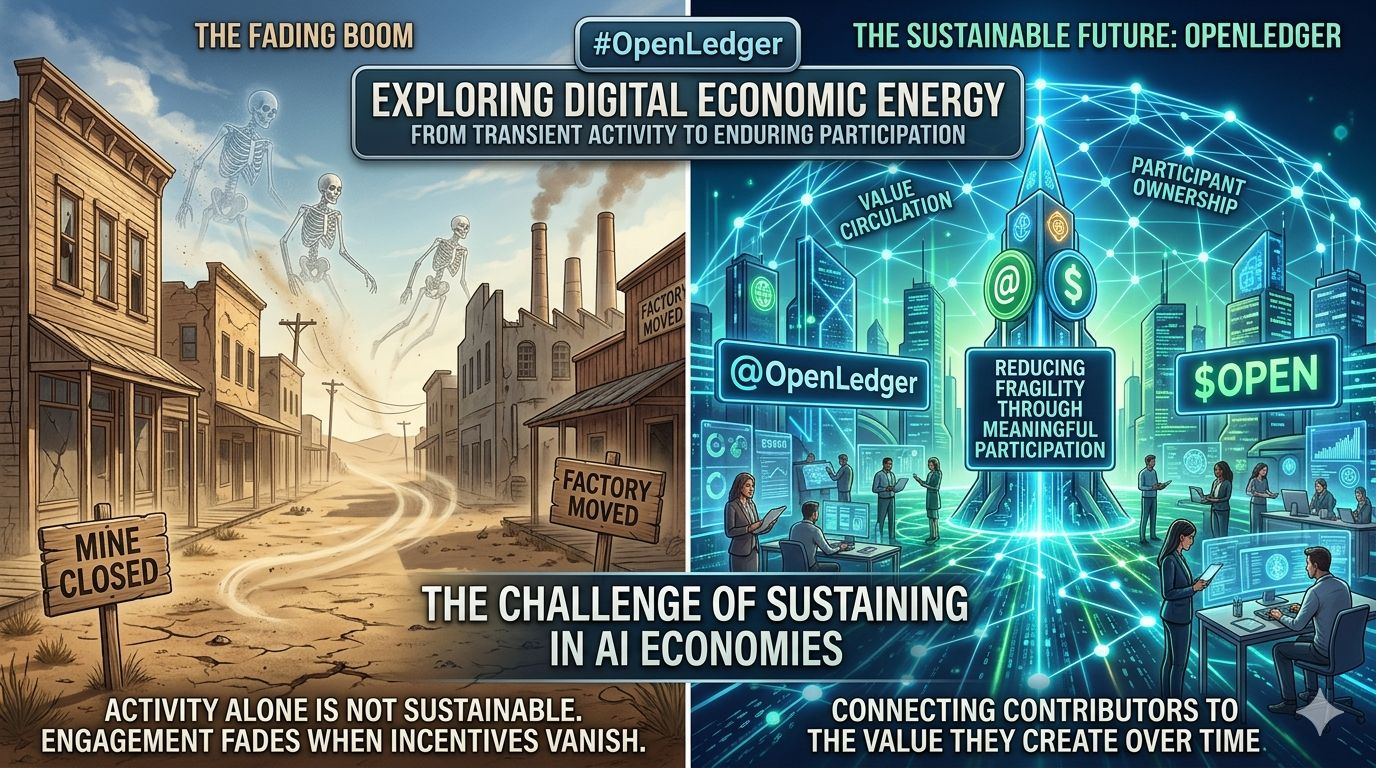
What often weakens emerging economies—both physical and digital—is the disconnect between contribution and reward. People may help create value, but if they cannot meaningfully participate in that value over time, engagement eventually fades. The system may continue operating, yet the energy that once fueled growth gradually disappears.
The connection to $OPEN becomes interesting from that angle. Every economy eventually reaches a point where growth alone is no longer enough. Retention becomes the real test. The projects that survive are often the ones that give people a reason to keep showing up after the initial attention fades.
In the AI sector, this question may become even more important. Models can improve, technology can evolve, and new competitors can emerge almost overnight. What tends to last longer are the incentives that align contributors with the future of the ecosystem itself. When participants feel ownership over the value they help generate, the foundation becomes more resilient.
That is why I find OpenLedger worth paying attention to. Not because it promises rapid growth or because it is attached to a popular narrative, but because it is exploring a challenge that many digital economies eventually face. Sustaining activity is difficult. Sustaining meaningful participation is even harder.
History is full of places that generated value for a moment. Far fewer managed to keep value circulating long enough to matter. The same may prove true for AI economies. The projects that endure will likely be the ones that understand that lasting economic energy comes not from attracting people once, but from giving them a reason to remain part of the system long after the excitement has passed