
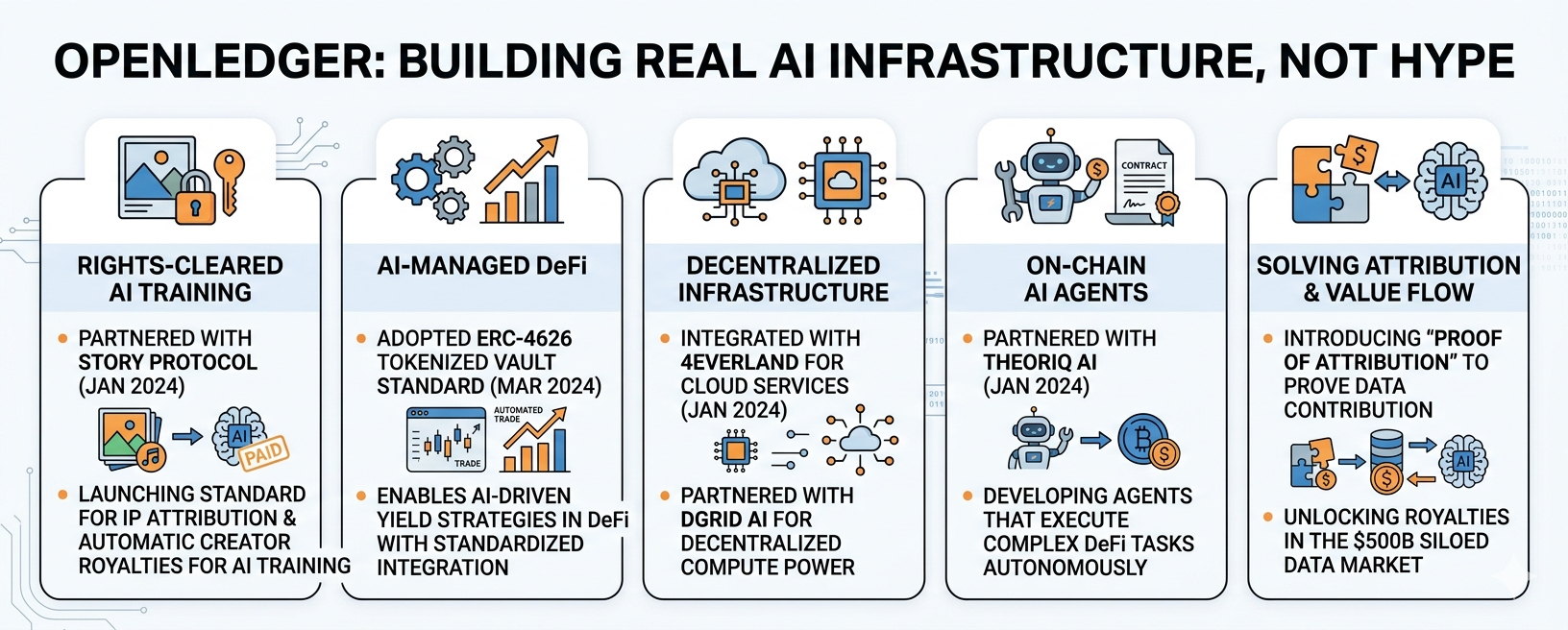
The more time I spend looking at AI projects, the more I feel that most conversations focus on the wrong layer. People debate model performance, agent capabilities, and automation, but rarely ask a simple question: who actually gets rewarded for making these systems useful?
That is why OpenLedger caught my attention.
What makes OpenLedger interesting is not that it combines AI and blockchain. Hundreds of projects have tried to package those two words together. What feels different here is the attempt to build an economic system around contribution. Every AI model is built on layers of human effort, from datasets and knowledge sources to model improvements and agent behaviors. Yet most of that value disappears into the background once the final output reaches a user.
OpenLedger is built around the idea that these contributions should not become invisible. Instead of treating data as a resource that gets consumed once and forgotten, it treats data as something that can remain connected to future value creation. That may sound like a technical distinction, but I think it is actually a cultural one. The internet became incredibly efficient at distributing information, but it never became very good at rewarding the people who made that information useful in the first place.
What I find particularly compelling is the project's focus on attribution. In traditional AI systems, users often receive answers without any meaningful understanding of where the underlying intelligence came from. OpenLedger is exploring ways to create a clearer connection between outputs and the data, models, or contributors that influenced them. Whether this vision scales perfectly or not, it addresses a problem that becomes more important every year as AI systems become embedded in everyday life.
Recent developments around AI-powered wallets, agent infrastructure, and ecosystem tools suggest that OpenLedger is moving beyond theory and into practical applications. That matters because infrastructure only becomes valuable when real people can interact with it. A sophisticated architecture means little if it never reaches the user experience layer.
The reason I continue watching OpenLedger is simple. Most AI projects are competing to build smarter machines. OpenLedger seems more focused on building a fairer economy around those machines. In the long run, that could be the bigger opportunity.
AI will continue generating enormous amounts of value. The real question is whether that value remains concentrated among a handful of platforms or flows back to the people, data sources, and contributors who helped create it. OpenLedger is one of the few projects directly exploring that question, and I think that makes it far more interesting than another race for marginally better AI performance.