
Introduction
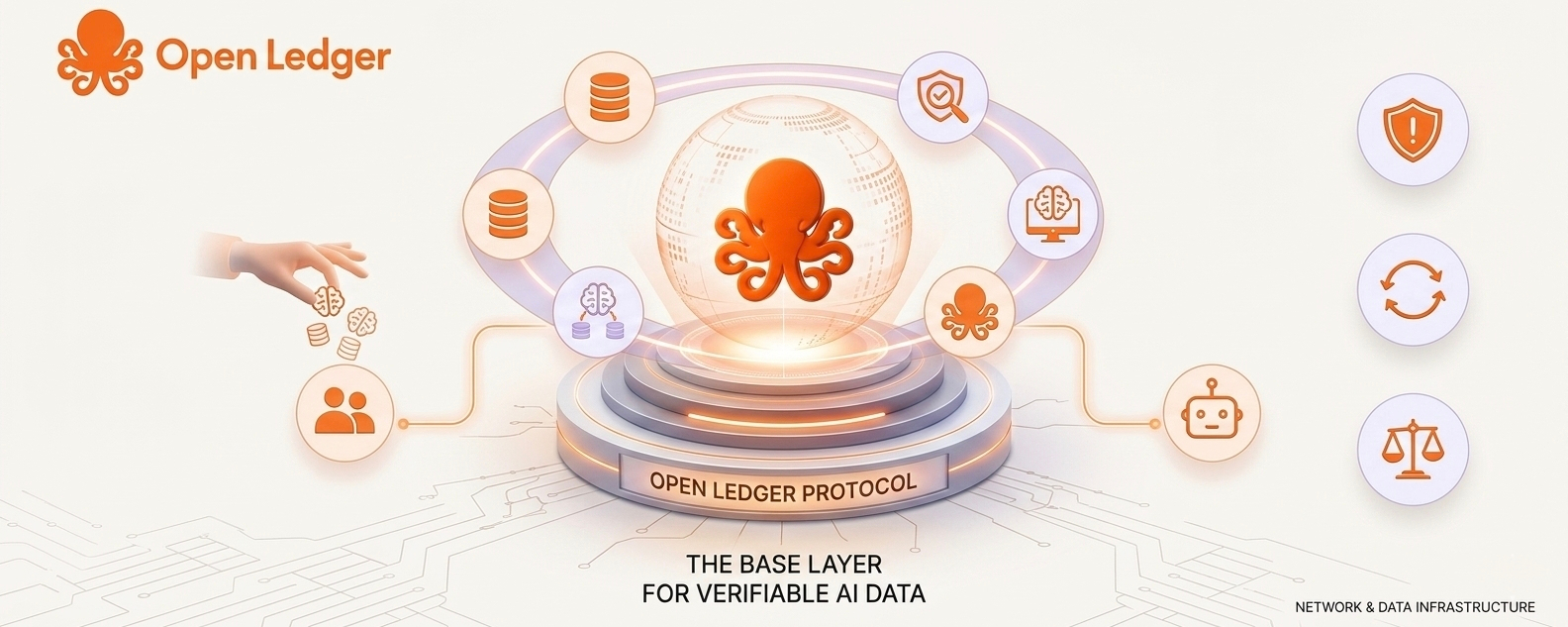
What if the most important part of AI is not the model itself, but the system that connects data, contributors, and value?
As AI continues to expand across industries, a new narrative is forming around how intelligence is built, trained, and distributed. It is no longer just about better models—it is about better coordination of data ecosystems.
This is where @OpenLedger and $OPEN enter the conversation within the broader #OpenLedger narrative.
Main Body: Beyond Models, Toward Coordination
Most AI discussions focus on performance—accuracy, speed, and benchmark improvements. But behind every AI system is a deeper layer that often gets ignored: data sourcing, attribution, and incentive alignment.
OpenLedger positions itself within this overlooked layer of infrastructure.
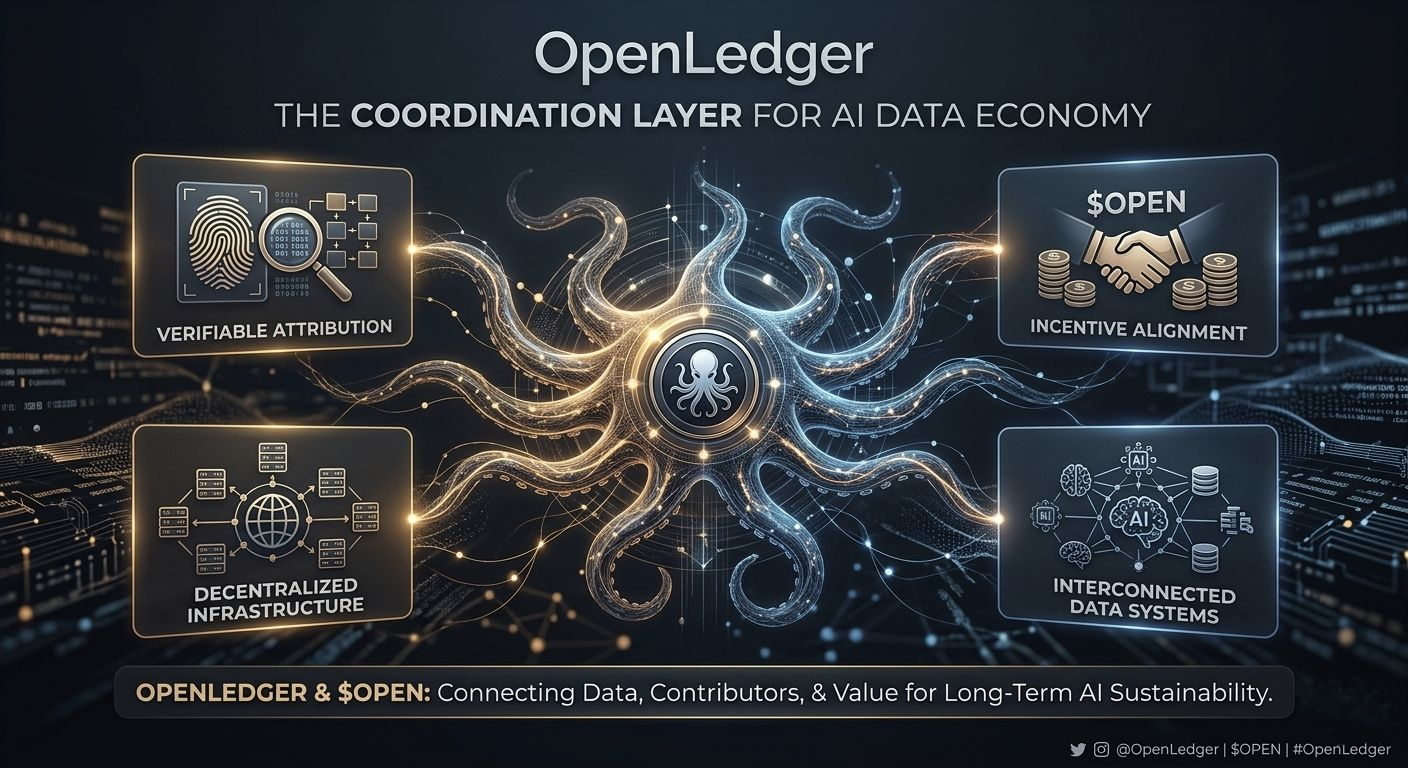
Instead of treating data as an invisible input, the idea is to create a system where data contributions can be tracked, attributed, and potentially rewarded. Through concepts like Datanets and decentralized AI infrastructure, the goal is to make data participation more transparent and structured.
One key observation here is that AI scalability is not only a compute problem—it is also a coordination problem. As datasets grow larger and more distributed, the challenge becomes ensuring that contributions are properly organized and recognized.
Another insight is that attribution in AI may evolve from a “nice-to-have” feature into a core infrastructure requirement. Without attribution systems, it becomes difficult to maintain fairness and long-term participation in AI ecosystems.
Market Relevance: Why This Narrative Matters
The convergence of AI and blockchain is creating a shift in how value flows through digital systems.
Blockchain technology introduces transparency and traceability, while AI introduces scale and automation. Together, they create a framework where data can potentially be managed in a more accountable and structured way.
This is why projects like OpenLedger are increasingly discussed within AI + blockchain narratives. They attempt to address real structural challenges rather than just adding another application layer on top of existing systems.
Forward-Looking Perspective
In my view, the next phase of AI development will not be defined only by model improvements, but by infrastructure that supports data coordination at scale.
If AI systems continue to rely heavily on global, user-generated data, then attribution and incentive alignment could become critical components of long-term sustainability.
However, execution remains the key factor. Many infrastructure narratives sound strong in theory, but only a few succeed in real-world adoption. The real test for $OPEN will be whether these ideas can scale beyond conceptual design into practical usage.
Conclusion
OpenLedger sits at the intersection of AI infrastructure, data coordination, and blockchain-based transparency. Whether it becomes a foundational layer or not will depend on adoption, usability, and ecosystem growth.
But the direction it represents is clear: AI is evolving from isolated intelligence systems into interconnected data economies.
So the real question is:
Will the future of AI be defined by smarter models—or by better systems that connect data, contributors, and value more transparently?