

When analyzing Bitcoin in June, price alone is not enough. The key is understanding what is happening beneath the surface through on-chain data.
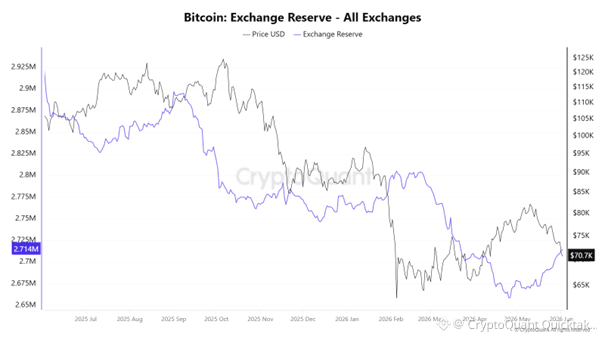
One of the most important indicators is Exchange Reserve, which measures how much BTC is available on exchanges for potential selling. Exchange balances continue to decline, suggesting that investors are moving coins into long-term storage. Lower exchange supply is generally considered a bullish signal because fewer coins are immediately available for sale.
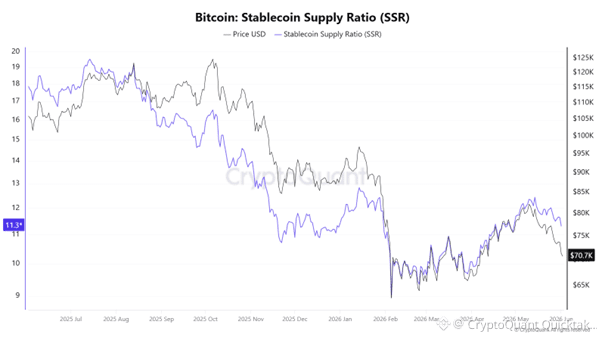
Another positive sign comes from the Stablecoin Supply Ratio (SSR). This indicator helps estimate how much stablecoin capital is waiting on the sidelines. A lower SSR typically means there is still significant buying power available. Current levels suggest that liquidity remains available if market sentiment improves.
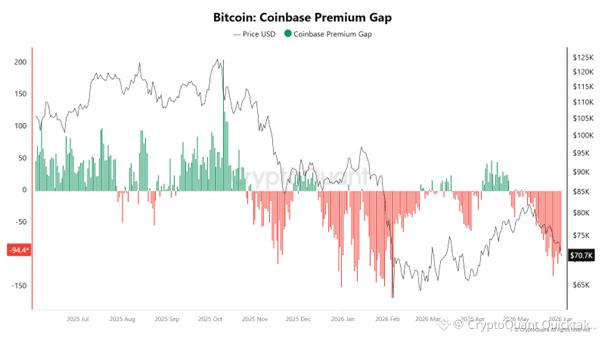
However, caution is warranted. The Coinbase Premium Index, which reflects the price difference between Coinbase and offshore exchanges, remains weak. Because Coinbase is widely used by U.S. institutions, a positive premium often signals institutional buying. Despite Bitcoin’s recent rebound, strong institutional demand has yet to appear.
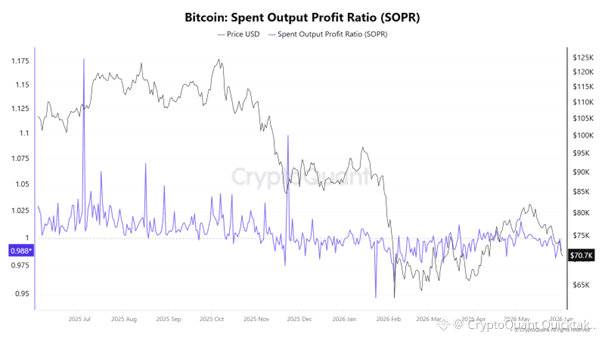
SOPR, which measures whether investors are realizing profits or losses, is also hovering near neutral levels. This indicates that market participants are not aggressively taking profits, but confidence remains limited.
Meanwhile, Open Interest in futures markets has started to cool after its rapid rise in May. This reduces excessive leverage and lowers liquidation risk, creating a healthier market structure.
MVRV, a measure of investor profitability, continues to rise but remains below historical overheating levels. This suggests growing unrealized profits without clear signs of a market top.
Overall, June presents a mixed picture: supply conditions are bullish, but demand remains insufficient. The most important indicators to watch are ETF flows, Coinbase Premium, SOPR, and Exchange Reserves.
Written by XWIN Japan