In 2026, the question for banks is no longer whether finance moves onchain.
The real question is: which settlement rails become the standard for the next decade?
That decision is being made right now.
Institutional adoption has already moved beyond experimentation.
JPMorgan's Kinexys platform has processed more than $1.5T in value on blockchain-based infrastructure, averaging roughly $2B daily.
DTCC is advancing tokenized Treasury workflows.
Major financial institutions are actively building the next generation of settlement systems.
Why does 2026 matter?
Because the remaining open questions are now implementation questions:
• Interbank interoperability
• Transaction privacy
• Institutional-grade settlement finality
• Governance for digital money
• Regulatory compliance frameworks
The next 18 months determine which rails solve them first.
Financial infrastructure behaves differently from consumer technology.
A social app can be replaced in months.
Settlement infrastructure often lasts decades.
Once institutions complete integrations, audits, legal reviews, operational procedures, and staff training, migration becomes extraordinarily expensive.
This is why first-mover advantage compounds.
The first successful institutional network doesn't just gain users.
It gains:
• Trust
• Regulatory familiarity
• Operational history
• Counterparty connectivity
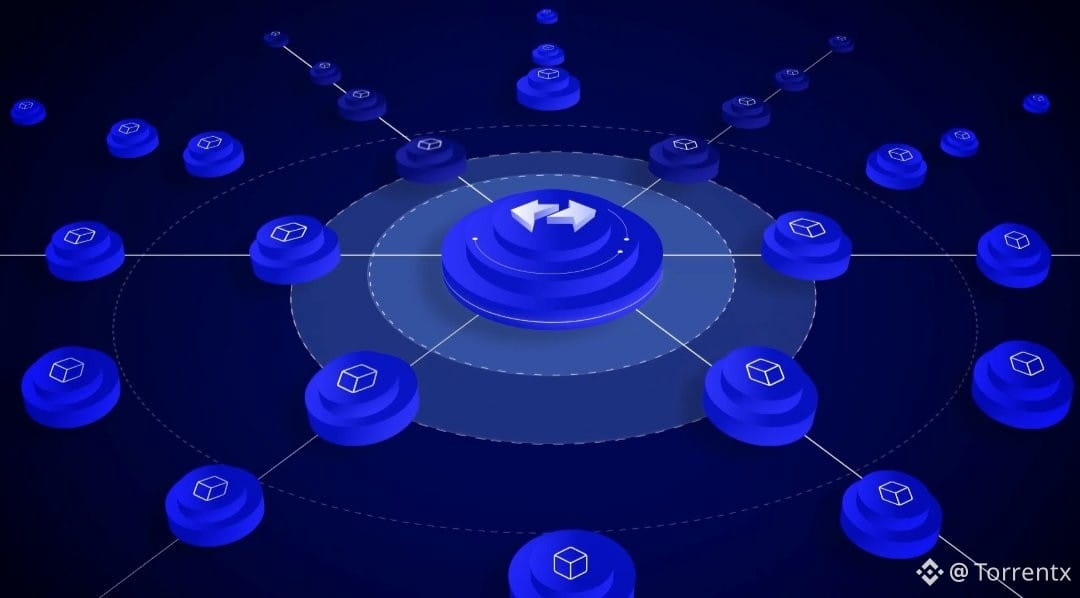
Each new participant increases the value of the network for every existing participant.
The mathematics are powerful.
10 institutions create 45 possible settlement corridors.
100 institutions create 4,950.
Each additional institution adds more than volume.
It adds connectivity.
Network value grows faster than participant count.
History shows the pattern.
SWIFT began with a few hundred banks and eventually connected more than 11,000 institutions worldwide.
Visa evolved from a regional payment network into global infrastructure.
Once a settlement standard reaches critical mass, displacement becomes increasingly uneconomic.
This is why institutional adoption is ultimately an infrastructure race.
Not a marketing race.
Not a narrative race.
The winners are the networks capable of supporting regulated finance at scale while maintaining efficiency, security, privacy, and interoperability.
$ZK enters this window with live and announced institutional deployments already in motion.
The opportunity is significant because institutional participants are not simply selecting technology.
They're selecting the foundation upon which future financial products, assets, and counterparties will connect.
The next decade of finance may be shaped by decisions being made in boardrooms today.
When settlement rails become standards, they tend to stay standards for years.
2026 is not merely another adoption cycle.
It may be the year the architecture of global onchain finance is chosen.
The biggest financial decision of 2026 isn't which assets get tokenized.
It's which settlement rails institutions choose.
Once banks integrate, audit, and build counterparty networks around a standard, switching becomes exponentially harder. That's why first-mover advantage in settlement infrastructure compounds for years, not months.
With institutional adoption accelerating, zk sync is competing in the window where standards are set and where the next decade of onchain finance may be defined.