
I Spoke With A Doctor Fighting Malaria In Nigeria. What He Told Me About Dying Mothers And Children Broke My Heart
As a journalist, I spend a lot of time researching people, projects, and ideas that claim they are changing the world.
Most of the time I come across investment opportunities, startups, blockchain projects, and business ventures.
But every now and then I find a story that is much bigger than money.
A story that is about human lives.
A story that forces me to stop and ask deeper questions.
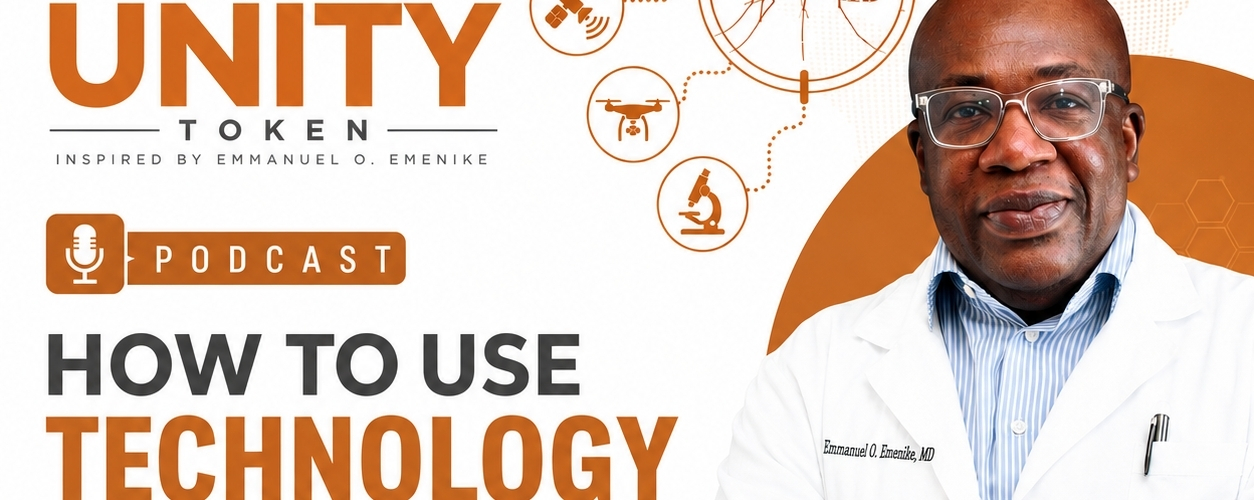
Recently, during my research, I came across Dr. Emmanuel O. Emenike, an experienced physician originally from Nigeria who now lives in California, USA.
What immediately caught my attention was not simply his medical background.
It was his passion.
His determination.
And his belief that some of the world's biggest humanitarian challenges can still be solved if the right people come together.
The more I looked into his work, the more interested I became.
This was not another charity campaign asking for donations.
This was not another organization publishing reports and statistics.
Instead, I found a doctor talking about innovation, infrastructure, technology, community empowerment, and long-term solutions.
Naturally, I wanted to know more.
The Beginning Of An Unusual Alliance
While investigating further, I discovered that on October 19, 2025, Dr. Emmanuel O. Emenike joined forces with Ryan Carter, Founder and CEO of UNITY Token, alongside DSGN (Diaspora Solutions Group Nigeria).
Together they launched what became known as The Malaria Project.
At first glance, the partnership seemed unusual.
A physician.
A humanitarian initiative.
A blockchain ecosystem.
A diaspora organization.
All coming together around one mission.
The mission was straightforward but incredibly ambitious.
To help combat malaria in Nigeria and eventually contribute to a future where malaria no longer devastates communities across the country.
As I continued researching, I started asking myself a simple question.
Why malaria?
Out of all the challenges facing Africa today, why dedicate so much time, energy, and resources to this particular disease?
The answer became clearer the deeper I looked.
 A Crisis Many People Outside Africa Never See
For many people living outside Africa, malaria is often viewed as just another disease mentioned in health reports.
But for millions of African families, malaria is a constant threat.
It affects children.
It affects pregnant mothers.
It affects entire communities.
And despite decades of global efforts, it continues to claim lives every year.
What struck me most during my early conversations and research was the emphasis on mothers and children.
Again and again, these were the groups being discussed.
Again and again, these were the lives most at risk.
And that is when I realized this story was not really about technology.
It was not even primarily about healthcare.
It was about people.
It was about families.
It was about communities trying to break a cycle that has existed for generations.
Where Technology Meets Humanitarian Action
As I continued investigating, I noticed something else.
This project appeared to be attempting something different.
Rather than treating malaria solely as a medical challenge, the people behind the initiative were discussing infrastructure, transparency, community engagement, innovation, and sustainable development.
From my perspective, it looked like several worlds were colliding.
Blockchain meeting humanitarian work.
Technology meeting healthcare.
Innovation meeting community development.
But could such an approach actually make a difference?
Could a movement involving healthcare professionals, innovators, community leaders, and technology platforms create measurable change?
Those were the questions I wanted answered.
And as I continued speaking with Dr. Emenike and studying The Malaria Project, I began uncovering details that surprised me even more.
What I discovered next would reveal the scale of the malaria crisis in Nigeria and why so many lives remain at risk today.
The Malaria Project: A Bold Vision To Eradicate Malaria In Nigeria
I reached out to Dr. Emmanuel O. Emenike to learn more about The Malaria Project, an initiative that aims to transform lives across Nigeria.
I wanted to understand what the project is all about, what the team is building, and how they plan to make such an ambitious vision possible.
What I discovered was a collaboration of doctors, researchers, and specialists bringing together advanced techniques, innovative technologies, and connections with some of the world's leading organizations.
The mission of The Malaria Project is clear: to eradicate malaria.
Their approach focuses on controlled malaria eradication through genetic innovation, community partnerships, and data-driven health systems.
As Dr. Emenike explained, understanding the disease cycle is critical.
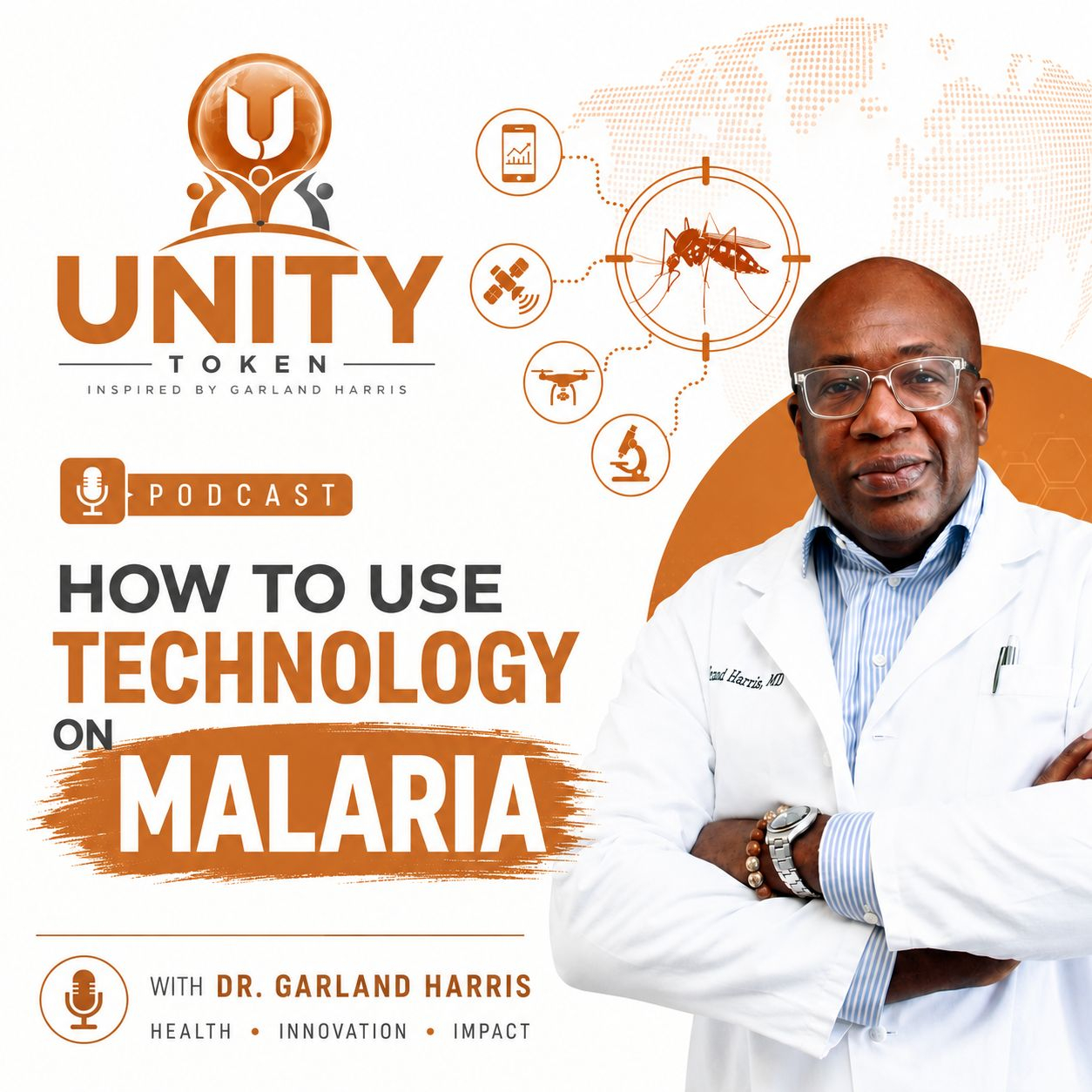
Female Anopheles mosquitoes transmit malaria through their bites. The parasite then moves from the mosquito into the human body and eventually reaches the liver.
The goal is to break this cycle.
According to Dr. Emmanuel O. Emenike, the project is collaborating with leading physicians and researchers to explore genetic attenuation strategies.
This work is being conducted in a state-of-the-art genetic research laboratory dedicated to breeding mosquitoes that are incapable of carrying malaria.
"We shall use precision drones to release modified mosquitoes into high-burden regions with surgical accuracy, ensuring maximum impact on the local vector population," Dr. Emmanuel explained.
But the project does not end with mosquito releases.
The team plans to remain actively engaged on the ground, monitoring results, educating communities, and empowering local populations.
Education will play a major role through schools, faith-based gatherings, markets, and community events.
This is where blockchain technology enters the picture.
The Malaria Project intends to use blockchain systems to track activities, monitor outcomes, gather information, and maintain transparency throughout its operations.
The vision is to create an open and accountable system that can be viewed and verified globally.
Ultimately, the project hopes to help position Nigeria as a center of excellence for public health innovation, supported by secure and transparent health data systems built on blockchain technology.
The Statistics That Shocked Me
As I continued my research, I wanted to understand the true scale of the malaria crisis in Nigeria.
What I found was alarming.
According to Severe Malaria Observatory data, Nigeria carries the highest malaria burden in the world. The country accounts for more than 25% of all estimated malaria cases globally and approximately 30% of global malaria-related deaths.
Think about that for a moment.
One country is responsible for nearly a third of all malaria deaths worldwide.
That statistic alone stopped me in my tracks.
Digging deeper, I discovered that approximately 97% of Nigeria's population lives in areas where malaria transmission remains a serious risk. This means that almost every family in the country faces the possibility of malaria infection.
The numbers become even more staggering.
Nigeria is estimated to record around 68 million clinical malaria cases every year and more than 180,000 deaths annually.
When I first saw these figures, I had to read them twice.
Sixty-eight million cases.
More than one hundred and eighty thousand deaths.
Every single year.
This is not a small health challenge.
This is a national crisis that affects millions of lives.
I then turned to data from the World Health Organization to understand who suffers the most.
The answer was heartbreaking.
Children under the age of five remain the most vulnerable group. According to global health statistics, young children account for the vast majority of malaria-related deaths worldwide.
In simple terms, many of the lives being lost are children who have barely begun their journey through life.
Children who should be in school.
Children who should be playing with friends.
Children who should be dreaming about their future.
Instead, many families are forced to battle a disease that has existed for generations.
The more I researched these statistics, the more I understood why Dr. Emmanuel O. Emenike and his team believe that malaria cannot be solved through short-term campaigns alone.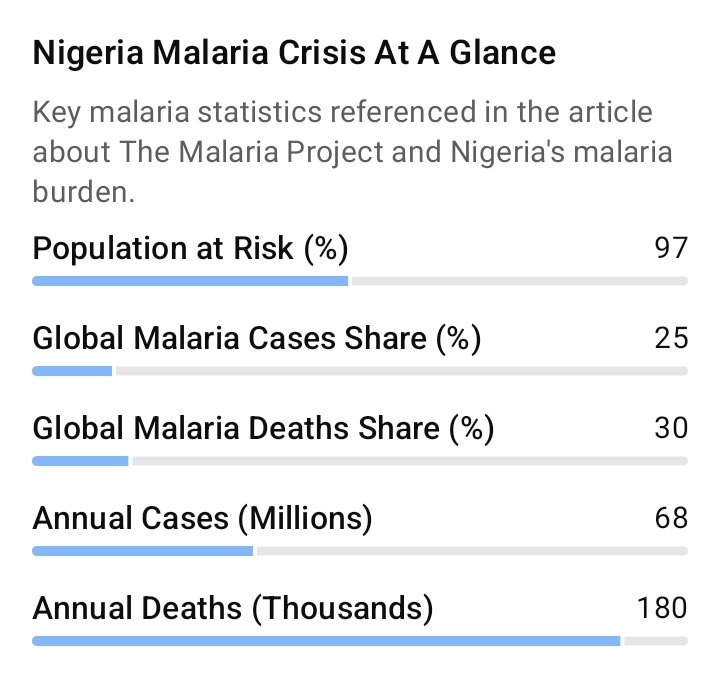
The scale of the problem is simply too large.
This is not a challenge that disappears after a few months of funding or a handful of awareness programs.
It requires long-term planning.
It requires innovation.
It requires sustained community involvement.
And perhaps most importantly, it requires people who are willing to think differently about how malaria can finally be defeated.
These statistics help explain why The Malaria Project is pursuing an ambitious and long-term approach rather than looking for quick fixes.
Where Blockchain Meets Humanitarian Innovation
One of the most interesting aspects of The Malaria Project is the role blockchain technology could play in supporting humanitarian efforts.
For years, cryptocurrency has been associated with trading, speculation, and financial markets.
But during my research, I began to see another possible use case.
What if blockchain could help connect people directly to humanitarian causes?
What if supporting a healthcare initiative could be as simple as sending a digital transaction from one wallet to another?
This is where UNITY Token enters the picture.
According to the project's vision, supporters can use UNITY Token to contribute toward humanitarian initiatives designed to improve lives and strengthen communities.
Unlike traditional payment systems that often involve multiple intermediaries, blockchain technology enables peer-to-peer transactions.
In simple terms, funds can move directly between participants without requiring numerous middlemen.
The idea is straightforward.
A person anywhere in the world could potentially support a humanitarian cause in seconds using blockchain technology.
Every transaction is recorded on-chain, creating a permanent and verifiable record that can be viewed publicly.
For supporters, transparency is one of the most significant advantages.
Rather than relying solely on reports or statements, blockchain systems can provide an additional layer of visibility into transactions and fund movements.
As I reviewed previous statements from UNITY Token leadership, I came across remarks from Ryan Carter, CEO of UNITY Token.
According to Carter, malaria should not be viewed as "their problem" or "someone else's problem."
Instead, he believes it is a collective challenge that affects humanity as a whole.
The philosophy reflects the words often attributed to the late Garland E. Harris, whose vision emphasized the idea that meaningful change requires participation from everyone.
As Harris frequently expressed it, solving major global challenges is not about "me" or "you" alone.
It is about "us."
That concept appears to be at the center of The Malaria Project's approach.
The goal is not simply to raise awareness about malaria.
The goal is to provide communities, healthcare professionals, and supporters with tools that can contribute to long-term solutions.
Whether through healthcare innovation, community education, data systems, or blockchain-powered transparency, the project aims to create a model where technology serves people rather than the other way around.
As I continued my investigation, I realized that the story was becoming larger than malaria itself.
It was beginning to raise bigger questions about how technology, healthcare, and humanitarian action might work together in the future.
Conclusion
After spending time researching The Malaria Project and speaking with Dr. Emmanuel O. Emenike, one thing became clear to me.
This is not simply a healthcare story.
It is a story about people trying to solve one of Africa's most persistent challenges through innovation, collaboration, and long-term thinking.
The statistics surrounding malaria in Nigeria are difficult to ignore.
Millions of cases are recorded every year.
Thousands of families continue to lose loved ones.
Children remain among the most vulnerable victims of the disease.
Yet despite the scale of the challenge, there are individuals and organizations determined to search for new solutions.
What makes The Malaria Project particularly interesting is its attempt to bring together healthcare professionals, researchers, community leaders, and emerging technologies under a single mission.
Whether through genetic mosquito control, community education, blockchain transparency, or public health infrastructure, the project's goal is to create measurable and sustainable impact.
As a journalist, I believe stories like this deserve attention because they focus on something bigger than headlines or profits.
They focus on human lives.
The coming years will ultimately determine the success of these efforts, but one thing is certain:
The fight against malaria is far from over, and innovative approaches such as The Malaria Project are seeking to become part of the solution.
For me, this is a story worth following.
And it is a story I will continue to monitor as it develops.
Frequently Asked Questions (FAQs)
What is The Malaria Project?
The Malaria Project is a humanitarian initiative launched through a collaboration involving Dr. Emmanuel O. Emenike, UNITY Token, and DSGN (Diaspora Solutions Group Nigeria). The project aims to help reduce and ultimately eradicate malaria through innovation, education, technology, and public health initiatives.
Who is Dr. Emmanuel O. Emenike?
Dr. Emmanuel O. Emenike is a physician originally from Nigeria who currently resides in California, USA. He is one of the leading figures behind The Malaria Project and advocates for long-term solutions to public health challenges.
Why is malaria such a serious problem in Nigeria?
Nigeria carries one of the highest malaria burdens in the world, accounting for a significant percentage of global malaria cases and deaths. Millions of people are at risk, particularly children and pregnant women.
How does malaria spread?
Malaria is transmitted through the bite of infected female Anopheles mosquitoes. The parasite enters the bloodstream and can cause severe illness if left untreated.
Who is most affected by malaria?
Children under five years old and pregnant women are among the most vulnerable groups affected by malaria.
What role does blockchain play in The Malaria Project?
The project intends to use blockchain technology to improve transparency, track activities, monitor outcomes, and create verifiable records related to project operations.
What is UNITY Token?
UNITY Token ($TUNIT) is a humanitarian-focused blockchain ecosystem that seeks to support projects involving healthcare, education, infrastructure, disaster relief, clean water, food security, and community development.
How can people support malaria eradication efforts?
Support can come through education, awareness campaigns, community engagement, healthcare initiatives, donations, research, and technological innovation designed to improve public health outcomes.
What makes The Malaria Project different?
The project combines healthcare expertise, scientific research, community engagement, and blockchain technology into a single long-term strategy focused on malaria eradication.
Will malaria ever be completely eradicated?
While malaria remains a major global challenge, advances in medicine, mosquito control, research, and public health systems continue to improve the possibility of significantly reducing or eventually eliminating the disease in affected regions.
About The Author
Daniel Leinhardt is an independent journalist, investigator, podcast host, and media commentator specializing in cryptocurrency, blockchain innovation, tokenization, humanitarian technology, and financial fraud investigations.
Daniel is the founder and host of The CryptoInvestar Podcast, where he explores emerging technologies, digital assets, tokenized economies, and real-world blockchain adoption. His work has appeared across multiple international media productions and documentaries examining cryptocurrency and global financial scandals.
As a OneCoin and Platincoin scam survivor, Daniel has spent years researching fraud, blockchain accountability, and the future of decentrali
zed technologies. His investigative reporting focuses on uncovering the people, innovations, and stories shaping tomorrow's digital economy.
Through interviews, articles, documentaries, and podcasts, Daniel aims to bridge the gap between complex technology and everyday people by making important global developments accessible, understandable, and impactful.