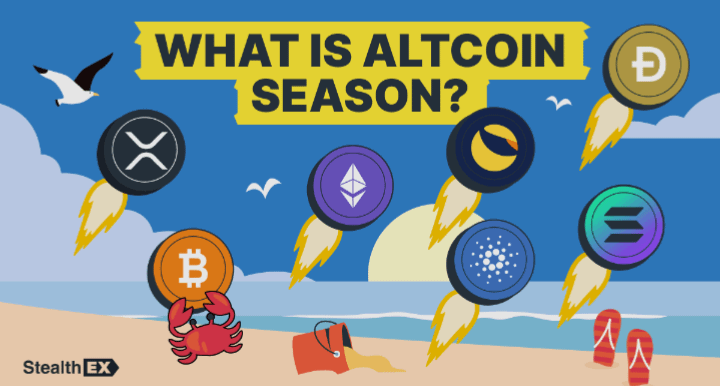
The cryptocurrency market moves in cycles. Every major bull run creates new winners, and every altcoin season is usually driven by a handful of powerful narratives that capture investor attention. In previous cycles, decentralized finance (DeFi), NFTs, Layer-1 blockchains, and memecoins dominated headlines and attracted billions of dollars in capital.
As the market prepares for what many investors believe could be another major expansion phase in 2026, the big question is no longer whether an altcoin season will happen, but which sectors could lead it.
While no one can predict the future with certainty, several emerging narratives are already showing signs of momentum. Understanding these trends can help investors identify opportunities while managing risk responsibly.
What Typically Triggers an Altcoin Season?
Historically, altcoin seasons have followed strong Bitcoin rallies. Once Bitcoin establishes a significant uptrend and liquidity enters the market, investors often begin rotating profits into higher-risk assets in search of larger returns.
This cycle creates a chain reaction:
Bitcoin attracts institutional capital.
Large-cap altcoins gain momentum.
Mid-cap projects start outperforming.
Smaller speculative assets experience explosive growth.
However, not every project benefits equally. The strongest gains often occur in sectors supported by real innovation, growing user adoption, and strong developer activity.
Artificial Intelligence (AI) and Crypto Integration
Artificial intelligence continues to be one of the fastest-growing industries globally. The intersection between AI and blockchain technology is becoming increasingly important as decentralized networks attempt to provide computing power, data storage, and AI infrastructure.
Several trends could support this narrative in 2026:
Decentralized AI marketplaces
Blockchain-based data networks
AI-powered smart contract systems
Distributed computing platforms
Investors are increasingly looking at projects that provide real utility rather than speculative promises. If AI adoption continues accelerating worldwide, crypto projects supporting AI infrastructure could become major beneficiaries.
The key advantage of this sector is that it aligns with a broader technological trend rather than relying solely on crypto market enthusiasm.
Real-World Asset (RWA) Tokenization
One of the most discussed institutional narratives is Real-World Asset tokenization.
RWA projects aim to bring traditional financial assets onto blockchain networks, including:
Government bonds
Real estate
Corporate debt
Private credit
Commodities
The appeal is simple. Tokenization can potentially improve transparency, accessibility, and efficiency while reducing settlement times.
Major financial institutions have already explored blockchain-based asset tokenization, suggesting that this trend could continue expanding throughout the decade.
If adoption accelerates, RWA-focused projects may attract both institutional and retail interest during the next altcoin cycle.
Layer-2 Scaling Solutions
As blockchain adoption grows, scalability remains a critical challenge.
Layer-2 networks help improve transaction speeds and reduce fees without sacrificing the security of underlying blockchains.
Key advantages include:
Faster transactions
Lower network costs
Better user experience
Increased scalability
As decentralized applications continue attracting users, demand for efficient scaling solutions could increase significantly.
Investors often pay attention to networks that demonstrate growing activity, developer engagement, and expanding ecosystems.
Gaming and Metaverse Evolution
The gaming sector remains one of the largest entertainment industries globally.
Earlier blockchain gaming projects struggled with sustainability, but developers have learned valuable lessons from previous cycles.
The next generation of crypto gaming may focus on:
Better gameplay experiences
Sustainable token economies
Digital ownership
Interoperable assets
Community-driven ecosystems
Rather than relying solely on speculation, successful projects may prioritize creating games that users genuinely enjoy playing.
If mainstream adoption increases, gaming-related tokens could once again become a major altcoin narrative.
DePIN: Decentralized Physical Infrastructure Networks
DePIN has emerged as one of the most interesting narratives in recent years.
These projects use blockchain incentives to build real-world infrastructure networks such as:
Wireless connectivity
Cloud computing
Data storage
Mapping services
Sensor networks
The concept is attractive because it connects blockchain technology with tangible real-world utility.
Many investors believe DePIN could become one of the strongest long-term growth sectors because it solves practical problems while leveraging decentralized networks.
Memecoins: The Wild Card
Every cycle produces unexpected winners, and memecoins have repeatedly demonstrated their ability to attract attention.
While they often lack traditional fundamentals, memecoins benefit from:
Strong communities
Viral social media trends
High engagement
Retail investor enthusiasm
However, memecoins remain highly speculative and volatile.
Investors should understand that these assets can experience rapid gains but also significant losses. Risk management remains essential when participating in this segment.
Interoperability and Cross-Chain Ecosystems
As the blockchain industry expands, users increasingly interact with multiple networks.
Projects focused on interoperability aim to create seamless communication between blockchains.
Potential benefits include:
Improved liquidity movement
Better user experience
Enhanced scalability
Greater ecosystem connectivity
The future of blockchain may involve multiple specialized networks working together rather than a single dominant chain.
This makes interoperability a narrative worth monitoring heading into 2026.
What Investors Should Watch
Instead of focusing solely on hype, investors may consider evaluating projects based on:
Development activity
User growth
Revenue generation
Ecosystem expansion
Security and transparency
Long-term adoption potential
Narratives can drive short-term price action, but sustainable growth often comes from genuine utility and consistent execution.
Final Thoughts
The next altcoin season could look very different from previous cycles. While Bitcoin will likely remain the market leader, emerging sectors such as AI, Real-World Asset tokenization, DePIN, Layer-2 scaling, gaming, interoperability, and even memecoins could compete for investor attention throughout 2026.
No narrative is guaranteed to succeed, and market conditions can change rapidly. Investors should conduct their own research, understand the risks involved, and avoid making decisions based solely on market excitement.
The projects that combine innovation, adoption, and real-world utility are likely to be the ones that stand out when the next altcoin season begins.