

I did not understand the problem until it embarrassed me.
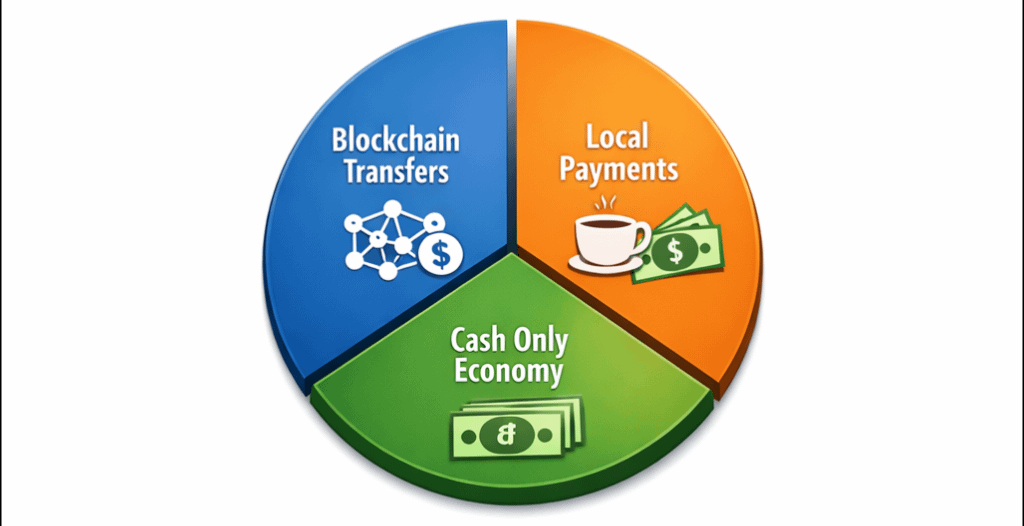
I was standing at a roadside stall in Vietnam holding a cup of freshly brewed iced coffee. The price was small. The problem was payment. The vendor only accepted cash. I had a credit card a phone filled with crypto wallets and access to liquidity that moves across blockchains in seconds. Yet in that moment I was completely stuck.
Earlier that day at the airport I had waited in line to exchange money. Poor rates. Hidden fees. Time wasted. Then the irony hit me hard. Moving eight or nine figures on chain takes seconds but buying a simple coffee on the street still depends on paper bills.
That contrast stayed with me. And it is the lens through which I now look at Plasma.
Cash is still king but it is also the most expensive prison
In Vietnam cash does not dominate because it is efficient. It dominates because alternatives are fragmented expensive and slow. For small and medium sized businesses this is not theory. It is daily pressure.
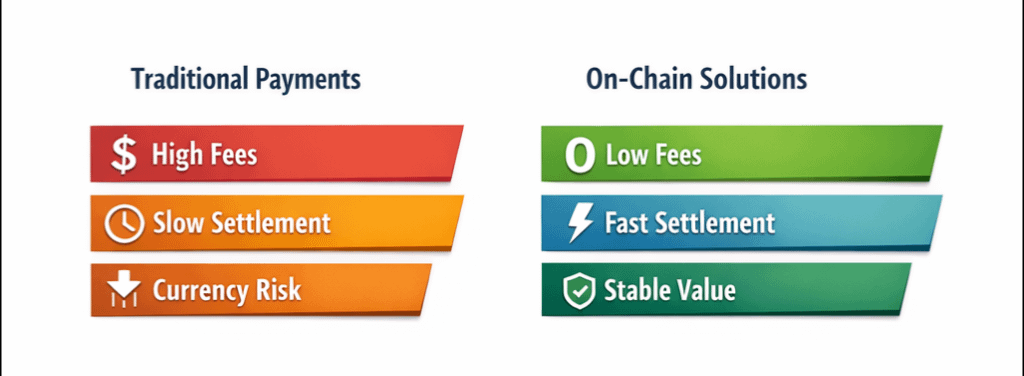
High settlement fees. Delays that stretch for days. Currency exposure that silently erodes margins. Every transaction leaks value. Not once. Every day.
When people talk about Web3 adoption they usually start with traders and DeFi TVL. That misses the real battleground. Adoption does not begin on exchanges. It begins on the street. With vendors suppliers payroll and working capital.
This is why the YuzuMoney use case stands out more than many louder protocols.
From on chain parking to real circulation
Most blockchains are excellent at storing value and terrible at letting it live. Funds get locked staked looped and displayed on dashboards. They do not pay suppliers or restock shelves.
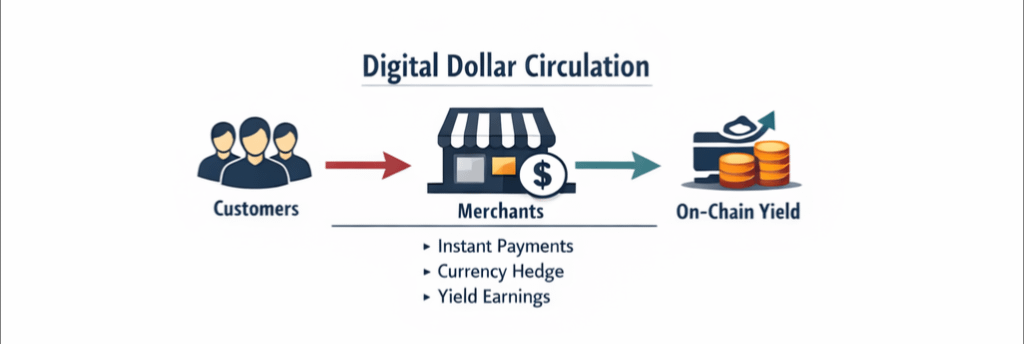
YuzuMoney changes that behavior. Instead of treating on chain dollars as speculative chips it treats them as operational money. Merchants receive payments that settle on Plasma convert into digital USD hedge local currency risk and earn yield while idle. When liquidity is needed funds move out through banking rails or cards without friction.
This is not a DEX rebranded as a solution. It functions more like a neobank built for merchants who care less about block explorers and more about tomorrows costs.
And that difference matters.
Because once digital dollars can circulate at the street level total value locked stops being the main metric. Total value used becomes the signal.
Zero gas is not a UX upgrade it is an economic unlock
Here is a question I often throw into conversations with builder friends.
If sending a WhatsApp message cost even a few cents each time would social messaging ever have scaled globally Of course not. The early internet already proved this. Dial up charged by the minute. People rushed. Usage stayed shallow. Only when broadband made connectivity feel free did behavior explode.
Web3 today still feels like dial up.
Every action costs gas. Every interaction forces users to think about fees congestion and timing. That mental friction kills entire categories before they mature. Gaming micropayments retail payments social interactions.
Plasma removes that friction at the base layer. Through Paymaster users do not see gas at all. Applications absorb it just like modern apps absorb server costs. The result is not just smoother UX. It is a completely different set of viable business models.
That is not convenience. That is infrastructure.
Rethinking the value of XPL
A question always follows. If users do not pay gas what supports the value of the network token.
This assumes the old head tax model where every user action is directly monetized. That model never scaled on the internet and it will not scale in Web3 either.
Plasma shifts the cost structure. Instead of taxing users it turns blockspace into a scarce resource competed for by applications. To deliver high throughput gas free experiences Paymasters must stake and consume network resources. As activity grows demand concentrates at the infrastructure level.
This mirrors the broadband era. Users stopped paying per megabyte yet network operators earned more because total usage multiplied.
Remove friction and volume becomes the value driver. Volume comes from real economic activity not speculative loops.
Why Vietnam is a proving ground
Emerging markets do not need more financial abstractions. They need better rails.
Vietnam sits at the intersection of heavy cash usage mobile first behavior and constant currency friction. If Plasma becomes the preferred settlement layer for converting cash into digital dollars and back again its value will not come from chasing narratives. It will come from being unavoidable.
Tolls on real commerce last longer than incentives for speculation.
If one day paying a digital dollar at a street stall feels normal Plasma will no longer feel like a blockchain. It will feel like background infrastructure. Invisible. Always on.
Standing there with that cup of iced coffee I was not thinking about blockchains. Now I am. Because the project that fixes that moment is not chasing hype.
It is quietly building the road the economy will end up using.

