
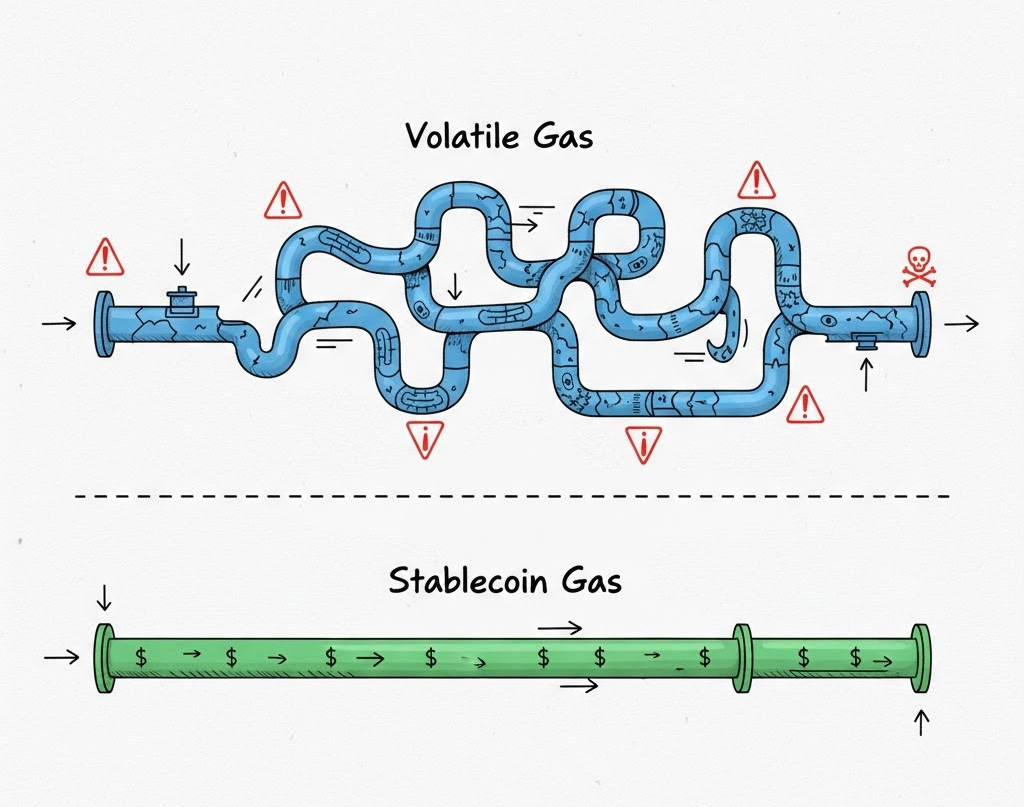
What struck me while examining @Plasma wasn’t its speed or compatibility—it was how little attention the execution layer demands from developers. From my perspective, most blockchain software today is quietly distorted by gas volatility. Apps are written to defend themselves: retries, buffers, dynamic pricing logic. I realized Plasma removes the need for that defensive posture entirely.
Because execution is denominated in stable value, cost stops being a variable input. According to how I see it, this subtly changes how software is designed. Developers no longer build around uncertainty; they build around intention. Transactions become closer to accounting entries than auction bids, and blockspace behaves more like infrastructure than a marketplace.
I also noticed that Bitcoin-anchored security reinforces this restraint. Plasma doesn’t just stabilize fees—it limits the discretion of operators. From my analysis, neutrality emerges not from promises, but from removing levers that could be abused. When neither volatility nor governance can quietly influence execution, the system feels mechanically honest.
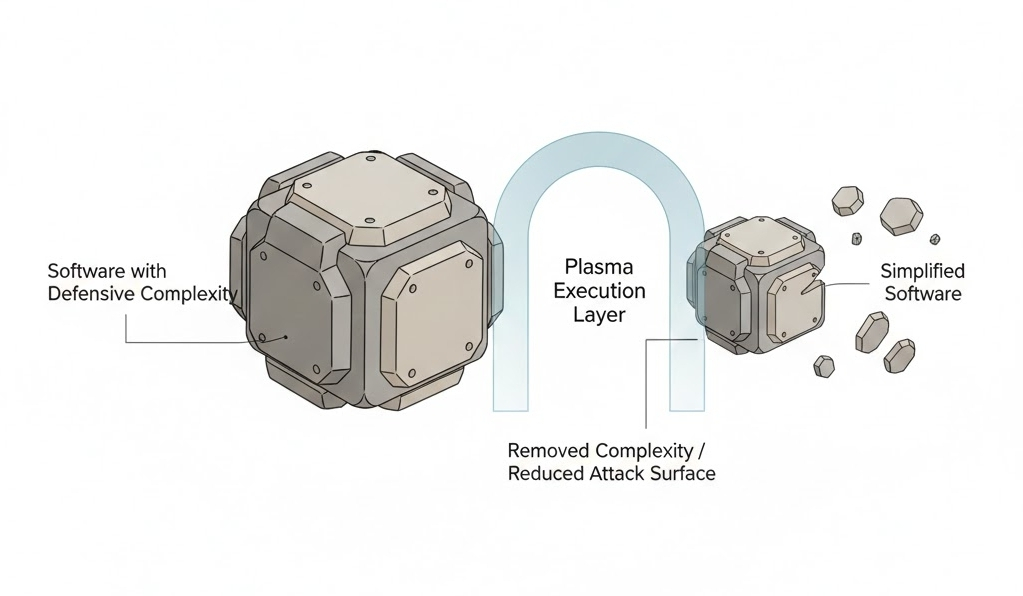
The deeper implication, in my view, is architectural. When cost predictability becomes native, entire classes of complexity disappear. Software gets simpler, not because developers try harder, but because the environment stops demanding defensive engineering.
Looking forward, I think @Plasma hints at a future where blockchain execution is boring in the best way possible. And once execution becomes boring, that’s when real financial systems tend to last.