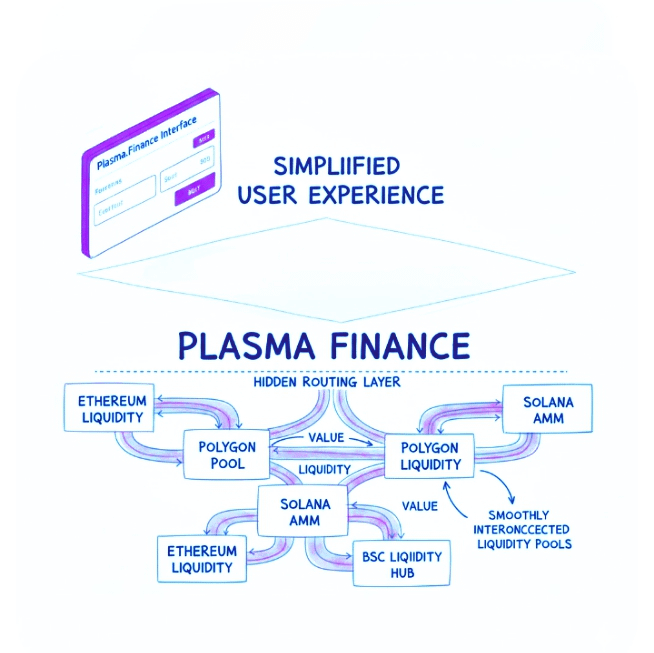
In most discussions around blockchain interoperability, the focus tends to be on scale: How many chains are connected? How many assets can move? How fast are the bridges? But these metrics, important though they may be, often tend to miss the deeper truth around why cross-chain systems struggle to achieve real adoption. The biggest failures in interoperability don't happen at a protocol level-they happen in a human layer at the moment when users are forced to make a choice.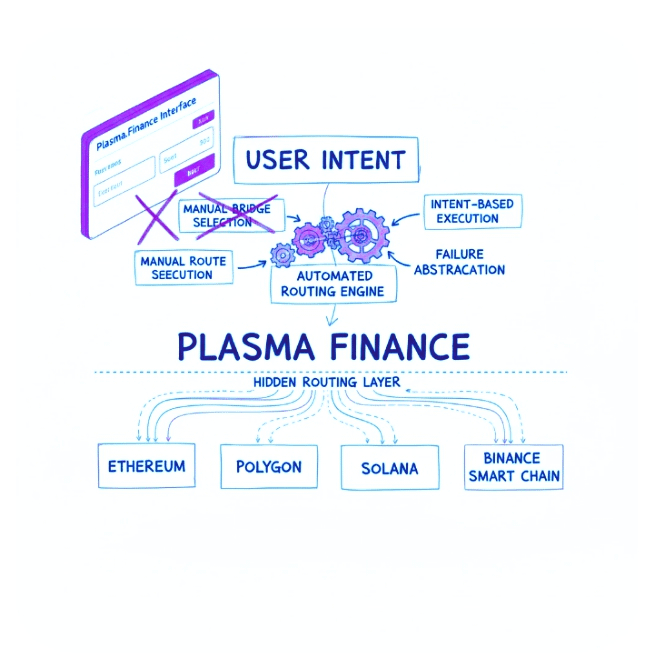
Wherever a user is required to choose a bridge, or to compare routes, or decide which chain to move through, the system introduces something far more insidious than latency: doubt. Every decision point adds a layer of cognitive load, and with it, perceived risk. Even should the underlying technology be secure, the act of choosing engenders a feeling something might go wrong — and that if that does happen, it will be the user's fault. This is where most cross-chain experiences quietly break down.
In this respect, the partnership between Plasma.Finance and Socket attacks the problem at its root. The system allows users to tell it a very simple intent: