
@Vanarchain is a Layer 1 blockchain built with a strong emphasis on real world usability rather than speculative or finance first use cases. The project is designed to support applications that millions of everyday users can interact with, including games, entertainment platforms, virtual environments, brand experiences, and AI driven services. Instead of asking users to adapt to blockchain, Vanar attempts to adapt blockchain to how modern digital products already work.
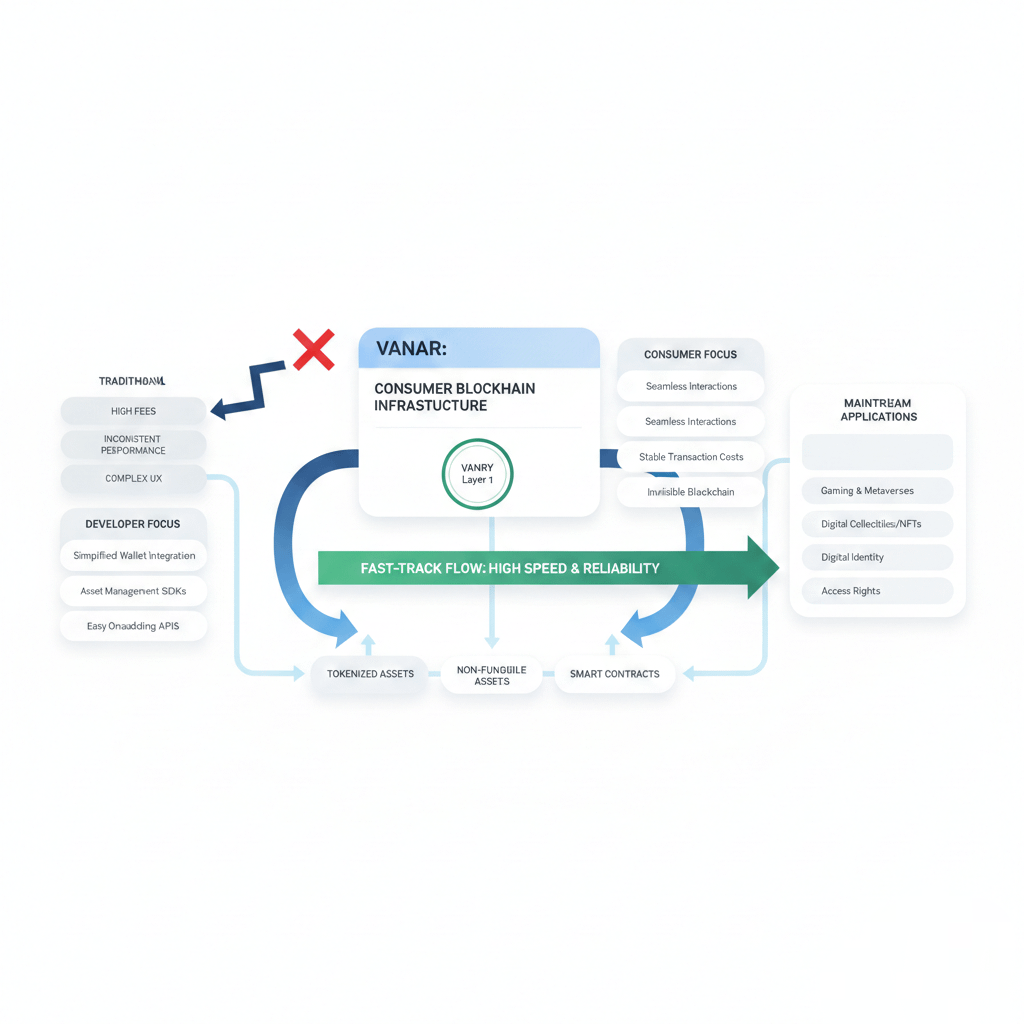
The core problem Vanar is addressing is the gap between blockchain technology and mainstream consumer applications. Many existing blockchains were created primarily for financial transactions or decentralized finance. While technically advanced, these networks often struggle with high fees, inconsistent performance, complex user experiences, and development environments that are difficult to integrate into large scale consumer products. For industries such as gaming or entertainment, where speed, reliability, and seamless interaction are essential, these limitations become major obstacles. Vanar’s approach is to create infrastructure that supports real usage without requiring users to understand or even notice the underlying blockchain.
At a high level, Vanar functions as an independent Layer 1 blockchain with its own native token, VANRY. The network processes transactions and smart contracts directly on its base layer, allowing applications to rely on a single system for execution, settlement, and asset management. The design prioritizes fast confirmation times and stable transaction costs, which are critical for applications that involve frequent user interactions. Developers deploy smart contracts to manage assets, logic, and permissions, while end users interact through applications that hide most blockchain complexity behind familiar interfaces.
The functional features of Vanar are centered on usability and consistency. The network supports tokenized assets and non fungible assets that can represent in game items, digital collectibles, identities, or access rights. Transactions are designed to remain affordable even during periods of higher activity, reducing the risk of sudden cost spikes that can disrupt consumer applications. The platform also focuses on developer tooling that simplifies wallet integration, asset management, and user onboarding, making it easier to embed blockchain functionality into existing products.
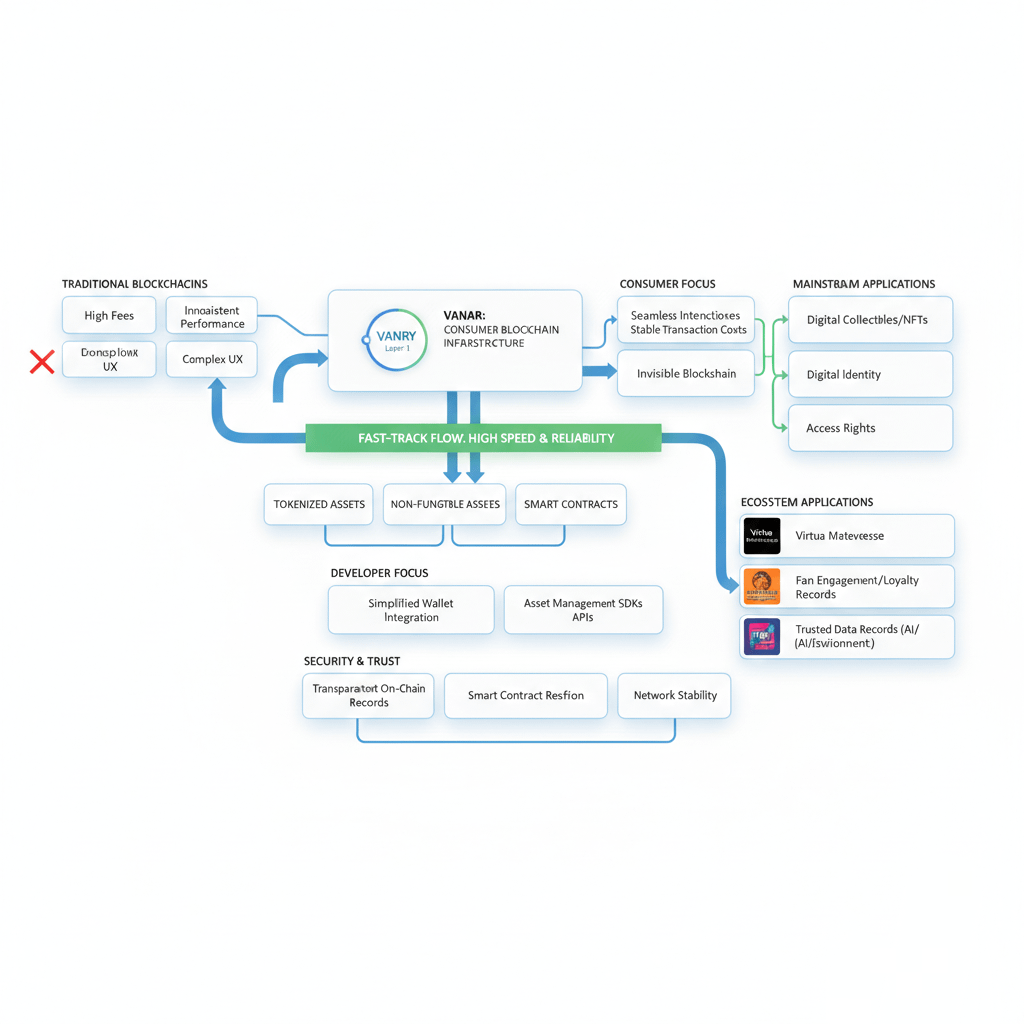
From an architectural standpoint, Vanar is designed to support scalable consumer platforms on top of a secure base layer. The core network handles validation, consensus, and transaction finality, while application level systems manage user interactions and content logic. This separation allows complex applications such as games or metaverse environments to scale without overloading the core protocol. The architecture reflects a balance between decentralization and performance, aiming to meet the practical demands of real world products.
The Vanar ecosystem includes live applications such as Virtua Metaverse and the VGN games network, which illustrate how the blockchain can be applied in practice. In gaming, Vanar enables persistent ownership of digital assets, allowing items or identities to exist independently of any single game or publisher. In metaverse environments, it supports virtual land, avatars, and digital experiences that can evolve over time. For brands and entertainment companies, Vanar provides infrastructure for digital collectibles, fan engagement systems, and loyalty programs that are transparent and verifiable. AI related and environmental applications can also use the network for trusted data records and automated interactions.
From a developer perspective, Vanar is valuable because it reduces technical friction. Developers can focus on building products instead of constantly optimizing for network congestion or unpredictable transaction fees. The consistency of the network makes it easier to design user experiences that feel smooth and responsive. For users, the benefits are often indirect. They gain faster interactions, lower costs, and more reliable digital ownership without needing to manage private keys or understand blockchain mechanics in detail.
Security and trust are supported through decentralized validation and transparent on chain records. Transactions and smart contracts are publicly verifiable, which allows independent auditing and reduces reliance on centralized authorities. At the same time, the platform must maintain strong standards for smart contract safety and network stability to protect applications built on top of it. Like all blockchain systems, overall security depends not only on the protocol but also on responsible development practices within the ecosystem.
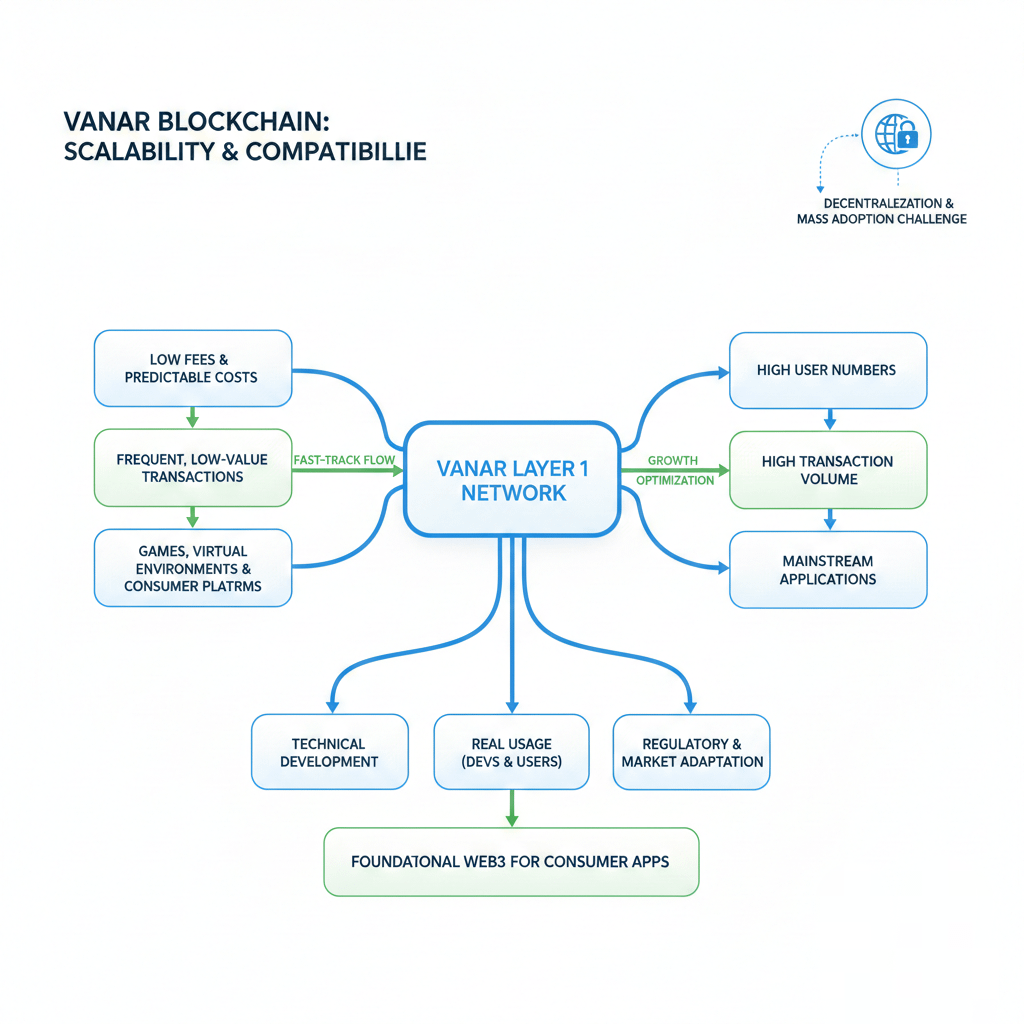
Scalability and compatibility are central to Vanar’s long term goals. As a standalone Layer 1 network, it avoids some of the complexity associated with cross chain systems. The design aims to support growth in user numbers and transaction volume without significantly increasing costs or reducing performance. This makes it more suitable for mainstream applications that may need to support large audiences over time.
Cost efficiency is a practical advantage of the network. By keeping transaction fees low and predictable, Vanar enables use cases that involve frequent, low value interactions. This is especially important for games, virtual environments, and consumer platforms where high fees would undermine usability. Stable costs also make it easier for businesses to plan and sustain long term operations on the network.
In the long term, Vanar operates in a highly competitive environment. Many blockchain platforms are pursuing similar goals around scalability and consumer adoption. The project’s relevance will depend on continued technical development, real usage by developers and users, and its ability to adapt to changing regulatory and market conditions. Maintaining decentralization while supporting mass adoption remains a complex challenge. If Vanar can continue to prioritize practical infrastructure and real world integration, it has the potential to serve as a foundational layer for consumer focused Web3 applicati