
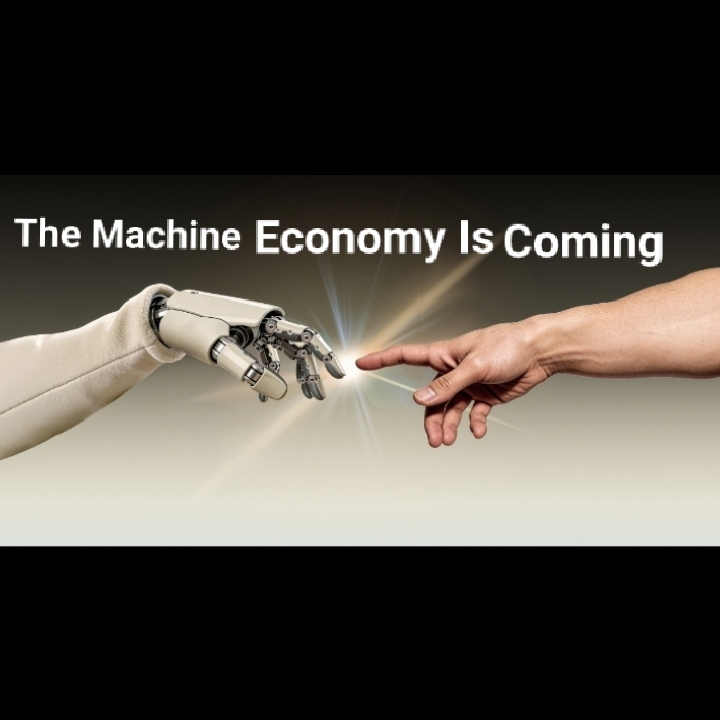
 Most people still believe blockchain is competing with banks.
I don’t think that is the real battle anymore.
The real competition is happening somewhere far less visible — and far more disruptive.
Blockchains are slowly preparing for a world where humans are no longer the main economic participants.
Not traders.
Not investors.
Not even users.
Algorithms are already trading.
AI agents are already managing liquidity.
Automated services are already buying data, executing payments, and negotiating value without human approval.
And once machines start paying machines at scale, financial infrastructure stops being a convenience…
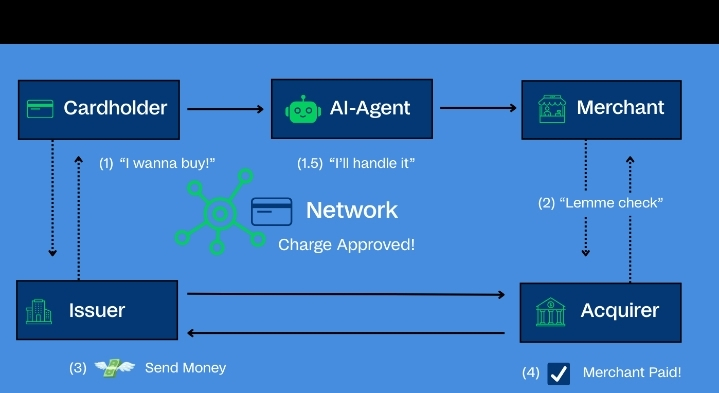
It becomes survival.
The more I study Plasma, the more it feels like infrastructure being built quietly for that exact moment.
For years, blockchain design has followed human behavior.
People open wallets occasionally.
They confirm transactions manually.
They tolerate small delays and unpredictable fees because human patience allows flexibility.
Machines don’t have patience.
Automated systems operate continuously. They execute financial logic instantly. They rely on consistency, not possibility. Even minor network instability can break automated workflows and collapse entire software-driven strategies.
This is where Plasma begins to look different to me.
Instead of chasing headline speed numbers or temporary scalability milestones, it appears to focus on something less visible but far more structural — operational certainty. Infrastructure that does not just process transactions fast, but processes them reliably enough for software to trust them blindly.
One design philosophy that stands out is Plasma’s reliance on cryptographic commitments combined with exit guarantees rather than permanently storing every transaction on-chain.
For human users, infrastructure risk is manageable. People can monitor validators, governance changes, or network stability manually.
Machines cannot.
Autonomous financial systems need something stronger than monitoring. They need guaranteed recovery. Plasma’s exit architecture allows participants to recover assets through provable ownership even if operators fail or infrastructure behaves maliciously.
From my perspective, this is not just security.
It is financial self-sovereignty designed for an economy where supervision is impossible.
Another quiet advantage Plasma introduces is cost stability.
Many scaling models improve performance by publishing more transaction data onto base layers. It works — temporarily. But over time, storage pressure increases, and operational costs become unpredictable.
Plasma approaches scaling by minimizing permanent data storage and verifying transactions through structured commitments and dispute proofs. This reduces dependency on long-term blockspace expansion and helps stabilize transaction economics.
For human users, fee volatility is annoying.
For machine economies, it is catastrophic.
Autonomous systems cannot negotiate with unpredictable settlement costs. They require financial rails that behave like physical infrastructure — stable, measurable, and dependable.
Security scaling is another area where Plasma feels structurally forward-looking.
As blockchain activity grows, dispute verification becomes increasingly complex. Traditional systems often require reviewing large volumes of historical data, creating hidden performance bottlenecks.
Plasma introduces layered dispute compression, where transaction conflicts are reduced into summarized verification proofs before final settlement review occurs.
It sounds subtle, but its impact is massive.
Scalable security is not just about protecting transactions. It determines whether automated economic environments can function continuously without overwhelming their own settlement foundations.
Then there is finality — not just speed, but confidence.
PlasmaBFT focuses on confirmation certainty rather than raw confirmation time. Sub-second finality combined with strong state assurance allows financial logic to execute immediately without requiring secondary verification layers.
For machine-driven finance, speed without certainty is meaningless.
Automation requires trust that cannot be questioned. And confidence-based finality transforms blockchain from a transactional tool into reliable economic infrastructure.
History shows that the most powerful financial systems rarely compete for visibility.
Clearing houses, payment networks, and settlement rails dominate global finance not because users interact with them directly — but because they operate flawlessly beneath the surface.
Plasma appears to follow this same blueprint.
It does not attempt to become a consumer-facing ecosystem. It positions itself as a coordination layer capable of supporting high-frequency economic activity between software systems.
If AI-driven services, automated data markets, algorithmic trading ecosystems, and machine-powered gaming economies expand, infrastructure that disappears into reliability may become the most valuable infrastructure of all.
When I step back and look at blockchain’s evolution, I see clear phases emerging.
First came decentralization.
Then scalability.
Now something far bigger is beginning to form — automated economic coordination.
If future financial systems are dominated by autonomous participants, infrastructure priorities will shift dramatically. Reliability will matter more than speed. Cost predictability will matter more than transaction volume. Recovery guarantees will matter more than marketing narratives.
Plasma’s architecture feels aligned with that transition. It does not appear designed for today’s user cycle. It looks prepared for tomorrow’s economic participants.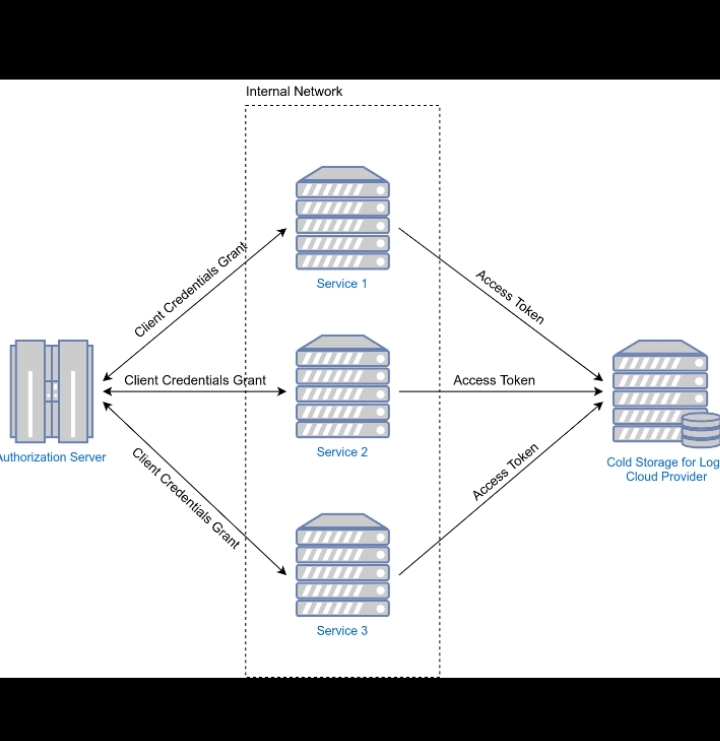
The more I analyze Plasma, the more I see infrastructure built for an economy where transactions never pause, decisions are algorithmic, and financial coordination happens continuously in the background.
Blockchain discussions often focus on faster transactions and cheaper fees.
But the real transformation may be much simpler — and far more disruptive.
The next generation of blockchain users may never open wallets.
They may never sign transactions.
They may never even know which network they are using.
Because the future of finance may not be human-facing at all.
It may be machine-native.
And historically, the infrastructure that defines new economic eras is never the loudest technology.
It is the technology that becomes so reliable…
The world forgets it is even there.