

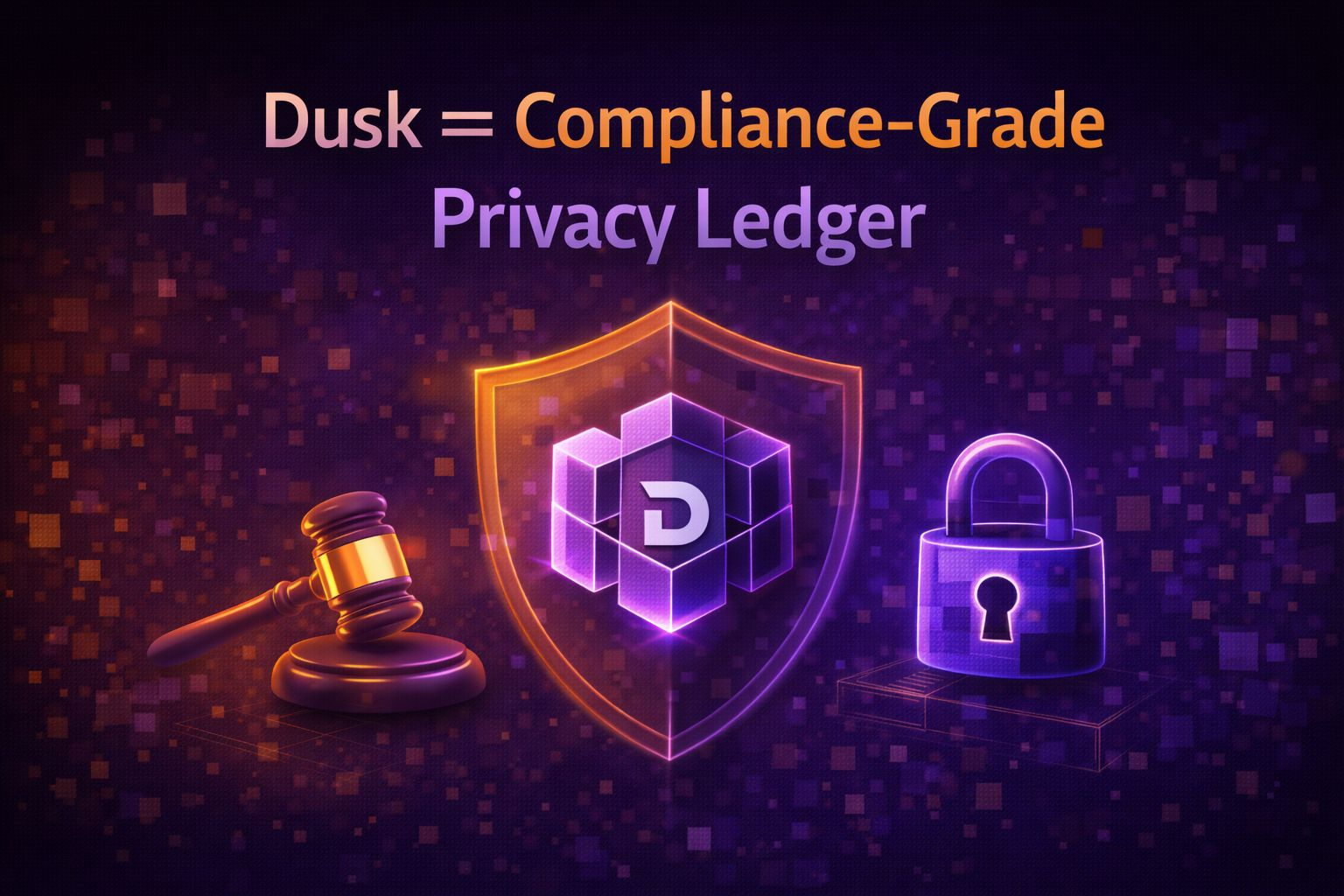
 Most blockchains still treat privacy like an ideological slogan. Either everything is transparent forever, or everything is hidden beyond reach. That framing works for crypto-native culture, but it breaks the moment you introduce real financial actors. Institutions do not operate on narratives. They operate on constraints: confidentiality rules, audit requirements, counterparty risk, and legal accountability. This is where Dusk stands out, because it does not design privacy as an escape route. It designs privacy as a controlled financial tool, one that can survive a regulator’s question without exposing the customer to the market.
The core problem Dusk is solving is not “how to hide transactions.” The real problem is how to allow financial activity to happen on a public blockchain without turning every balance sheet movement into public intelligence. In regulated markets, data exposure is not just uncomfortable, it is dangerous. If counterparties can see treasury flows, fund reallocations, or large transfers in real time, it creates a structural advantage for predatory actors and a structural disadvantage for legitimate ones. Traditional markets have spent decades building systems where transactions are provable but not broadcast as public signals. Dusk is trying to bring that same market logic on-chain.
This is why Dusk should not be described as a privacy coin. It is closer to a compliance-grade ledger that understands selective visibility. In real finance, privacy does not mean the absence of records. It means that records exist, but only the right parties can view them under defined circumstances. Dusk’s philosophy aligns with this. Transactions can remain confidential to the public while still being validatable and reconstructable for authorized oversight. That balance is the difference between a chain regulators will tolerate and a chain they will treat as an unmanageable black box.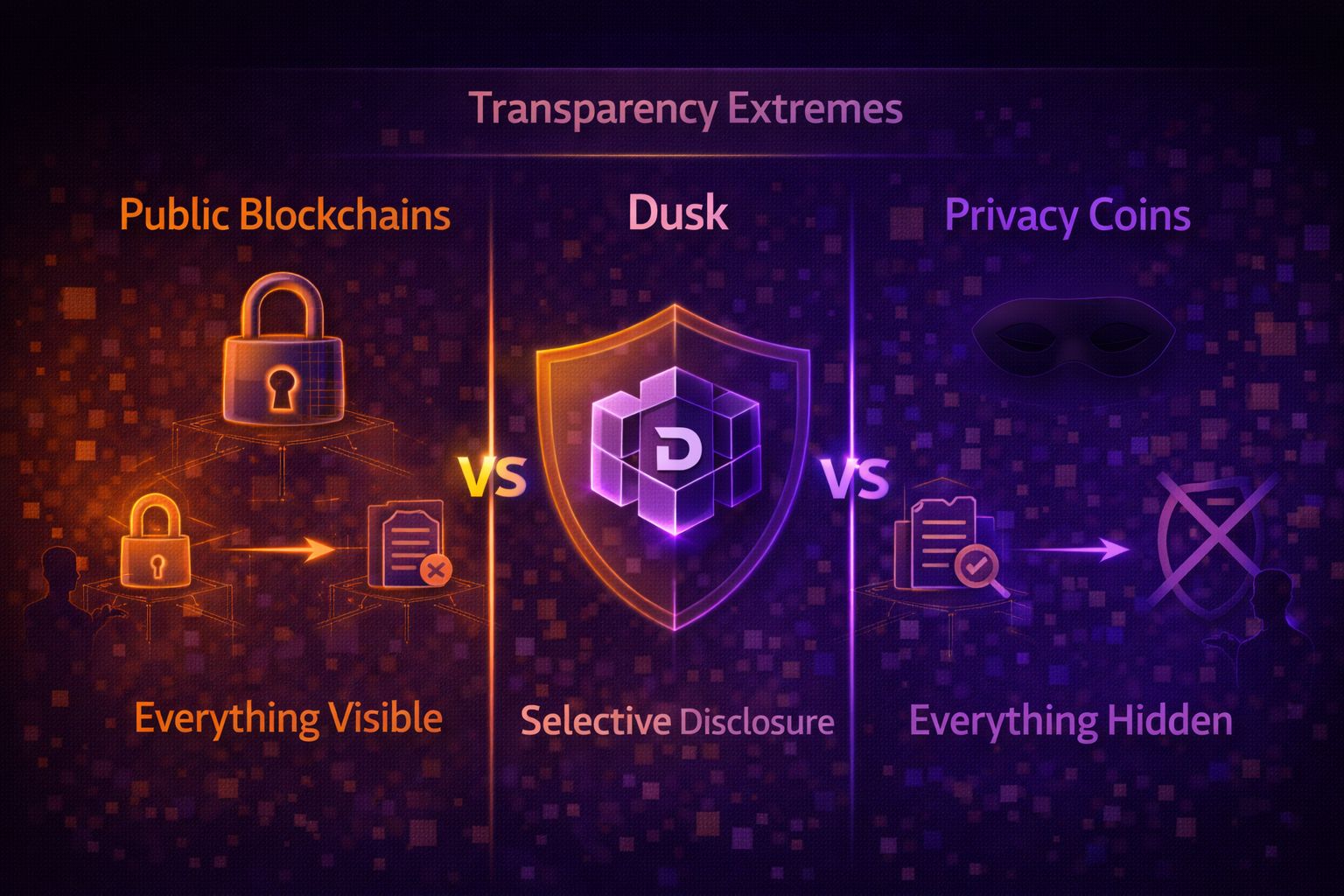 What makes Dusk’s approach stronger than typical privacy narratives is that it does not pretend compliance can be outsourced. Many chains claim institutions can “just use compliance layers” on top, but institutions do not trust compliance that lives in front-end gating or off-chain monitoring. They want enforcement closer to the protocol, where rules are structural rather than optional. Dusk’s architecture is built around that assumption. It is designed to support financial workflows where confidentiality exists, but proof and enforcement are still part of the system’s behavior, not a separate promise.
A key signal that Dusk is built for professionals is its obsession with observability. Most projects treat explorers, APIs, and node tooling as secondary. Dusk treats them like infrastructure. Access to block data, structured queries, transaction metadata, validator statistics, and monitoring endpoints is not built for retail curiosity. It is built for compliance teams, operators, and auditors who need to reconstruct activity months later without relying on assumptions. In regulated environments, the question is never “can you send a transaction.” The question is “can you prove what happened, when it happened, and why it was valid.”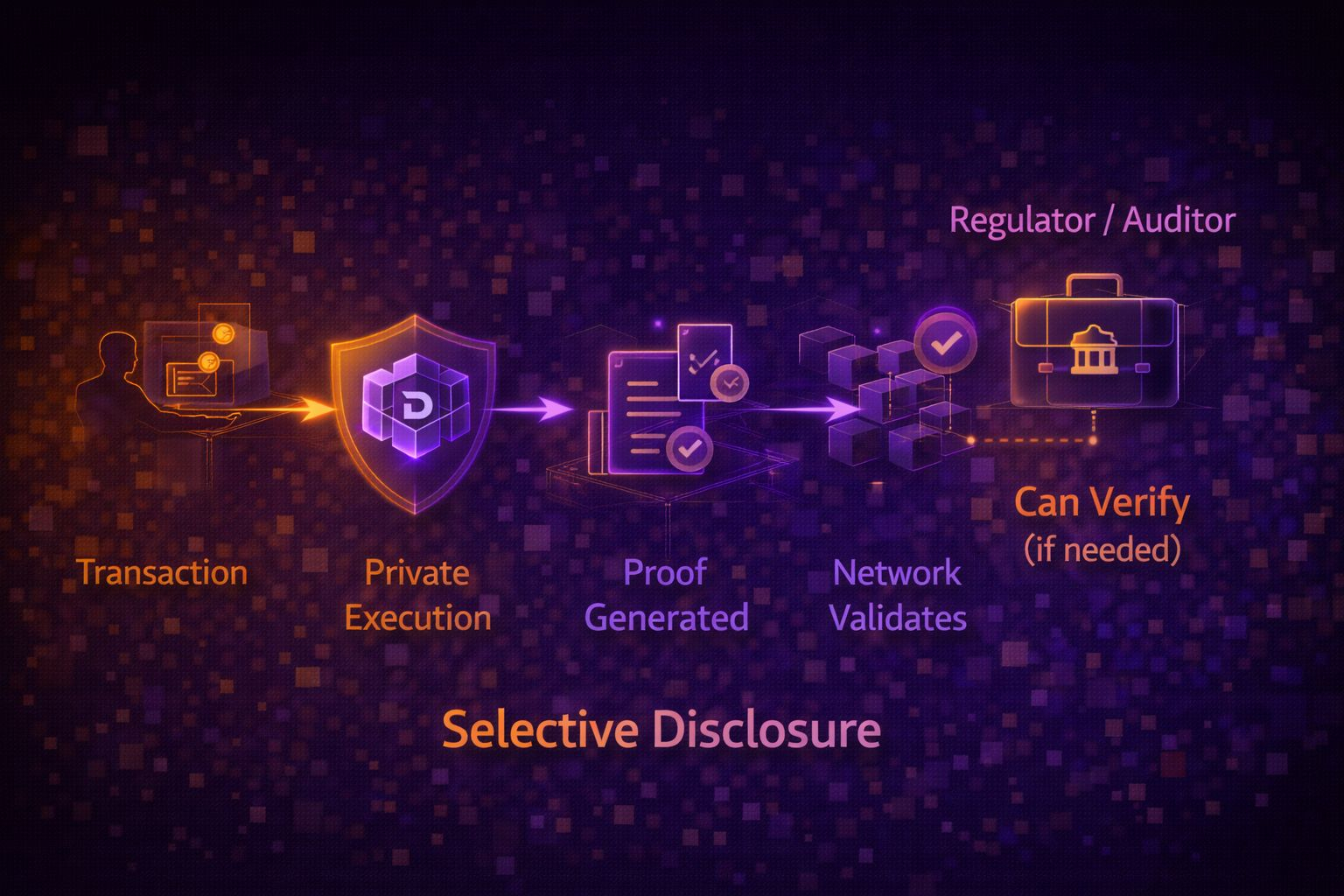 Honestly, you can see the institutional mindset baked right into Dusk’s staking model. Their validator setup isn’t about putting on a show for the community it’s about making sure people actually do their jobs. In privacy-focused networks, you can’t rely on everyone watching each other, so the real incentive comes down to money. That’s what keeps things honest. Dusk keeps its staking rules simple and, yeah, maybe even a little dull: set requirements, specific duties, no surprises. But that’s exactly the point. Boring signals stability, which is what real financial systems want. Institutions don’t care about hype or theatrics they want systems they can measure, trust, and count on day after day.
DUSK as a token also fits into this framework in a practical way. Instead of being positioned as a speculative asset first, it functions as settlement fuel and security capital. It exists to pay fees, reward correct operation, and sustain network participation. Even the long emission schedule reflects a long-term security mindset. A system built for regulated finance cannot be designed around short-term attention cycles. It must be designed around long-duration incentive stability, because regulated adoption takes years, not months.
One of the strongest trust signals is how Dusk treats migration and bridging. Most chains hide these mechanics behind marketing language. Dusk documents them as explicit procedures: tokens are locked, events are emitted, off-chain listeners process actions, native issuance occurs, decimals are handled precisely. That level of clarity is not aesthetic. It is institutional-grade communication. Financial users need to understand what happens to their assets step by step. A system that cannot explain asset transitions clearly is not ready for regulated value flows.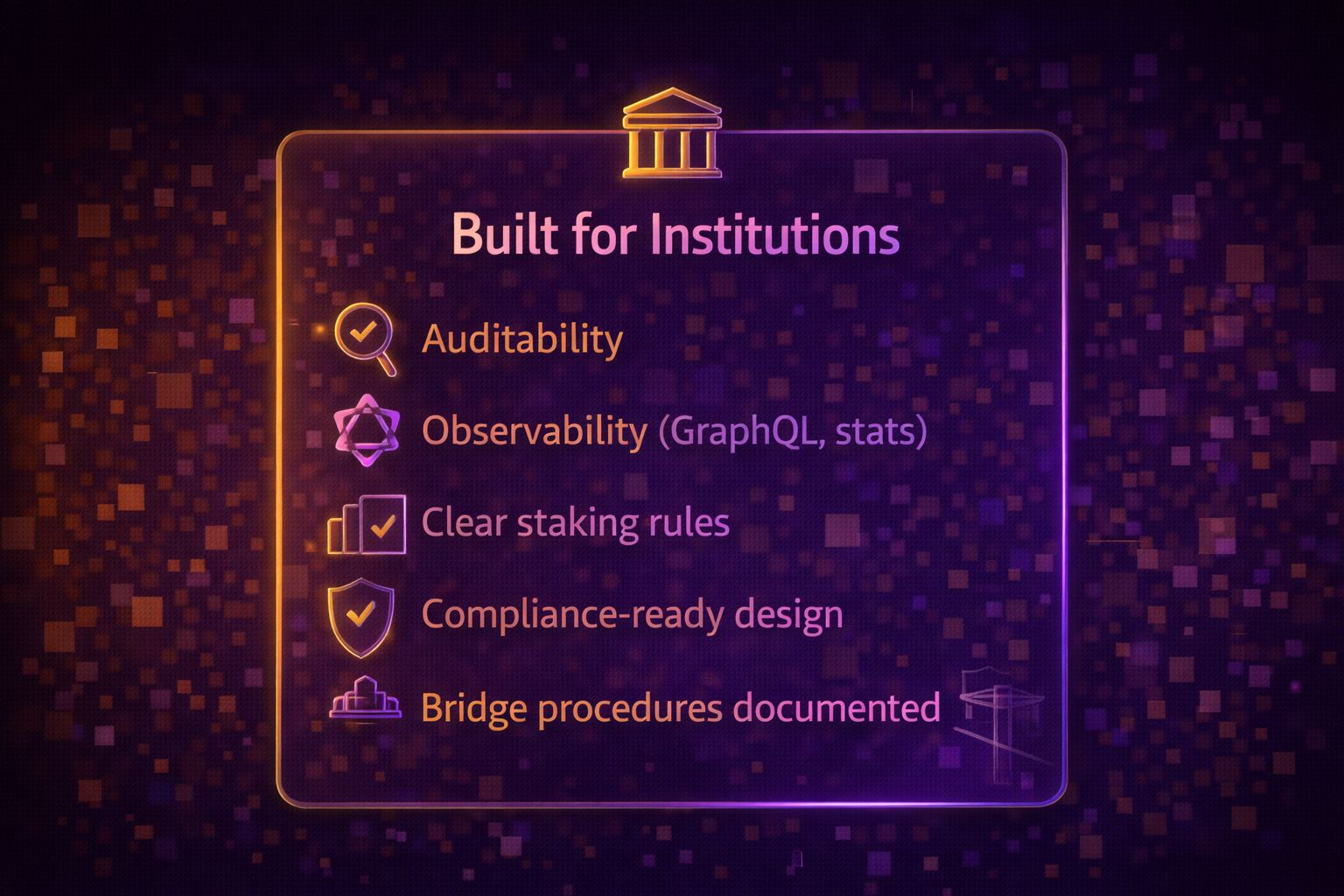 The larger point is that Dusk behaves like a blockchain that expects serious scrutiny. It is not optimizing for viral growth. It is optimizing for defensibility. Defensible to auditors, defensible to regulators, defensible to risk committees. And that is why its privacy story matters. Dusk is not selling invisibility. It is selling controlled confidentiality with accountability built into the ledger itself.
If Dusk succeeds, it will not succeed because privacy became trendy again. It will succeed because markets eventually admit the truth: transparency is not always trust. In capital markets, trust comes from controlled disclosure, enforceable records, and provable compliance. Dusk is building a system where compliance can be proven without making the customer public. That is not a narrative. That is infrastructure.