
Many blockchains celebrate immutability as a virtue. In theory, that sounds ideal. In practice, real finance works the opposite way. Regulations evolve monthly. Risk limits are adjusted. Compliance language changes. What was acceptable yesterday may be prohibited tomorrow. Even within a single institution, policies shift due to market conditions, fraud patterns, or geographic expansion.
Change isn’t the hard part of finance — immutability is.
Vanar approaches blockchain from a different angle. Instead of treating code as sacred and frozen, it treats the chain as a system that can evolve without breaking trust. That distinction matters. Finance doesn’t need flawless, untouchable code — it needs upgradeable policy with a verifiable audit trail.
Traditional smart contracts force institutions into an uncomfortable trade-off. Any real-world policy update requires redeployment. Users fear admin keys and opaque upgrades. Each migration introduces confusion, risk, and new attack surfaces. This rigidity clashes with how banks actually operate, where rules are living documents that are constantly revised.
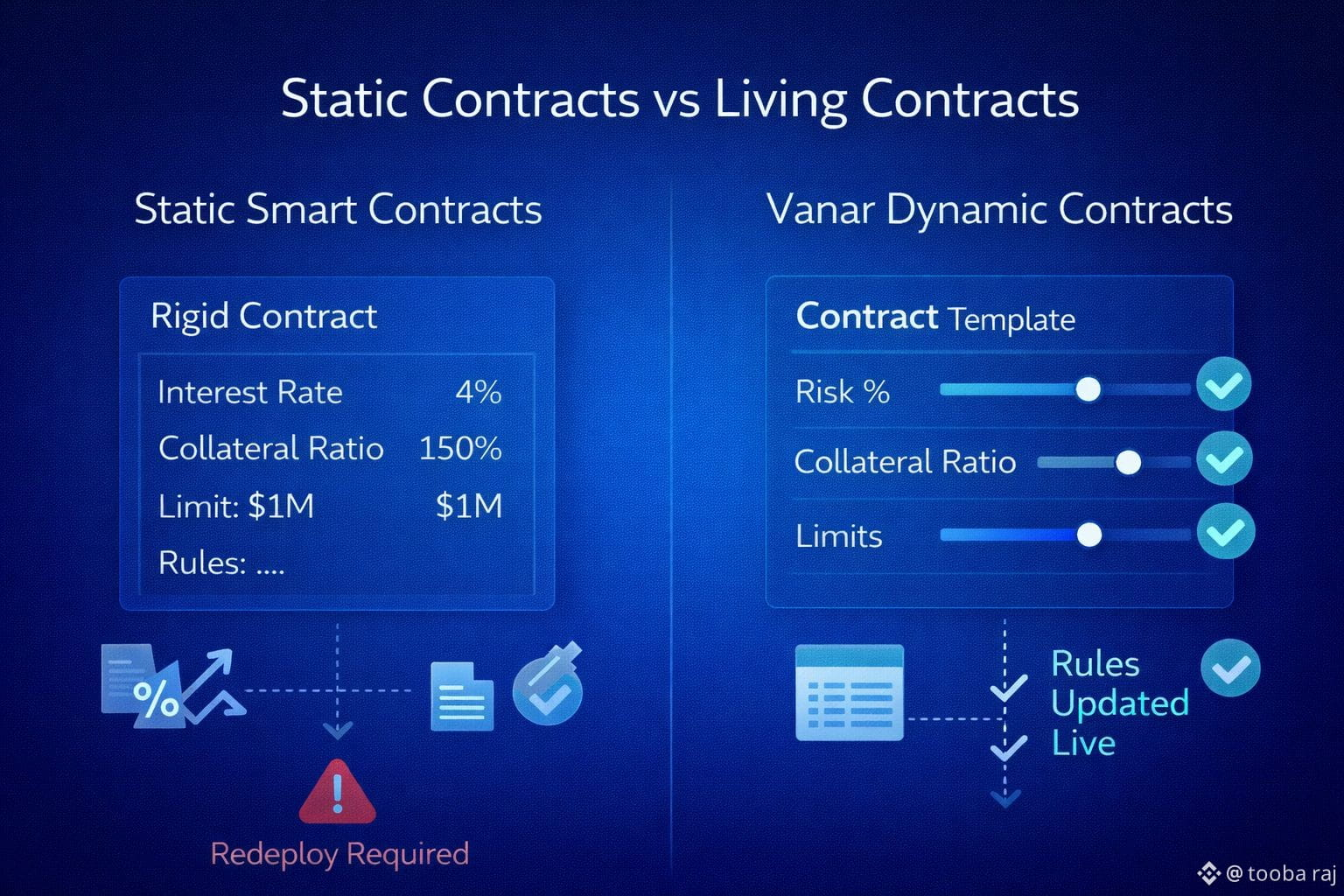
That’s where dynamic contracts become critical — not as feature expansion, but as long-term compliance efficiency.
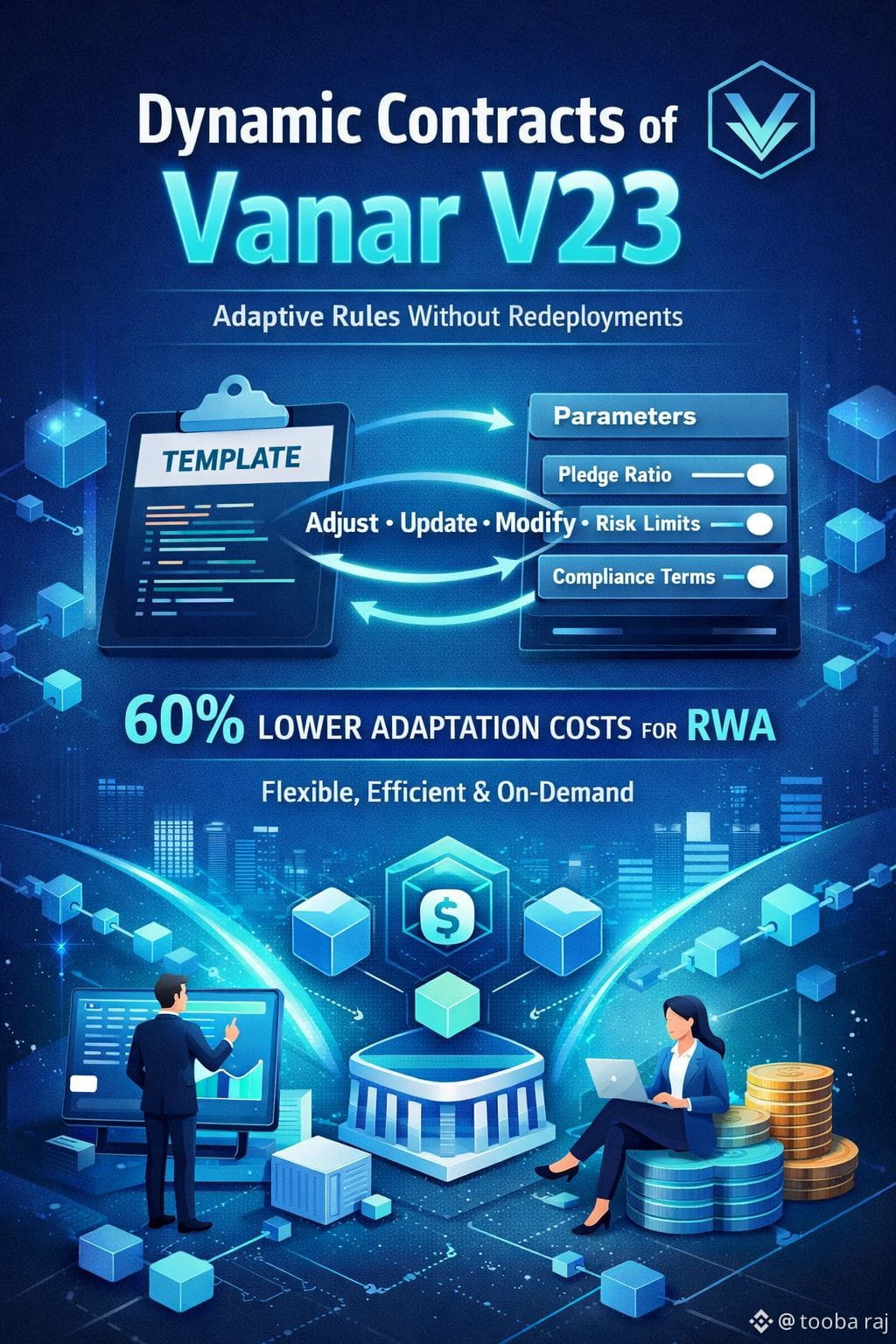
With Vanar V23, contracts are framed as stable templates paired with adjustable parameters. Instead of rewriting logic, institutions modify approved rule-sets: risk levels, pledge rates, compliance thresholds, regional limits. The structure remains intact; only sanctioned parameters change. It mirrors a well-understood software principle: separating code from configuration.
This shift redefines what “upgrading” means on-chain. Rather than shipping new contracts to new addresses, Vanar allows controlled, auditable parameter updates within the same system. According to the V23 write-up, this approach can reduce multi-scenario RWA adaptation costs by roughly 60% — but more importantly, it treats policy change as a first-class feature, not a workaround.
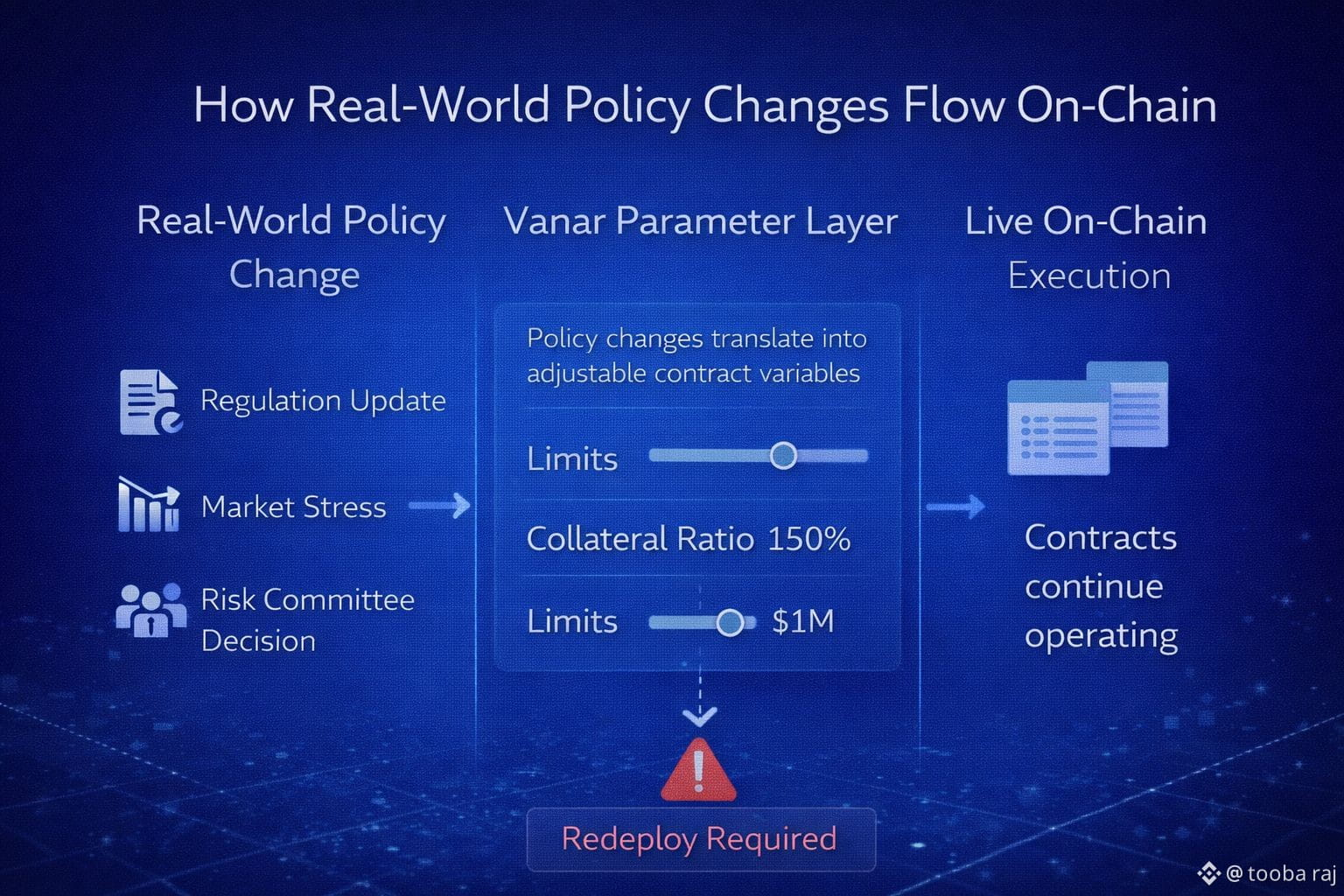
This is especially relevant for RWA tokenization, where rules never stand still. Collateral requirements adjust with volatility. Jurisdictions redefine accredited status. Compliance teams introduce new constraints after audits. Expansion into new regions demands new limits. In immutable systems, each change creates forks, redeployments, or fragile upgrade paths.
Vanar’s template-plus-parameter model offers a cleaner middle ground: change is expected, scoped, and verifiable. The contract isn’t a rock — it’s a machine with visible dials, and everyone knows which dials exist.
Fewer redeployments also mean fewer risk events. Every migration is a moment of vulnerability. By allowing rule updates without replacing core logic, Vanar reduces attack windows and integration failures. Risk isn’t eliminated — it’s contained.
Governance, in this model, becomes the rule-approval layer, not a noisy ritual. With Governance Proposal 2.0, Vanar outlines how token holders can approve system-level parameters, including AI and protocol rules. What matters is direction: who can change what, how it’s approved, and how it’s recorded.
That’s how businesses think. Not who shouted loudest — but what was approved, when, and by whom.
Consider an on-chain lending product. Core logic — issuance, monitoring, repayment — should remain stable. But loan-to-value ratios, risk tiers, accepted collateral, regional exposure, and compliance checks must evolve. With dynamic contracts, policy changes don’t force users into new contracts or developers into constant rebuilds. Auditors can trace every adjustment. Integrations remain intact.
This is how on-chain finance stops being an experiment and starts behaving like infrastructure.
Most crypto narratives chase novelty. Vanar’s dynamic-contract vision chases something rarer: operational maturity. It doesn’t reject change — it says change safely.
That’s how banks, payment networks, and regulated systems function. They evolve constantly, but within structured policy frameworks, approval flows, and audit trails.
If Vanar continues down this path — with confined changes, clear governance, and verifiable audits — it isn’t just building another chain. It’s building a platform where real finance can move on-chain without breaking itself.
Immutability is often confused with trust in crypto. In real systems, trust comes from predictable behavior and transparent change.
Vanar’s V23 story reframes smart contracts for the real world: stable templates, adjustable rules. That shift could make regulated finance and RWA not just possible on-chain — but sustainable.
The chain that adapts endures. The chain that only promises fades.