

Every significant technological transition produces infrastructure winners whose importance only becomes clear after the transition is complete. During the development of telecommunications networks, the companies building switching infrastructure rather than handsets or content captured the most durable value. During the internet’s commercial development, routing infrastructure and backbone network operators established positions that remained valuable long after specific applications and services rose and fell. During the smartphone transition, operating systems and app distribution infrastructure captured more durable value than most individual applications running on them. These historical patterns share a common thread: the infrastructure coordinating interactions between system components captures value proportional to the volume and importance of those interactions rather than to any single application or use case.
Plasma Protocol is pursuing precisely this infrastructure coordination position within blockchain’s multi-chain transition. As the ecosystem evolves from Ethereum-centric operations toward genuine multi-chain architecture where dozens of significant blockchain networks coexist serving different purposes, the infrastructure coordinating value flows between these networks becomes increasingly essential. Every DeFi transaction routing across chains, every arbitrage correcting price discrepancies between networks, every yield optimization rebalancing capital toward better opportunities, every institutional position managed across multiple chains generates demand for reliable cross-chain coordination infrastructure. Plasma is building the protocol that captures this coordination role, with all the compounding value dynamics that infrastructure positions historically provide.
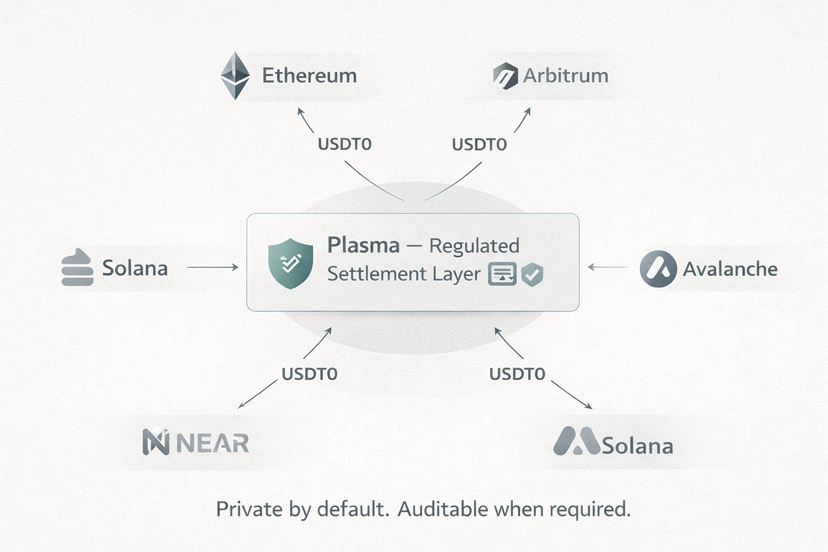
The scale of this opportunity requires understanding how dramatically the multi-chain ecosystem has grown and continues growing. Total value locked across all blockchain networks has expanded substantially beyond Ethereum alone. Layer-two networks have matured from experimental scaling solutions into substantial ecosystems with genuine user bases and diverse application landscapes. Alternative layer-one blockchains have developed distinctive user communities, unique protocol ecosystems, and competitive advantages in specific application categories. This proliferation of viable blockchain networks creates the fragmentation problem that Plasma solves, and the continued growth of this ecosystem expands the addressable market for cross-chain coordination infrastructure.
Protocol Architecture Addressing Infrastructure-Grade Requirements
Infrastructure-grade protocols face requirements distinct from application-grade protocols. Applications can tolerate occasional failures, scheduled maintenance, and gradual feature development because users can substitute alternatives during disruptions. Infrastructure cannot tolerate these same limitations because the applications depending on it inherit every failure, limitation, and inconsistency from the infrastructure layer. Building infrastructure-grade cross-chain coordination requires architectural decisions that prioritize reliability, security, and consistency over feature velocity and performance optimization.
Plasma’s architecture reflects these infrastructure-grade requirements throughout its design. The security model employs economic mechanisms that create genuine financial consequences for dishonest behavior rather than depending on reputation, legal accountability, or technical prevention alone. Validators who attest to fraudulent cross-chain transactions lose substantial staked XPL, creating financial losses that exceed any potential gains from fraud for rational actors. This economic security model functions regardless of validator identity, reputation, or jurisdiction because it depends on financial incentives rather than trust in validator behavior.
The distributed liquidity pool architecture provides infrastructure-grade resilience by eliminating single points of failure that have historically compromised bridge security. Traditional bridge designs concentrate user assets in custodial contracts that become catastrophic failure points when compromised. Plasma’s pool-based design distributes value across multiple independent pools on different chains, each representing a separate security boundary. Compromising one pool creates limited losses rather than total protocol failure, providing the fault tolerance that infrastructure systems require. The protocol continues functioning even if individual components experience problems, exactly the resilience characteristic that distinguishes infrastructure from fragile application-layer designs.
Operational monitoring and incident response capabilities reflect infrastructure thinking about reliability maintenance. Automated anomaly detection systems continuously analyze transaction patterns, pool balances, and validator behavior for deviations from expected baselines. Circuit breaker mechanisms can isolate problematic components without shutting down entire protocol operations, allowing most functionality to continue during localized issues. These operational capabilities distinguish serious infrastructure projects from application-layer protocols that can afford more casual approaches to reliability management.
Deep Dive into Liquidity Mechanics
The liquidity architecture underlying Plasma’s cross-chain transfer mechanism deserves detailed examination because it represents the core innovation enabling everything else the protocol delivers. Understanding how this architecture functions differently from traditional bridge designs illuminates why Plasma can achieve security and performance characteristics that custodial bridges cannot match simultaneously.
Traditional bridges operate on a lock-and-mint model where users lock assets on source chains and receive wrapped representations minted on destination chains. This creates several interconnected problems. Locked assets accumulate in custodial contracts, creating concentrated value that attracts sophisticated attackers. Wrapped tokens represent claims on locked assets rather than native assets, introducing trust dependencies on bridge operators maintaining adequate reserves. Liquidity for each wrapped token is separate from liquidity for native versions of the same asset, fragmenting markets and degrading execution quality.
Plasma’s pool-based model replaces lock-and-mint mechanics with native asset swaps. Users wanting to transfer value from one chain to another swap their assets against liquidity pools on their source chain. Simultaneously, liquidity providers on the destination chain release equivalent native assets. The net result is value transfer between chains without any assets being locked in custodial contracts. Users receive native destination chain assets rather than wrapped representations. The economic connection between source and destination chains comes through liquidity provider positions rather than custodial arrangements.
This architectural difference creates security properties that emerge from structure rather than from security measures applied to insecure architecture. There are no custodial contracts holding concentrated user deposits to attack. There are no bridge operators whose private keys could be compromised to drain user funds. There are no wrapped token systems whose backing could be under-reserved. The attack surfaces that have enabled most major bridge exploits simply don’t exist in Plasma’s architecture. Security improvements come from eliminating vulnerabilities rather than from defending them more vigorously.
Pool rebalancing through arbitrage incentives creates self-correcting liquidity distribution without centralized management. When heavy usage depletes a pool on one chain, transfer prices through that pool increase, incentivizing arbitrageurs to restore balance by transferring in the opposite direction to capture the spread. This market mechanism distributes liquidity efficiently across chains in response to actual usage patterns rather than speculative projections about future demand. The efficiency of this rebalancing improves with protocol scale because larger markets attract more arbitrage capital that responds more quickly to imbalances.
XPL Token Dynamics in a Growing Ecosystem
The XPL token’s economic dynamics become more interesting and more favorable as the protocol ecosystem grows. Understanding why requires examining how different sources of token demand interact and compound as network usage increases. Multiple independent demand sources create more stable and sustainable economics than single-source demand that can disappear quickly if circumstances change.
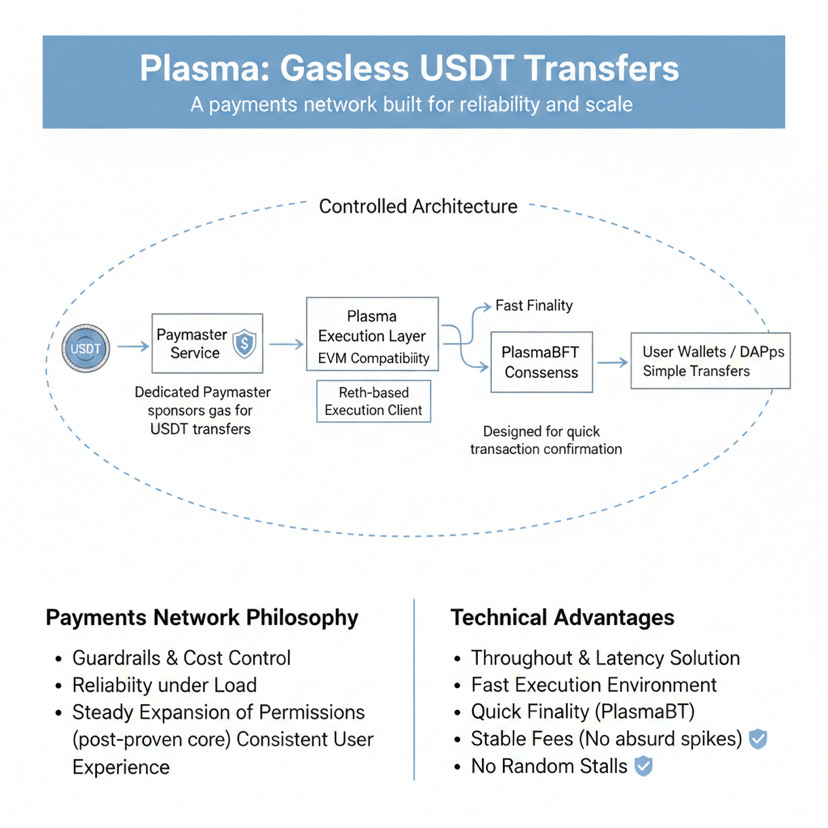
Validator staking demand grows with network security requirements. As transaction volumes increase and aggregate values flowing through the protocol grow, maintaining adequate security requires more validators each staking more XPL. This demand source is essentially unlimited on the upside because there’s no ceiling on how much security validators might collectively stake as the protocol processes more valuable transactions. The security-driven demand for XPL is uniquely durable because it’s connected to fundamental protocol operation rather than optional features that could be abandoned.
Liquidity provider positioning creates another demand dimension connected to yield seeking behavior. As protocol transaction volumes grow, fee yields available to liquidity providers become more attractive, drawing more capital into pools. Liquidity providers who want exposure to protocol fee yields need to hold and deploy XPL to participate. This creates demand connected to the investment attractiveness of protocol economics rather than to security requirements, diversifying the demand base.
Governance participation creates demand from long-term protocol stakeholders who want influence over development direction. As the protocol matures and governance decisions have greater consequences for stakeholder outcomes, thoughtful actors increase governance participation to protect and advance their interests. This demand source grows as the protocol becomes more valuable and governance decisions have more significant economic consequences. I’m convinced that governance value has been consistently underpriced in early-stage protocols and becomes increasingly recognized as protocols mature into genuine infrastructure.
Application Ecosystem Maturation
The application ecosystem building on Plasma’s infrastructure is maturing from experimental integrations toward production systems handling significant economic activity. This maturation trajectory follows a pattern common to infrastructure protocols where early applications demonstrate possibility, intermediate applications demonstrate scalability, and mature applications demonstrate the institutional-grade reliability that enables mass adoption.
Early yield optimization applications demonstrated that cross-chain rebalancing was technically feasible and economically meaningful. These applications showed that Plasma’s infrastructure could support real investment strategies rather than just theoretical examples, attracting attention from sophisticated DeFi participants who began experimenting with cross-chain yield strategies.
Intermediate applications focused on demonstrating scale and consistency. Multi-chain liquidity management systems handling larger capital amounts required Plasma to demonstrate that performance characteristics observed in small-scale testing held at production scale. We’re seeing these intermediate applications performing successfully, validating that the protocol architecture scales as designed rather than degrading under production conditions.
Mature institutional applications represent the frontier that could transform Plasma’s economic profile significantly. Institutional capital seeking yield across DeFi requires infrastructure demonstrating not just technical performance but operational reliability, comprehensive audit trails, and professional-grade support. As Plasma builds track record with institutional-scale transactions, it becomes increasingly qualified for institutional capital deployment that would dramatically increase protocol transaction volumes and fee generation.
Cross-chain derivatives represent another emerging application category with significant potential. Financial instruments that reference prices or conditions across multiple chains require reliable cross-chain data and settlement infrastructure. Plasma’s cross-chain messaging capabilities can support these instruments in ways that single-chain protocols cannot, creating application categories exclusive to cross-chain infrastructure that can’t be replicated on any single blockchain regardless of its individual capabilities.
Competitive Positioning and Market Development
The competitive landscape for cross-chain infrastructure is developing in ways that create both opportunities and challenges for Plasma. Competition validates market importance because well-resourced competitors enter markets with genuine long-term potential. The presence of multiple teams working on cross-chain infrastructure confirms that the problem space Plasma addresses represents genuine demand rather than theoretical opportunity.
Differentiation within this competitive landscape depends less on unique technical approaches and more on execution quality, ecosystem development, and earned trust through operational reliability. Technical approaches to cross-chain coordination have converged somewhat as different teams independently reached similar conclusions about the architectural patterns that work. The differences that matter increasingly are operational: which protocols demonstrate consistent reliability under production conditions, which teams respond effectively to security incidents, which ecosystems have developed the deepest liquidity and broadest application support.
If it becomes industry standard for cross-chain infrastructure to meet certain reliability and security criteria before capturing institutional adoption, protocols that have already demonstrated compliance with these standards have meaningful advantages over newer entrants that must build track records from scratch. The time required to build demonstrated reliability creates natural barriers to displacement that protect well-established infrastructure protocols from purely technical competition.
The Future Taking Shape
The future Plasma is building toward looks quite different from today’s fragmented blockchain landscape. In that future, DeFi users interact with applications that access liquidity, yield, and opportunities across all blockchain networks simultaneously. The applications present unified interfaces regardless of where underlying assets reside or where transactions execute. Users focus on financial outcomes rather than blockchain mechanics, experiencing DeFi as financial infrastructure rather than as technology requiring constant navigation.
Reaching this future requires solving problems that remain genuinely difficult. Expanding chain support to cover all significant DeFi ecosystems requires substantial ongoing engineering work. Maintaining security guarantees as the protocol processes growing values requires continuous security attention and infrastructure investment. Building the institutional trust that enables large-scale capital deployment requires sustained operational excellence over extended periods. These challenges are real and demanding.
What makes the effort worthwhile is the destination. Infrastructure that successfully connects blockchain’s fragmented networks into unified financial architecture won’t just be valuable for its direct participants. It will enable the broader DeFi ecosystem to fulfill promises that fragmentation currently prevents from being kept. When users anywhere can access opportunities everywhere without friction, when capital flows to its most productive uses across chain boundaries as easily as within chains, when developers build applications accessing global DeFi liquidity without implementing complex multi-chain integrations, the ecosystem will have genuinely matured beyond its current limitations. The infrastructure making that maturation possible is being built now, piece by piece, integration by integration, proving itself through consistent performance under real conditions. That quiet, persistent work is among the most important happening in decentralized finance today.